Maroccan minors in ceuta: why their return to Morocco is delayed
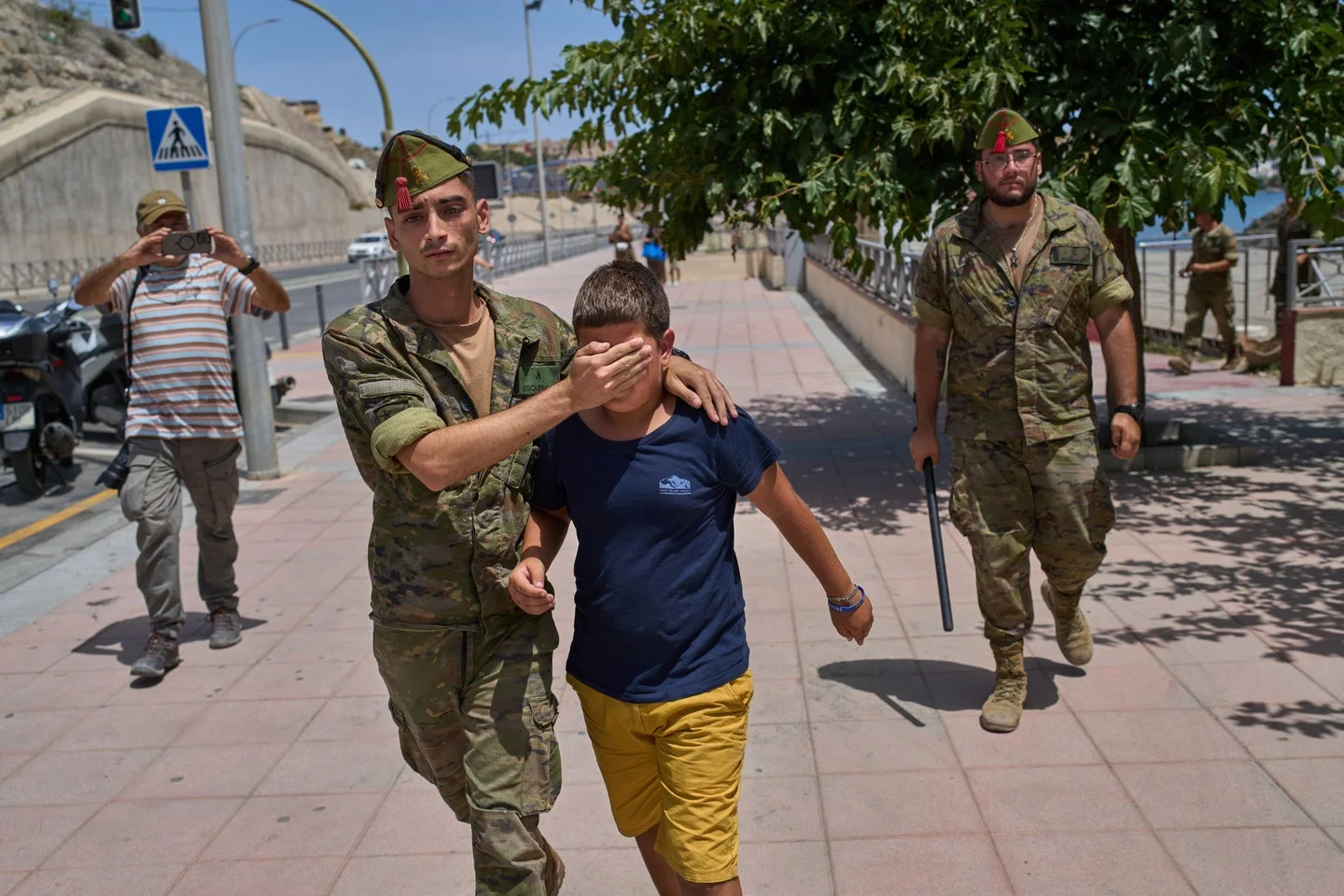
Morocco’s Minister of Justice, Abdellatif Ouahbi, has urged the repatriation of Moroccan minors currently in Spain, including those who arrived in Ceuta during the latest migration surge. This directive follows royal instructions aimed at streamlining the identification and return process for these minors.
The exact number of affected minors remains uncertain. Spanish authorities reported 1,527 unaccompanied minors in Ceuta following the recent crisis, as of the most recent data shared on August 12. However, this figure does not exclusively reflect newcomers from July 30–31; some had already been in the enclave before the migration wave.
An existing agreement between Rabat and Madrid
Contrary to common misconceptions, Spain’s legal framework does not prohibit the return of Moroccan minors. Since 2007, Rabat and Madrid have maintained a bilateral agreement focused on preventing irregular migration of unaccompanied minors, safeguarding their rights, and facilitating their coordinated return. The treaty outlines joint efforts to locate the minors’ families and, when feasible, arrange their return to Morocco or transfer them to Moroccan authorities.
However, the agreement does not permit mass or automatic returns. Spanish law mandates a case-by-case assessment to determine whether repatriation aligns with the child’s best interests. Authorities must gather family background, consult Moroccan counterparts, and allow the minor to present their perspective. The public prosecutor’s office also plays a key role in these proceedings.
This requirement for individual review explains why minors could not be processed like adults during the initial expulsion phase. Their irregular entry into Spain does not negate their status as protected minors under Spanish jurisdiction.
The shadow of the 2021 precedent
Spanish caution is heavily influenced by past events in Ceuta. In August 2021, following a major influx of migrants, hundreds of minors were sent back to Morocco in an operation coordinated by Spanish authorities.
The Spanish judiciary later ruled against this approach. In January 2024, the Supreme Court upheld that the 2021 returns were unlawful because they failed to meet the legal safeguards required for minors. The court specifically highlighted the lack of sufficient individual assessments of each child’s situation.
This legal outcome now poses a significant hurdle for any collective repatriation efforts. Despite Rabat’s requests and Madrid’s desire to ease the strain on Ceuta, Spanish authorities must ensure that every return complies with the legal protections guaranteed by law.
An alternative approach: dispersing minors across Spain
While awaiting potential repatriation, Madrid faces an immediate challenge: the overcrowding of Ceuta.
The Spanish government has activated protocols to redistribute some unaccompanied minors to other autonomous communities. This measure does not interfere with the parallel process of assessing their repatriation to Morocco; the two actions operate independently.
The issue has sparked political friction in Spain. The central government advocates for regional dispersal to alleviate pressure on Ceuta, while the People’s Party insists on prioritizing returns to Morocco. Juan José Imbroda, President of Melilla, has also called for the full implementation of the 2007 agreement with Rabat.
The current situation reflects less a refusal by Spain to return the minors than a legally constrained process. Morocco demands their repatriation and insists it is prepared to receive them. Spain may consent to these returns but must execute them on a case-by-case basis.
The coming weeks will test whether cooperation between the two nations can expedite family identification and fulfill the conditions necessary for these returns. The 2021 judicial ruling serves as a stark reminder that hastily organized collective operations risk renewed legal challenges.