Ivory Coast’s refusal of US deportee deal: the real-world costs for citizens, businesses and regional stability
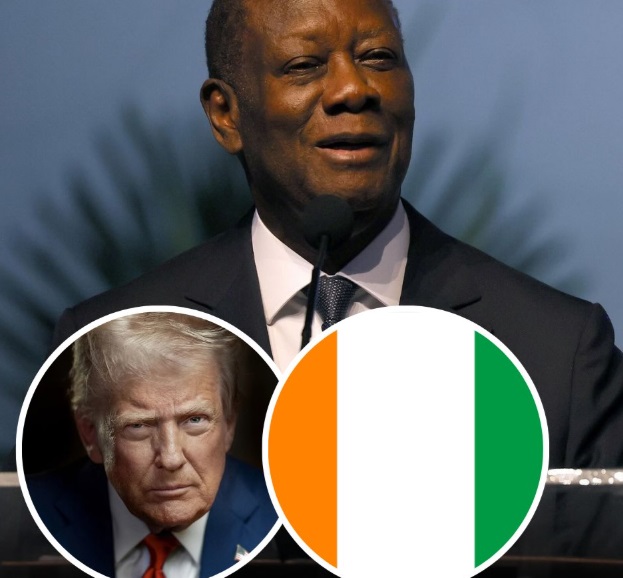
Ivory Coast has turned down a US proposal to accept people deported from the United States who are not necessarily Ivorian nationals. The decision carries tangible consequences for households, local economies and the country’s international standing, as Washington expands its third-country removal policy.
In mid-June 2026, a US State Department official travelled to Abidjan as part of a diplomatic tour across West and Central Africa.
Christian Ehrhardt, who heads the State Department’s Office of Remigration, was seeking to persuade several African governments to take in people expelled from the United States even when those individuals are not citizens of the receiving countries.
The talks in Abidjan did not produce an agreement. Ivorian authorities declined the US request.
What the US third-country removal policy means in practice
The approach is part of a broader push by Donald Trump’s administration to expand deportations to third countries.
The principle is relatively new: a person can be removed from the United States to a country where they are not a national and with which they may have no prior connection.
Internal State Department figures show that by late June 2026, the US administration had authorised or pledged at least $410 million to facilitate agreements with 31 countries, mainly in Africa and Latin America.
Since 2025, more than 25,000 people are said to have been deported to at least 28 third countries, according to an analysis based on multiple independent sources.
Some countries have accepted foreign nationals in exchange for funding or other forms of assistance. Direct financial commitments to several governments have been reported.
Why Abidjan said no — and what is at stake
Against that backdrop, Ehrhardt’s mission to Ivory Coast took on particular significance.
The US official, who runs a bureau of about fifteen people within the State Department, was tasked with negotiating with foreign governments to accept people deported from the United States.
But in Abidjan, the US proposal reportedly found no agreement.
Ivory Coast does not appear, in the US data made public for June 2026, among the countries that concluded an operational agreement of this kind.
The refusal matters beyond diplomatic circles: accepting deportees without local ties could strain social services, affect community relations and create legal uncertainty for the individuals concerned. For Ivorian businesses, a deal of this kind could also have exposed the country to reputational risks and complicated trade and travel relations with partners who question the legality of the policy.
A sensitive debate with legal and human consequences
The question of deportations to third countries is highly controversial.
The US administration presents the policy as a way to remove people subject to deportation orders when their country of origin refuses or is unable to take them back.
Human rights organisations and lawyers for deportees nevertheless challenge certain aspects of the system, particularly the guarantees offered to those concerned before their transfer to a third country.
A US federal appeals court ruled in September 2026 that the policy was unlawful in a case concerning the lack of sufficient safeguards for the people involved. The Trump administration was expected to appeal to the Supreme Court.
For Ivory Coast, the decision to stay out of the arrangement reflects a calculation about sovereignty, social cohesion and the economic fallout that could follow if the country were drawn into a contested removal scheme.