Senegal’s special funds: what happens after the constitutional setback?
After the constitutional setback, the debate shifts to what comes next
The constitutional ruling on Senegal’s special funds has triggered a wider debate about the limits of parliamentary oversight, the sharing of powers between the executive and the legislature, and the fate of discretionary spending that remains outside independent audit. The decision has not settled the argument; it has moved it into a new arena, where the question is no longer whether the funds should be controlled, but who has the authority to set the rules and how far that control can realistically reach.
The push to regulate special funds began with unusual momentum. On August 10, 2026, during an extraordinary session, lawmakers examined an urgent bill on the legal regime for special credits, championed by MP Guy Marius Sagna. The proposal sought to end the long-standing opacity surrounding funds traditionally held at the Presidency and the Prime Ministry. It envisioned a strict legal framework and a confidential audit mechanism entrusted to a parliamentary committee and magistrates from the Court of Auditors. That effort, however, ran into immediate resistance from the executive branch. On August 13, Justice Minister Moussa Sarr introduced a government amendment designed to refocus the text on general principles, leaving the precise modalities of execution and oversight to regulatory power, and therefore to the executive itself, under Articles 67 and 76 of the Constitution. A further amendment on August 14 proposed explicitly including the Presidency, the National Assembly and the Prime Ministry in the reform’s scope, a sign that the controversy was less about the principle of stronger oversight than about the level of the legal instrument and the exact reach of parliamentary control. The text was passed on August 19, only for its review to be suspended the following day after the executive filed an appeal.
Constitutional council rejection forces a fresh start
That appeal proved decisive. On August 25, 2026, the Constitutional Council struck down the ordinary bill outright, ruling that the regime governing public credits fell exclusively under an organic law, not an ordinary law passed through a parliamentary initiative. The censure forced deputies to restart the entire process on a different legal foundation. On September 2, 2026, the National Assembly’s Bureau declared admissible a new organic bill, this time amending Organic Law No. 2020-07 of February 26, 2020, on finance laws. Under the institution’s rules of procedure, the President of the Republic must now be consulted for an opinion before the new text is sent to committee and placed on the agenda, a procedural step that further delays any effective oversight mechanism.
Why the impasse leaves spending unchecked
In practical terms, until this procedure is completed, special credits continue to escape external accounting scrutiny. National defense secrecy remains preserved in every version of the text examined so far. The stated goal is not to remove the confidentiality inherent to sovereign spending, but to replace total absence of oversight with a circumscribed form of control, exercised by bodies cleared to handle classified information without disclosing it. Yet the question of whether that oversight will fully extend to funds held not only at the Presidency but also at the Prime Ministry and the National Assembly itself remains divisive. Some observers suggest that lawmakers may be reluctant to see their own credits subjected to the same level of scrutiny as those of the executive.
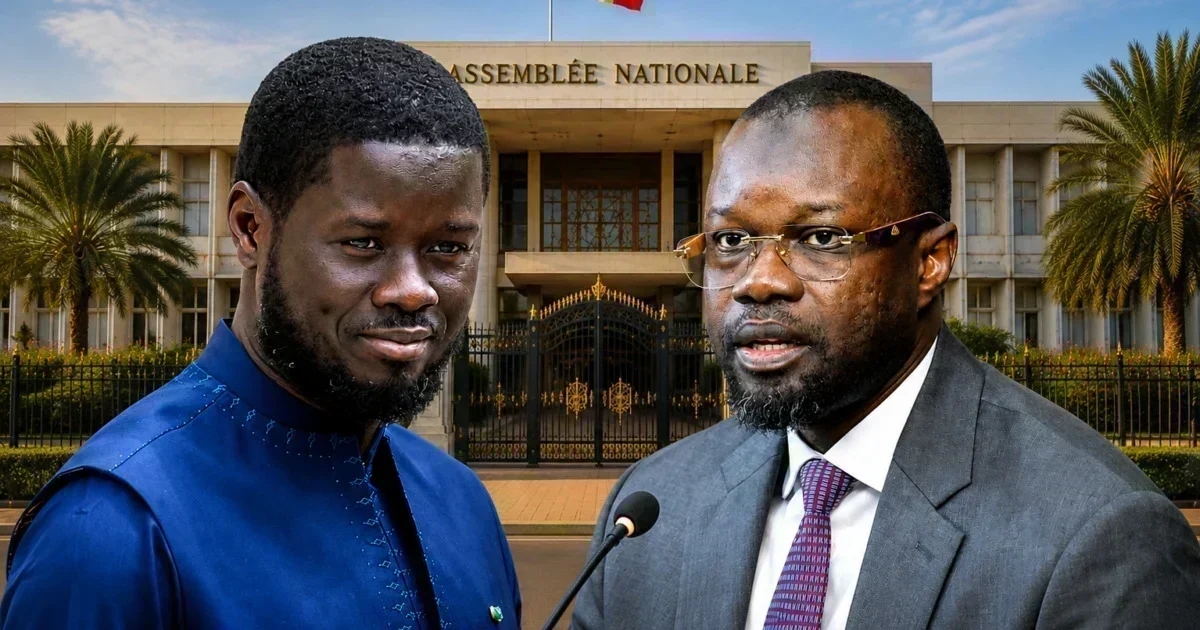
The financial stakes are also poorly understood. Since 2011, the amount of special fund credits in the initial finance law has been renewed unchanged at 8,856,296,000 CFA francs, even though the sums actually mobilized during the year repeatedly differ from that figure, with no independent verification mechanism currently able to account for the gap precisely. Until the organic bill completes its parliamentary journey, all of these expenditures, from the Presidency to the Prime Ministry and potentially the National Assembly, remain outside fully operational parliamentary oversight, despite the offensive launched by Ousmane Sonko and his fellow deputies since early August.
Competing visions fuel the standoff
The institutional debates over the bill to regulate special funds reveal major disagreements. The parliamentary majority wants to restrict these funds to strictly sovereign matters, while the executive defends their use for humanitarian and social emergencies. Tensions center on how to define the scope and purposes of the funds, as well as on how oversight should be carried out. Those competing visions explain why the reform remains stalled, and why the public debate is now focused on what happens next.