Niger: Tiani’s post-coup paranoia — the fallout, the backlash and what lies ahead
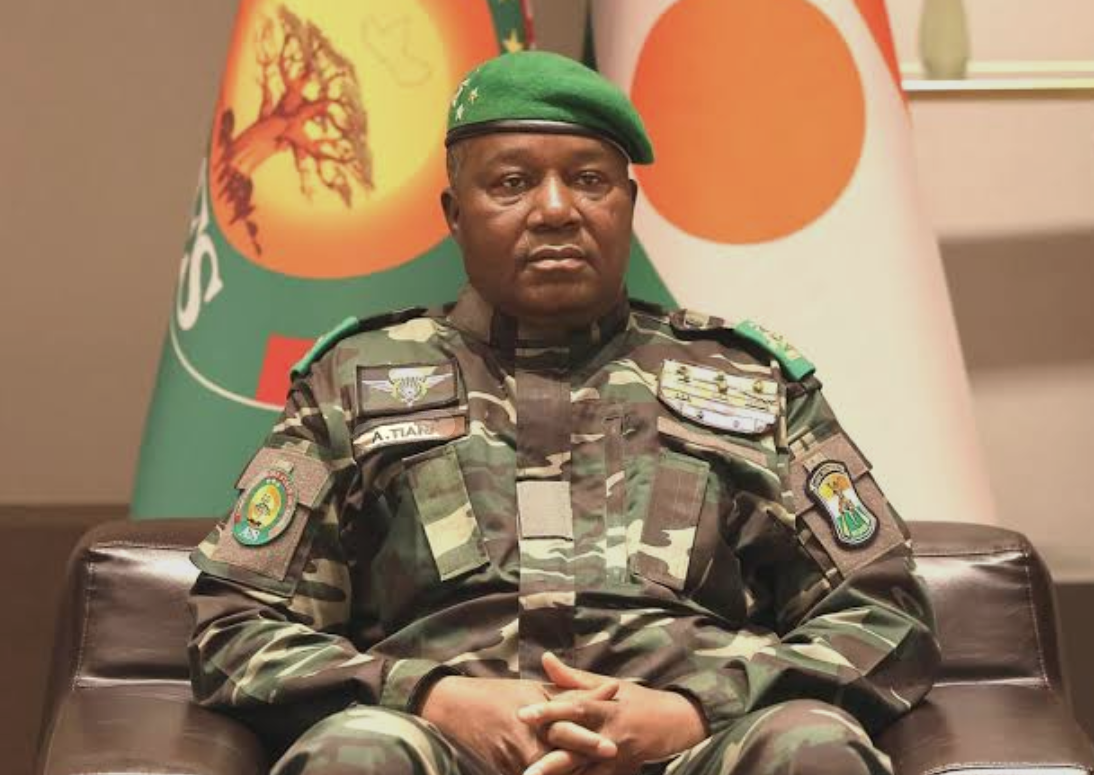
Niger’s military regime has taken another dramatic step down a path of no return. Barely days after a ruthless shake-up at the top of the armed forces command, General Abdourahamane Tiani has dismissed four key ministers. With the junta reeling from a failed coup attempt in the night of 28-29 August, this government purge exposes a leadership consumed by its own survival — while the country sinks deeper into near-total insecurity. The fallout is already generating intense public debate, and the question now is what comes next.
Four ministries change hands in a midnight decree
The portfolios affected are far from minor: Agriculture, Agrarian Reform, Energy and Communications were all reassigned with immediate effect. By redistributing these strategic levers — crucial for economic stability and control over information — the head of the junta is desperately trying to close ranks and lock down every instrument of state power.
For many observers, the move is less about improving governance than about protecting a fragile inner circle. Each new appointment appears designed to reward loyalty rather than competence, fuelling concerns that the government is turning inward at precisely the moment it should be addressing the nation’s mounting crises.
The coup leader who now fears a coup
There is a bitter irony in this political jitteriness. General Tiani only rose to power by overthrowing democratically elected President Mohamed Bazoum in July 2023. A former commander of the presidential guard, Tiani used armed force and the trust placed in him by state institutions to orchestrate his own takeover.
Now he finds himself caught in the very trap he set for others. Fully aware of how easily an undemocratic regime can collapse from within, the junta chief lives under a perpetual illusion of internal threat. In politics as in the barracks, legitimacy cannot be decreed: those who seize power by the gun inevitably risk suffering the same fate.
This paranoia at the top of the state reflects an undeniable reality — the CNSP no longer controls its own house. Frictions within the armed forces are intensifying, and August’s attempted coup was merely the visible symptom of a much deeper fracture inside Niger’s military elite.
A nation trapped between insecurity and isolation
While General Tiani reshuffles his ministries and hands posts to loyalists to guarantee his personal safety, ordinary Nigeriens are paying the highest price for this chronic instability. Since the military junta took over, the country has slid into a disastrous security spiral.
The original justification for the 2023 coup — improving security against armed terrorist groups — has completely collapsed. On the ground, the reality is damning:
- A growing terrorist threat: Attacks by groups affiliated with Al-Qaeda and the Islamic State have multiplied in border areas, killing numerous civilians and soldiers.
- A strategic void: By abruptly severing traditional military alliances and expelling partner forces, the regime left entire swathes of territory without effective protection.
- A humanitarian and economic crisis: Mounting insecurity and sanctions have paralysed the local economy, pushing millions into extreme vulnerability.
Public backlash and a widening debate
The latest purge has not gone unnoticed. Across Niamey and beyond, citizens are questioning the direction of a government that seems more focused on internal score-settling than on their daily struggles. Social media and informal networks are buzzing with frustration, as many wonder how many more ministers will fall before the junta admits its approach is failing.
Critics argue that replacing individuals rather than changing methods only delays the inevitable. The relentless militarisation of institutions and the witch-hunt inside the government betray a glaring absence of any clear political vision for the country.
What comes next for Niger?
By governing through fear, suspicion and permanent purges, the military regime isolates itself a little more each day. Neither press censorship nor the express replacement of energy or communications ministers will be enough to mask an obvious truth: the CNSP’s promise of stability has turned into a security and institutional chaos whose main victim remains the people of Niger.
As the junta tightens its grip, the international community watches closely, weighing the consequences for a region already on edge. For now, the only certainty is that Niger’s crisis is far from over — and the next chapter may be even more turbulent.