Gabon’s PDG in reckoning: post-palace meeting sparks debate on party’s future
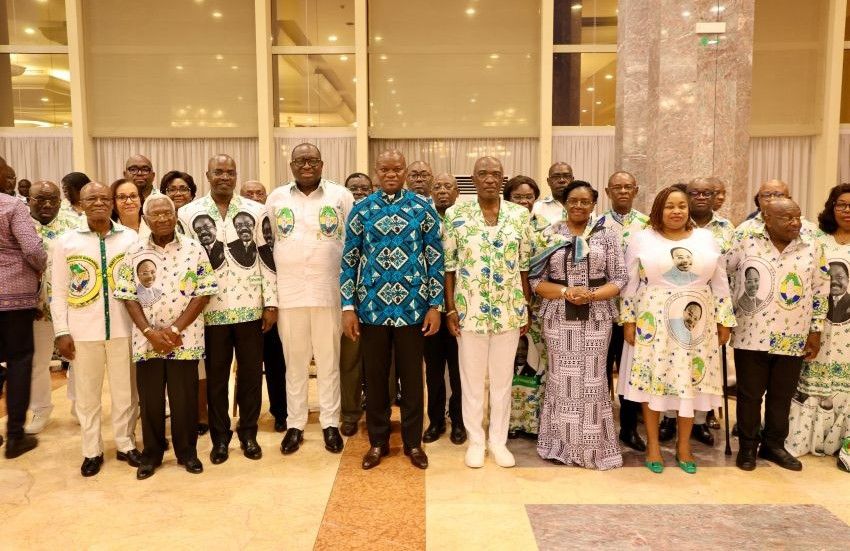
Libreville, October 31, 2026 — Three years after relinquishing power it held for over half a century, Gabon’s PDG finds itself at a crossroads following a high-stakes meeting at the Palace of Renovation. While President Brice Clotaire Oligui Nguema received a delegation led by party chief Blaise Louembé, the true weight of the encounter lies in its aftermath: how will Gabon’s dominant political force navigate internal divisions as it braces for a pivotal November congress?
The PDG’s leadership returned from the presidential audience with a united front and calls for national reconciliation. Yet behind closed doors, tensions simmer between factions loyal to Blaise Louembé’s current direction and those still claiming allegiance to former president Ali Bongo Ondimba. As the party prepares for its 13th ordinary congress from November 27–29, the question looms large: can the PDG move beyond its fractured past and emerge as a cohesive force in Gabon’s evolving political landscape?
Signs of détente, shadows of division
The PDG’s delegation arrived at the Palace of Renovation with a clear message: unity and restoration. Blaise Louembé, speaking after the meeting, framed the party’s stance within the context of Gabon’s ongoing transition. He highlighted the PDG’s unwavering support for the Transitional authorities under President Oligui Nguema, while acknowledging the pressures the party faced following last year’s national dialogue—including calls to dissolve political parties, with the PDG particularly exposed.
« From the Transition to the Liberation, we have consistently backed the President of the Republic, » Louembé affirmed. « Today, we reaffirm this commitment. » Yet his words carry a subtle tension: while the PDG’s leadership seeks to position itself as a constructive partner in the nation’s rebuilding, factions within the party continue to challenge its legitimacy, citing irregularities in the upcoming congress’s preparation and demanding a more inclusive reunification process. The presidential audience, in essence, signaled openness to dialogue but stopped short of resolving deep internal rifts.
The president’s plea for unity
President Oligui Nguema used the meeting to underscore the urgent need for national cohesion. Praising the PDG’s discipline and sense of responsibility, he drew a parallel between current challenges and the legacy of Omar Bongo Ondimba, the party’s founding father, whom he described as a champion of simplicity, tolerance, and dialogue. « Gabon does not need division, » he declared. « It needs unity. »
Oligui Nguema’s message was unmistakable: partisan infighting must yield to the greater good. He urged the PDG to prioritize collective progress over internal power struggles, positioning his administration as an impartial arbiter in Gabon’s political realignment. The president also broached the thorny issue of confiscated assets, advocating that proceeds from such cases should benefit Gabonese citizens—particularly its youth—rather than being absorbed exclusively by foreign jurisdictions. This stance underscores a broader debate over sovereignty and justice in Gabon’s post-transition order.
What’s at stake in the upcoming congress
With the congress fast approaching, the PDG faces a defining moment. The meeting at the Palace of Renovation offered symbolic support but did little to resolve the party’s existential questions. Can the PDG transcend its historical legacy to forge a shared vision for the future? Or will it remain hostage to competing narratives of its past—one group championing continuity under Omar Bongo’s political ethos, another pushing for a modernized, reformist agenda?
The answers may well determine whether the PDG can reclaim its role as Gabon’s preeminent political force—or fade into irrelevance in a country rapidly reshaping its democratic identity. As Gabon moves forward from the tumult of August 2023, the party’s survival hinges not on nostalgia, but on its ability to listen, reconcile, and articulate a vision that resonates with a new generation of Gabonese.
Can the PDG heal its fractures before November?
The Palace of Renovation meeting opened a fragile window for dialogue, but it did not close the door on further contention. The November congress will test whether the PDG can channel its diverse currents into a unified platform—or whether internal divisions will overshadow its ambitions. One thing is certain: in a Gabon where political identities are being redefined, the PDG’s next moves will shape not only its own fate, but the trajectory of the nation itself.