After the Lomé refugee accords: what happens next for displaced Burkinabè
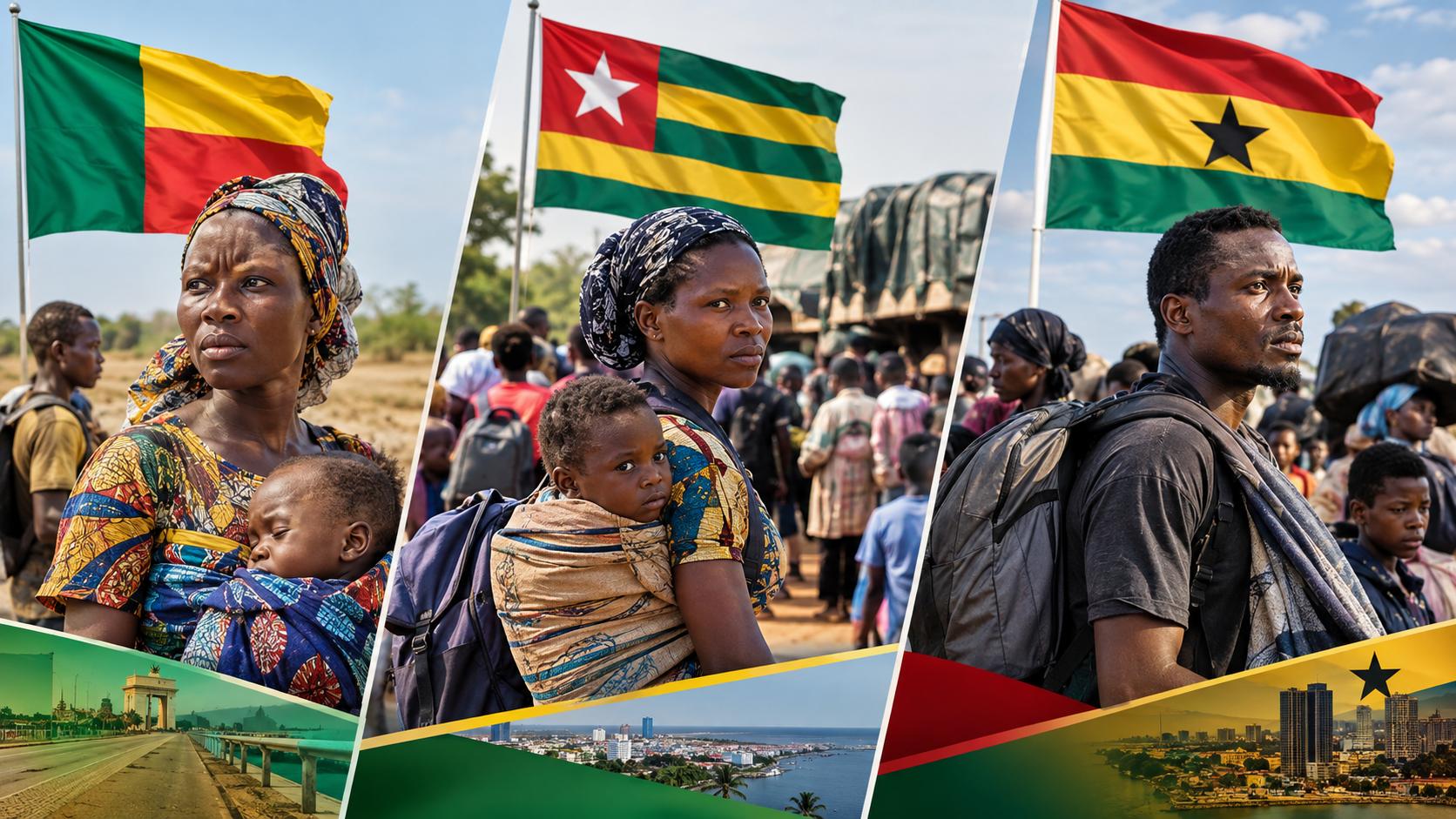
The ink has dried on the Lomé agreements, and the debate has shifted. For the thousands of Burkinabè who crossed into Benin, Ghana and Togo to escape violence at home, a framework now exists for a voluntary, safe and dignified return. But a framework is not a homecoming. As host communities, human rights monitors and displaced families digest the news, the central question is no longer what was signed, but what comes after.
A cooperative framework, not an immediate green light
On 11 September, delegations from Benin, Ghana, Togo and Burkina Faso sat down with the UN refugee agency to put three tripartite agreements on paper. The texts set out consultation mechanisms, monitoring arrangements and preparatory steps for potential returns and reintegration, should conditions allow.
The diplomatic language matters. In a region shaped by forced displacement, the word “return” can be heard as a summons. The principle these accords rest on is different: repatriation must be chosen freely, and people must have enough information to decide what is right for them.
Host countries stretched by a crisis they did not create
Years of insecurity in Burkina Faso have pushed families across borders. Benin, Ghana and Togo now carry a crisis that arrived uninvited.
As of 31 May 2026, Benin counted more than 11,000 refugees from Burkina Faso. Ghana’s June 2026 statistics recorded 13,368 Burkinabè refugees, about two-thirds of its refugee population; reception centres in Tarikom and Zini had been set up earlier, and prima facie refugee status was granted to Burkinabè arrivals in February 2025. Togo, meanwhile, hosted roughly 65,100 refugees and asylum seekers in June 2026, 86 percent of them from Burkina Faso.
These figures give the Lomé accords their true weight. Behind any eventual movement of people are households that left villages, abandoned property and, in some cases, lost relatives.
The rights record that shadows any return plan
Burkina Faso’s authorities sit at the centre of this equation. For years the country has faced an insurgency led by Islamist armed groups, alongside serious allegations about the conduct of government forces and allied militias.
In a report released in April 2026, Human Rights Watch documented 57 incidents and interviewed hundreds of people to examine violence since 2023. The group concluded that both Islamist armed groups and Burkinabè forces with allied militias are responsible for grave abuses that may amount to war crimes or crimes against humanity, and called for credible investigations to establish accountability.
Since the September 2022 coup, Captain Ibrahim Traoré’s military authorities have extended the transition period and narrowed political and civic space, according to the same rights organisation, which has also documented disappearances, forced conscriptions and pressure on journalists, opponents and civil society. In May 2026, it again criticised tightening restrictions on independent media.
For refugees, these are not abstract concerns. The core question is protection: can they go back without fearing fresh violence? Will they reach their homes and land? Will they obtain civil documents, healthcare, schools and a means of living? And will there be mechanisms to report abuses if they occur?
A durable return, as humanitarian agencies consistently note, requires that the root causes of displacement are addressed and that peace allows people to stay without being forced to flee again.
Benin, Ghana and Togo: partners with a double duty
The stance of the three host nations is central to how this unfolds. By sheltering those forced to flee, they took on a heavy humanitarian responsibility despite their own security and economic pressures.
The Lomé deal avoids pitting reception against return. It gives the countries involved a shared platform to plan ahead while holding the line on voluntariness — and it signals regional cooperation in a zone directly exposed to the Sahel crisis, where displacement does not stop at borders.
Benin, Ghana and Togo are therefore not only neighbours of Burkina Faso but active players in the regional response.
Reactions, risks and the road ahead
Public debate since the signing has been cautious. The accords are widely read as a roadmap rather than a repatriation timetable. Their effectiveness will depend on implementation and, above all, on conditions inside Burkina Faso.
The message to refugees is that return must be voluntary and take place only when safety and dignity are assured — a prudence reinforced by continued armed violence and allegations of abuses involving multiple parties to the conflict.
For Benin, Ghana and Togo, the challenge is dual: keep protecting those who need asylum while preparing, with the UN refugee agency and Burkinabè authorities, for a possible return.
Because a refugee truly goes home only when home is a place where life can be lived in safety. The real measure of the Lomé accords will not be how many people are moved back across a border, but how many can return freely, rejoin their communities and rebuild their lives without being driven out again.