Monday, October 26

Culture

Inside the formation of a new politico-military alliance in DRC: kabila’s strategic move amid deepening instability
Culture

Inside the formation of a new politico-military alliance in DRC: kabila’s strategic move amid deepening instability

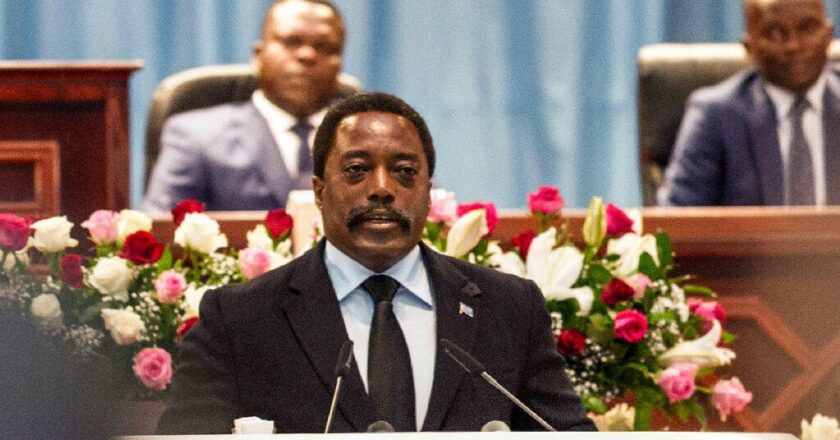
The Democratic Republic of Congo is on the brink of a potentially explosive shift as former president Joseph Kabila steps into the spotlight as leader of the newly launched Front for the Refoundation of the Nation (FRN). The coalition, unveiled in Goma on October 12, marks a bold consolidation of opposition forces, uniting factions from the Alliance of the Congo River (AFC) and the M23 rebel group under a single banner of resistance against President Félix Tshisekedi’s government. The internal mechanics of a strategic alliance Behind the scenes, the FRN was not hastily assembled. The leadership roster reveals a deliberate effort to merge political influence with military muscle. Claude Ibalanky, a close advisor within the movement, announced the formation during a press briefing, framing ...
Inside the Riyadh airport strike: what the Houthi attack reveals about the war’s hidden dynamics
Culture

Inside the Riyadh airport strike: what the Houthi attack reveals about the war’s hidden dynamics

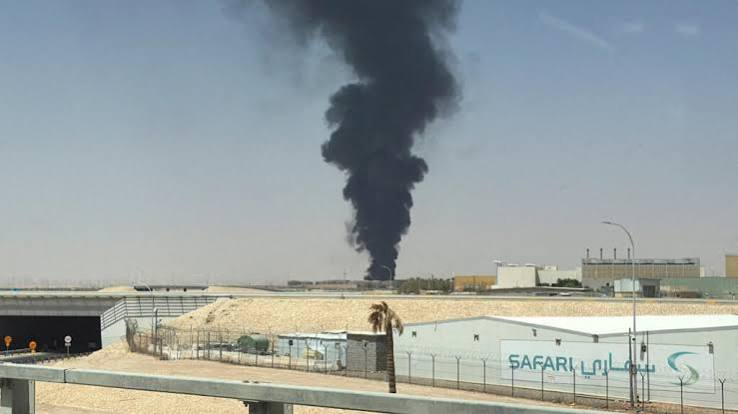
The missile that tore into Riyadh's King Khalid International Airport on Saturday, October 10, was not simply a military strike — it was the visible tip of a deeper confrontation that has been building for months. With 13 dead and 308 wounded, according to Saudi authorities, the attack stands as one of the most brazen Houthi operations against the kingdom to date. But the story behind the strike matters as much as the destruction itself. The mechanics of an attack that slipped through The Houthis' military spokesman, Yahya Saree, was quick to claim responsibility, stating that the group had targeted Riyadh's airport using missiles and drones. He also claimed strikes on Dammam airport and Saudi oil facilities, and issued a stark warning to airlines: avoid the kingdom's airports and airspac...
Behind Benin’s aerial sovereignty drive: the deeper story of the Cana military aviation school review
Culture

Behind Benin’s aerial sovereignty drive: the deeper story of the Cana military aviation school review

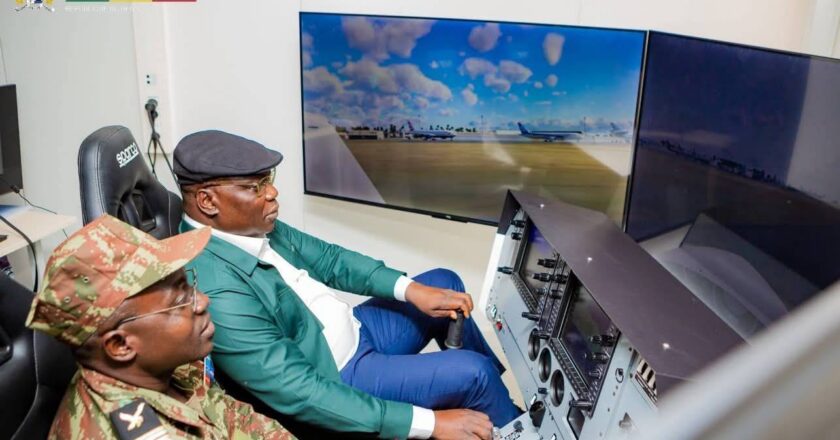
The Cana military aviation school (EAM-Cana), nestled within the Cana air base, plays a pivotal role in sharpening the aeronautical skills of Benin's armed forces. It delivers training in piloting, aircraft maintenance, air traffic control, and technical support. Its classrooms, flight simulators, workshops, and innovation spaces are designed to equip military personnel for the air force's expanding needs. The institution also contributes to training the 100 drone pilots recruited by the general staff. Why the defence minister's visit matters On Friday, October 9, 2026, the minister delegate for national defence, Gildas Habib Bignon Agonkan, traveled to Cana for a working visit. This trip allowed him to assess the school's capabilities, engage with its leadership, and understand the requi...
Benin’s fourth health cohort: the strategy behind 787 new recruits
Culture

Benin’s fourth health cohort: the strategy behind 787 new recruits

A strategic push to strengthen Benin's health workforce In an official statement released on October 7, 2026, Benin's Minister of Health, Benjamin Hounkpatin, announced the selection of 787 young health professionals for the fourth cohort of the "Bridging the Gaps" project. This marks a key step in the government's ongoing effort to reinforce human resources within the public health system. The recruits, chosen after a rigorous merit-based selection process, fall into four distinct skills categories. Their integration is expected to help alleviate the shortage of healthcare personnel in public facilities across the country. Funding and objectives of the initiative Backed by the Islamic Development Bank (IDB), the "Bridging the Gaps" program is designed to address critical staffing gaps in...
Behind Oryx Energies’ $1 billion sale: what really drives Africa’s fuel distribution shake-up
Culture

Behind Oryx Energies’ $1 billion sale: what really drives Africa’s fuel distribution shake-up

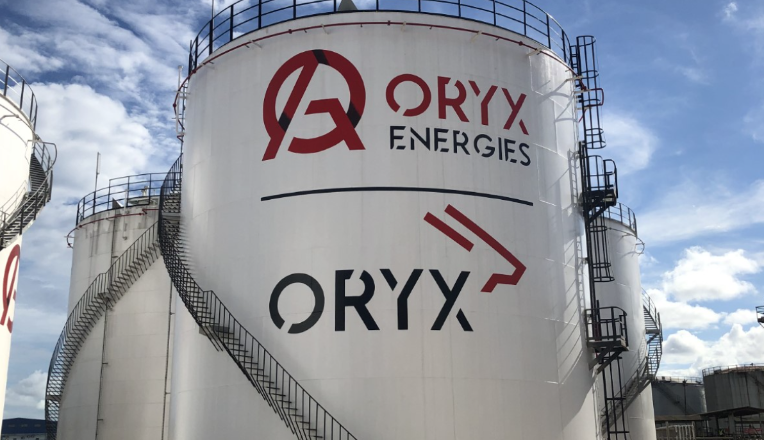
Behind closed doors, a deal had been taking shape for months. When Oryx Energies finally changed hands in a transaction valued at close to $1 billion, it was not a sudden twist but the culmination of a longer power play over one of Africa's most entrenched fuel distribution networks. The Swiss oil trader, a fixture on the continent for more than three decades, has now passed to new owners — and the dynamics behind that shift reveal as much about Africa's energy market as the price tag itself. The forces that pushed a Swiss trader into new hands The African energy sector has just absorbed one of its most consequential ownership changes in years. Oryx Energies was sold for roughly $1 billion, following months of speculation about the company's future. The group, which specialises in tradin...
Burkina Faso’s 40 billion CFA market debt: the fiscal reality behind the sovereignty narrative
Culture

Burkina Faso’s 40 billion CFA market debt: the fiscal reality behind the sovereignty narrative

Behind the daily rhetoric of rupture and national sovereignty, Burkina Faso's public finances tell a more complicated story. On 7 October 2026, the government once again turned to private investors on the UMOA financial market to raise 40 billion CFA francs. The operation itself is technically routine, but its timing and context reveal a structural tension that has been building for months: the gap between the country's declared ambition of self-reliance and the hard arithmetic of its budget.The structural roots of the paradoxFor analysts tracking the region's political economy, the contradiction is not new — but it is becoming harder to ignore. The executive has repeatedly championed the idea of counting on the nation's own forces, rejecting what it frames as external dependency. Yet curr...
Inside Benin’s restitution strategy: the thinking behind 35 new cultural claims on France
Culture

Inside Benin’s restitution strategy: the thinking behind 35 new cultural claims on France

When Benin secured the return of 26 royal treasures from Abomey in 2021, it was widely seen as a diplomatic breakthrough. Yet the machinery behind that success never stopped running. President Romuald Wadagni has now formally asked his French counterpart, Emmanuel Macron, to hand back 35 additional cultural objects and historical documents still held in France. The request is not a random gesture: it is the product of a carefully built restitution apparatus that has been quietly expanding for years, blending memory politics, cultural sovereignty and a long-term tourism agenda. What really drives Cotonou's latest claim The restitution of African cultural property held in Europe has become a permanent feature of relations between Benin and France. By lodging a fresh request for 35 cultural ...
Behind Niger’s push for a five-year term against lawyer Lirwana: inside a case that tests digital speech
Culture

Behind Niger’s push for a five-year term against lawyer Lirwana: inside a case that tests digital speech

The confrontation between Niger's judiciary and the most outspoken members of its bar has entered a decisive phase. Fifteen days after being remanded in custody, lawyer Abdourahamane Lirwana appeared on Tuesday, October 6, before the Niamey High Court to answer the charges against him. When the hearings concluded, the prosecution requested a five-year prison sentence, along with a fine of five million CFA francs. Online posts at the heart of the case The proceedings stem from content the lawyer published on social media. Prosecutors accuse Lirwana of "disseminating data likely to disturb public order," an offence severely punished under Niger's cybercrime legislation. The charge carries heavy penalties, reflecting the authorities' increasingly strict approach to online expression. Tensio...
Niger’s fuel price decision: the hidden pressures forcing the CCR’s hand
Culture

Niger’s fuel price decision: the hidden pressures forcing the CCR’s hand

The recommendation that emerged from the Conseil Consultatif de la Refondation (CCR)'s first extraordinary session of 2026 landed like a thunderclap — yet it merely confirmed what many had long suspected. The advisory body is now openly advocating for an upward adjustment of pump prices for petroleum products. Behind closed doors, officials describe the move as a bitter pill that cannot be avoided if Niger is to protect its macroeconomic stability and energy security. The financial undertow driving the price review Persistent supply-chain disruptions and mounting financial strain on the Société Nigérienne des Produits Pétroliers (SONIDEP) have left the CCR with little room to manoeuvre. The institution is urging the government to take the plunge, recommending an increase in hydrocarbon pr...
Inside Niger’s fuel debt labyrinth: the forces that pushed SONIDEP’s SORAZ arrears to 418 billion FCFA
Culture

Inside Niger’s fuel debt labyrinth: the forces that pushed SONIDEP’s SORAZ arrears to 418 billion FCFA

The hidden mechanics behind a record shortfall Niger's hydrocarbons sector is weathering its most severe financial storm yet. At the centre of the turbulence sits the Société Nationale des Produits Pétroliers (SONIDEP), whose outstanding obligations to the Société de Raffinage de Zinder (SORAZ) have climbed to an unprecedented 418 billion FCFA. The scale of this liability raises urgent questions about how the national fuel supplier reached such a point — and what it means for the stability of the domestic market and the continuity of fuel deliveries. The roots of the shortfall Understanding this crisis requires looking beyond the headline figure. Historically, SONIDEP's debt to the refinery hovered in a far more manageable range, roughly 40 to 50 billion FCFA under the previous administra...
What Niger’s general Barmou removal means for the junta’s next chapter
Culture

What Niger’s general Barmou removal means for the junta’s next chapter

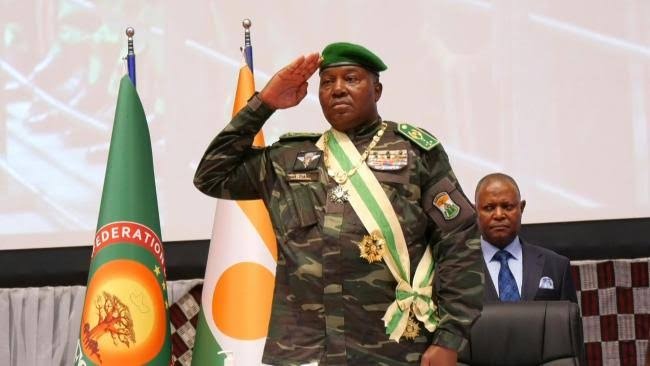
The detention of Major General Moussa Salaou Barmou has triggered a wave of reaction across Niger's capital, with public debate now focused on what his removal from the top of the military hierarchy means for the country's political trajectory. The officer, once a central figure in the junta that seized power in July 2023, was stripped of his role as chief of general staff of the Nigerien Armed Forces on 11 September 2026 and placed under house arrest. The fallout from the failed mutiny of 28-29 August at Air Base 101 continues to reshape the balance of power at the highest levels of the state. A swift downfall and its immediate aftermath Barmou's dismissal came by presidential decree, and General Abdourahamane Tiani moved quickly to appoint Brigadier General Mamane Sani Kiaou, previously...
Mutiny in Niamey exposes rifts in Niger’s military leadership
Culture

Mutiny in Niamey exposes rifts in Niger’s military leadership

A violent mutiny at Niamey’s Air Base 101 in late August ended with a devastating toll: at least 13 members of the Presidential Guard killed and numerous others wounded in heavy-weapon clashes. Though fewer than 20 rebels were detained during subsequent security sweeps, the incident laid bare deep structural weaknesses within Niger’s armed forces—despite the country fielding tens of thousands of troops across the Sahel. The unrest unfolded as Niger allocates over 37% of its national budget to defense spending, heightening public anxiety among its 25 million citizens about regime stability and troop cohesion in the volatile tri-border region. Cracks emerge in Niger’s military command structure The uprising revealed simmering internal divisions within the very institution meant to uphold th...