When Burkina Faso’s public payroll thins, households across the nation feel the squeeze
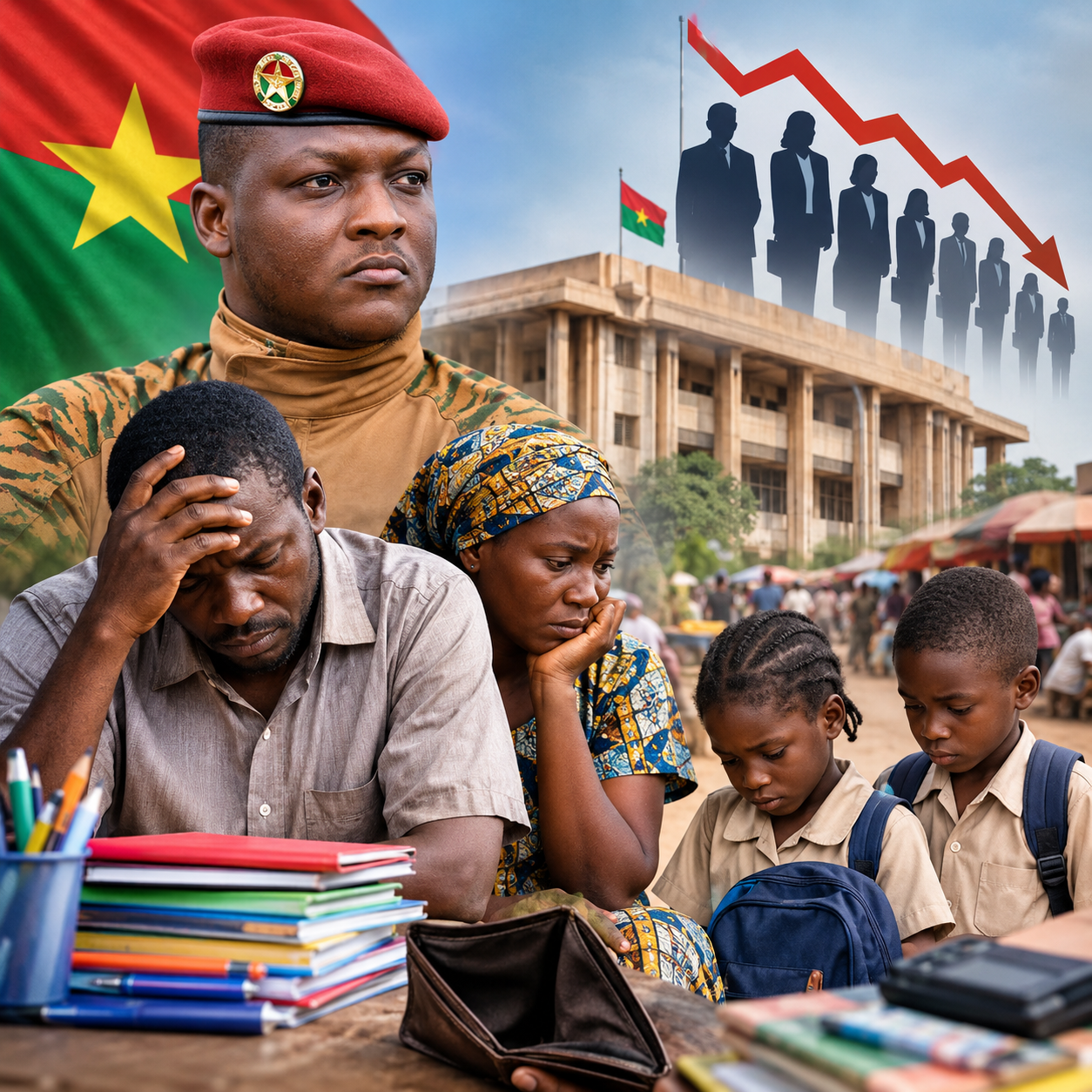
As the school year begins in Burkina Faso, a sobering social reality confronts thousands of families. According to official figures, the number of salaried civil servants in the state public service fell from 204,310 in 2021 to 202,393 in 2025 a reduction of 1,917 agents over four years.
The 2025 breakdown is as follows:
140,438 men;
61,955 women.
The human dimension behind the numbers
These statistics represent far more than administrative posts. Each public employee may be the primary breadwinner for a family, covering school fees, housing, food, and daily expenses. This is what gives the decline a profound social dimension.
As Burkinabè families grapple with back-to-school costs, any reduction in regular income can quickly force painful trade-offs: tuition, supplies, meals, or healthcare.
Political rhetoric versus everyday survival
Since President Ibrahim Traoré assumed power, official discourse has consistently emphasized sovereignty, national mobilization, and the transformation of Burkina Faso. Yet behind the grand speeches and economic announcements, the central question remains the daily reality of households: how many families today truly have a stable income to meet their obligations?
The decline in public service staffing does not, by itself, prove that all affected agents have been “laid off,” nor does it mechanically attribute every departure to a personal decision by Ibrahim Traoré. The exact causes retirements, recruitments, non-renewals, administrative restructuring, or other management measures—must be documented.
However, the social debate cannot be dismissed.
Ripple effects beyond the administration
When a household loses its main income, the consequences extend far beyond government offices. They reach into classrooms, markets, and homes. Every public job eliminated or left unfilled can have a much broader economic impact when it is a family’s primary source of revenue.
At the start of the school year, this reality takes on particular urgency. For some parents, the priority is no longer just preparing their children for a new academic year but finding the means to finance it.
The challenge for the authorities
The true challenge for Burkinabè authorities is to demonstrate that state management choices do not further weaken households. Because behind the public service statistics are families who live, consume, educate their children, and strive to secure their future.
By Harouna Ousmane — Reporter