US Treasury removes General François Olenga from sanctions list after nine years
US Treasury removes General François Olenga from sanctions list after nine years
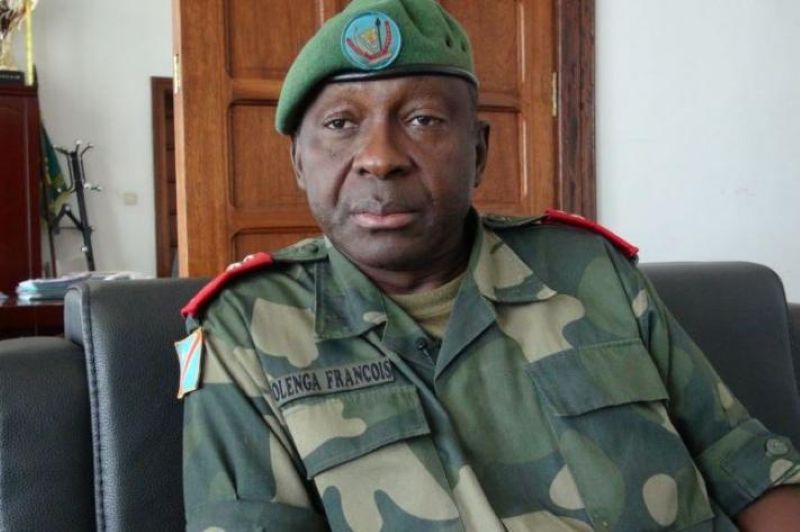
The United States Department of the Treasury’s Office of Foreign Assets Control (OFAC) has officially removed retired four-star General François Olenga Tete and his Safari Beach complex from its sanctions list, ending a nine-year legal and diplomatic ordeal.
In a September 23 notification, Olenga’s legal representative, Aimé Kilolo Musamba, confirmed the decision: “The US Treasury has formally notified me of OFAC’s decision to delist General François Olenga Tete and Safari Club.”
The move follows a lengthy legal battle in Washington, during which Kilolo argued that the sanctions were not justified by evidence. “This marks the culmination of over nine years of relentless advocacy, multiple trips to Washington, and robust legal challenges,” the lawyer stated. “I always maintained that the case lacked merit, and today, justice has prevailed.”
What the delisting means for General Olenga and the Safari Beach
With his name removed from the OFAC list, General Olenga regains full access to his financial assets in the United States and is no longer barred from traveling there. His Safari Beach resort, located near N’sele, can now welcome American clients and process business transactions without restrictions.
The sanctions, imposed in June 2017, had frozen Olenga’s US-based assets and severely limited his professional and personal engagements with American individuals and entities. The delisting removes all financial and travel restrictions previously imposed by Washington.
Why the sanctions were imposed in 2017
In June 2017, the US Treasury accused General Olenga—then head of the Republican Guard under former President Joseph Kabila—of suppressing political opposition and obstructing democratic processes. The administration claimed that under his command, the Republican Guard had engaged in “harassment of political opponents, arbitrary arrests, and executions”, while also impeding UN observer activities.
These allegations came amid a broader political crisis in the DRC, triggered by Kabila’s refusal to step down after his constitutional mandate expired in December 2016. The sanctions froze Olenga’s assets and banned him from entering the United States, effectively isolating him from global financial and diplomatic networks.
A call for stronger African sovereignty in sanctions policy
Speaking from Brussels, Aimé Kilolo Musamba framed the victory as part of a larger call for African self-reliance in justice and sanctions. He urged the DRC government to develop its own legal framework to impose targeted sanctions against individuals and entities involved in international crimes on Congolese soil.
“The Congo must no longer depend solely on the United States or the European Union to impose sanctions. We need a national mechanism grounded in the rule of law, capable of defending our sovereignty and protecting our people,” he stated.
Kilolo emphasized that while international justice is critical, African states must also take responsibility for enforcing justice domestically. “Sovereignty is not just about political independence—it’s about having the legal tools to act when crimes are committed against our citizens.”
A nine-year legal battle: the road to justice
The path to delisting was not easy. For nearly a decade, General Olenga and his legal team fought to dismantle the US Treasury’s case. Kilolo traveled repeatedly to Washington, presenting evidence and challenging the narrative that supported the sanctions.
“This case proves that when justice is pursued with competence, persistence, and skill, even the most powerful institutions can be held to account,” Kilolo said. He also highlighted the role of African legal professionals in navigating complex international systems. “An African lawyer can stand before the highest courts in the world—and win.”
What’s next for General Olenga and the DRC?
With the sanctions lifted, General Olenga is expected to resume his business activities, particularly at Safari Beach. The move also signals a potential shift in US policy toward senior Congolese officials linked to past administrations—though the political landscape in Kinshasa remains complex.
For the DRC, the delisting raises questions about the future of its engagement with international partners and how it will assert greater control over its own legal and economic sovereignty. As Kilolo noted: “The Congo must now ask itself: What kind of justice system do we want? One imposed from abroad, or one shaped at home?”