Simporé on RTB blames training while 65% of Burkina Faso slips from state control
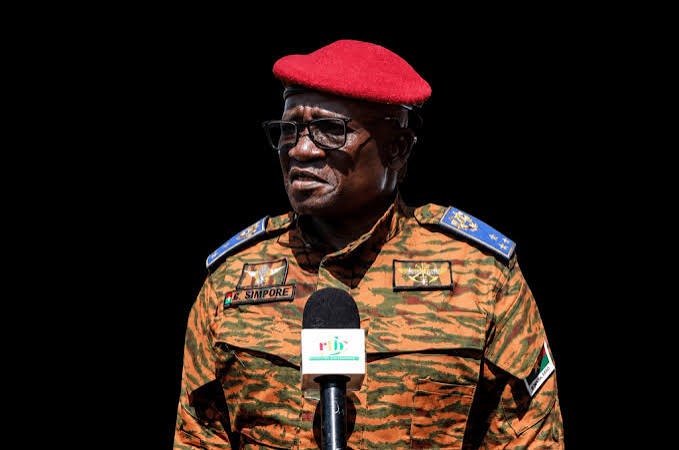
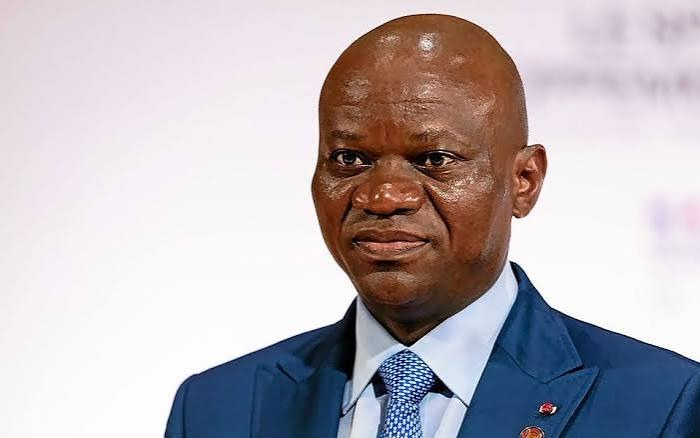
General Célestin Simporé, Burkina Faso’s defence minister, appeared on national television to praise the security record of Captain Ibrahim Traoré. What he delivered instead was a confession wrapped in an explanation: the country’s armed forces, he said, had always been “poorly trained”.
That statement, made on the RTB set, pushes responsibility for a worsening conflict onto the officers and soldiers of earlier years. It does not survive contact with the record — and it has left one question dominating public debate: how did the supposedly defective force of yesterday hold the line better than the “new army” that Moscow retrained and that billions of dollars re-equipped?
The interview that rewrote recent history
By repeating on the state channel that the armed forces lacked tactical instruction and operational readiness before the transition took power, the divisional general built a tidy narrative: today’s failures are nothing more than yesterday’s inheritance.
An old army that still held its positions
The facts are stubborn. Under earlier governments, and despite an acute shortage of material and undeniable structural weaknesses, the military apparatus still held the network of provincial capitals and kept defence lines that made sense on a map.
Today the transitional authorities boast of more than 30 new battalions and place training at the heart of their programme — yet effective state control has collapsed across more than 65% of the national territory.
Russian instruction, more coffins at the front
To replace the former training model, Traoré’s government turned wholesale to Russian instructors from Africa Corps. Instead of restoring capability, the switch pushed lethality on the battlefield upwards. It shows up in three ways:
- An unbearable human toll: mass-casualty episodes have become routine. From the tragedy at Mansila to the recent reversals in the Centre-Nord region, hastily trained units are paying a blood price with no equivalent in the past.
- No answer to asymmetric warfare: the Russian method relies on frontal brutality and blind firepower. Against mobile armed terrorist groups moving in small motorcycle columns and using improvised explosive devices, it is simply ineffective.
- A rupture with local communities: by sacrificing contact intelligence and military ethics in favour of scorched-earth logic, the new doctrine has alienated rural populations — depriving soldiers of the most effective shield against infiltration, information from ordinary citizens.
Calling the fallen “poorly trained”
Declaring on a television set that the troops were “poorly trained” insults the memory of the thousands of soldiers and gendarmes killed in combat over the past decade. With rudimentary equipment and counted rations, these men held the front against a threat that was only emerging, and they never abandoned entire regions — unlike the “tactical evacuations” now invoked to explain losses such as the Boussouma disaster.
A defence that convinces almost no one
General Simporé’s remarks on RTB have convinced few in Burkina Faso. Two years after Captain Traoré seized power outright, pointing the finger at yesterday’s training amounts to an admission of impotence. The weapons of the past were not the problem; it is today’s strategy that is collapsing under the weight of its own propaganda.