Hormuz: Tehran sends Washington a seven-day reopening plan with three conditions
What Tehran put on the table in New York
Iran has formally handed the United States a proposal to restore maritime traffic through the strait of Hormuz within seven days. The document was delivered to US envoy Steve Witkoff on Tuesday, and Iranian foreign minister Abbas Araghchi went public with the move on the margins of the United Nations General Assembly in New York.
The exact wording remains locked behind diplomatic confidentiality. What is not in doubt is the calendar: Tehran is offering a one-week window to wind down a standoff that has throttled the world’s most sensitive maritime chokepoint. In Araghchi’s own framing, the file now sits on the desk of the White House.
Three conditions attached to the seven-day window
The reopening is not being offered for free. The Iranian foreign minister made clear that a fast return to normal navigation would require major concessions in return:
- An immediate halt to strikes targeting Iran’s strategic infrastructure;
- Targeted relief from economic sanctions;
- Solid guarantees on the withdrawal or redeployment of Western naval forces present in Gulf waters.
Strikes, sanctions and naval positions
Each of the three demands touches a sensitive nerve in Washington. Taken together, they show how far Tehran expects the negotiation to reach: from the battlefield to the sanctions architecture and the military balance in the Gulf itself.
“We are not seeking to make the closure of the strait permanent, but the safety of our shipping lanes is inseparable from the wider security of our nation,” Araghchi told a packed room of foreign correspondents.
Why Hormuz remains Iran’s strongest card
By threatening freedom of navigation through a waterway that keeps the global energy system running, the Islamic Republic is converting military isolation into political leverage against Washington and its allies. The message is blunt: Iran’s adversaries may hold the military edge, but Tehran controls the valve.
Hormuz has once again proved itself the ultimate deterrent in Iranian hands — the one asset that forces the world’s largest economies to pay attention to Tehran’s terms.
An economic shock already in motion
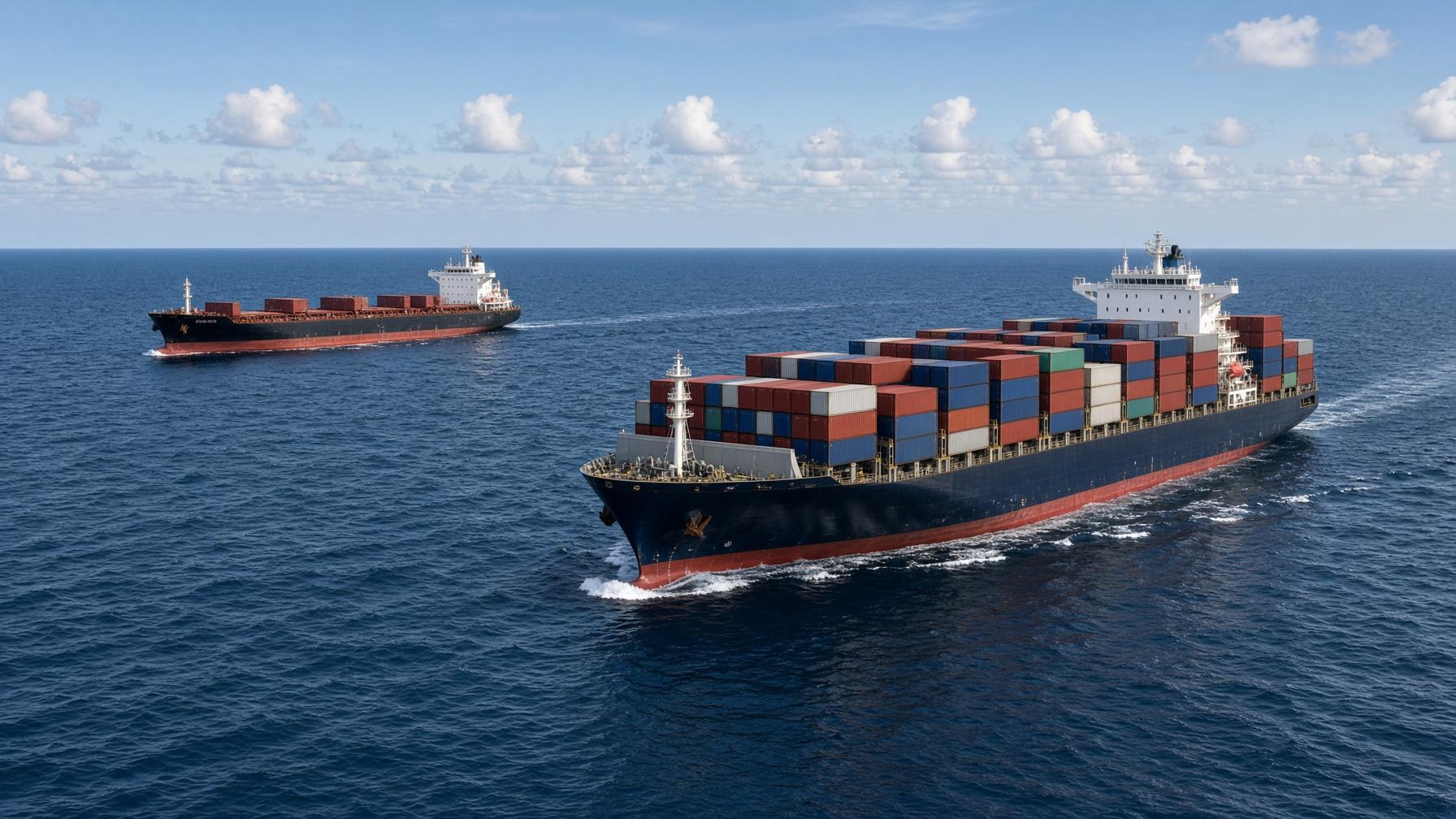
The offer lands at a critical moment. Since traffic through the strait began to seize up, the global economy has absorbed blow after blow. Barely 33 kilometres wide at its narrowest point, Hormuz normally carries around 20 percent of the world’s crude oil consumption and a third of liquefied natural gas (LNG) every single day.
Four pressure points
- Soaring energy prices: within days, the price of a barrel of Brent climbed spectacularly, breaking through alarming thresholds. Fear of a lasting supply rupture is fuelling speculation on financial markets and raising the spectre of an oil shock comparable to those of the 1970s.
- Exploding freight and insurance costs: facing threats of attacks, ship seizures and missile fire, maritime insurers have pushed war-risk premiums to prohibitive levels — and in some cases simply refuse to cover tankers at all.
- The costly detour around Africa: to stay out of the Gulf, many shipowners have ordered their vessels to round the Cape of Good Hope. The diversion adds at least two weeks to each voyage, drives up fuel bills and ties up the global fleet.
- Broad inflation risk: rising fuel and shipping costs are already feeding through into global supply chains. For consumer economies, particularly in Europe and Asia, the prospect of a fresh wave of inflation and fuel shortages at the pump is becoming very concrete.
Washington’s dilemma
The Iranian proposal leaves the US administration facing a strategic bind. Turning it down would mean owning the prolongation of an energy crisis that destabilises both the American and the world economy, at a politically delicate moment. Accepting Tehran’s terms within seven days, on the other hand, could be read by regional allies as a concession to maritime blackmail.
So far, US diplomacy has said nothing publicly about the details of the plan handed to Steve Witkoff. Other capitals are turning up the heat on both sides to reach a compromise without delay — particularly in Asia, where China, Japan and South Korea are the leading buyers of the oil that passes through the strait.
A decisive week in the Gulf
The next seven days look decisive. Between the hope of a rapid diplomatic de-escalation in New York and the fear of a prolonged conflagration in the Gulf, the fate of the world economy is currently being played out across a few nautical miles.