JNIM overruns Djenné military post in minutes as fuel blockade paralyses Mali’s forces
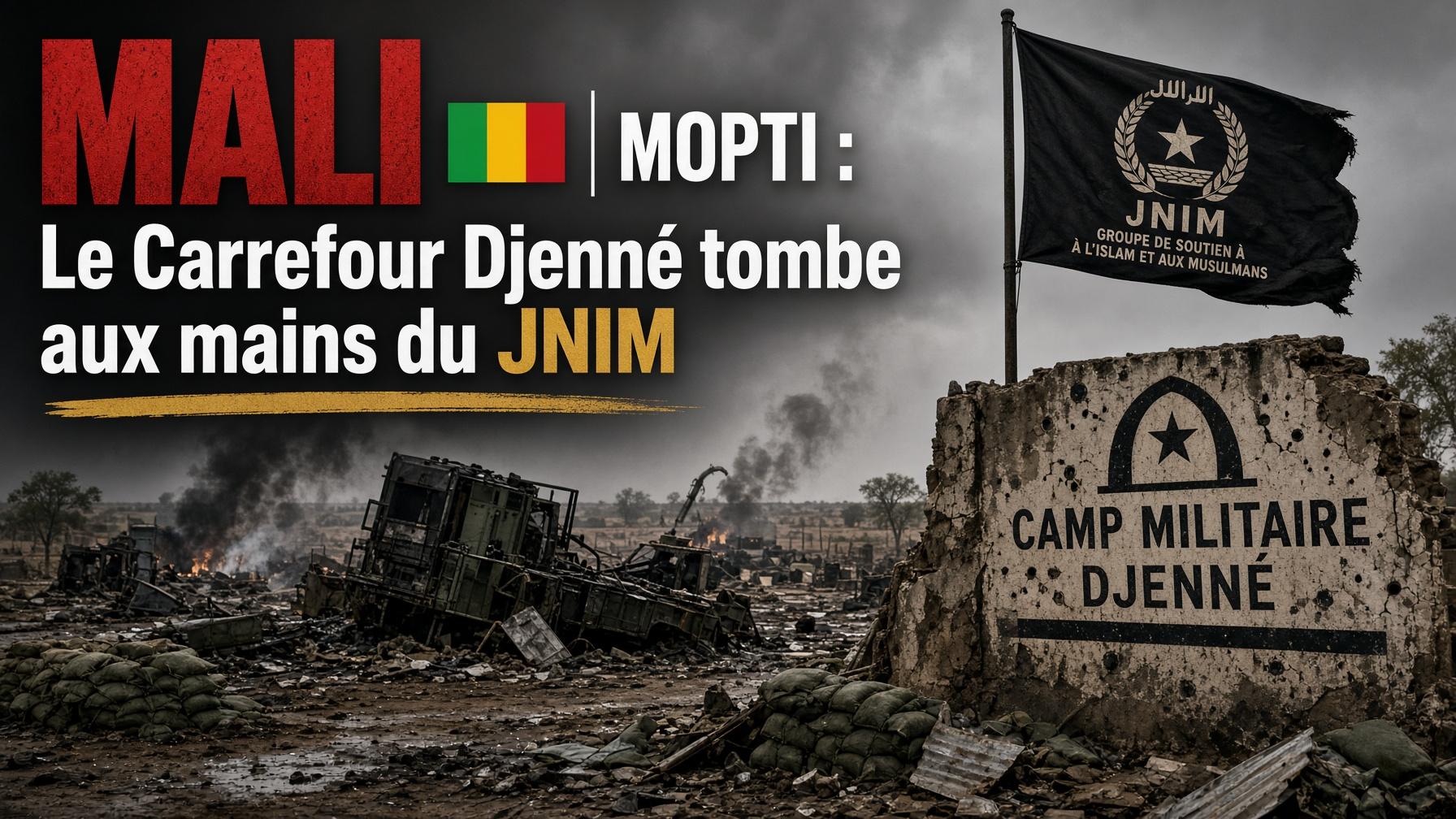
Mopti, Mali — The military post at Djenné fell in a matter of minutes. On Thursday 24 September, shortly after 12:10 local time, fighters from Jama’at Nusrat al-Muslimin (JNIM), an Al-Qaeda affiliate, stormed the crossroads that anchors the RN6, the highway linking southern Mali to the north, and overwhelmed the position before it could be reinforced.
Panic has returned to central Mali. The human toll has not been confirmed by the army’s general staff in Bamako, but everything points to a heavy price. The attackers left with a substantial haul: tactical vehicles, heavy weapons and stocks of ammunition.
The speed of the collapse has revived a question that has been building for months — how long can a military apparatus hold ground when it can no longer move?
A rapid encirclement, then a rout at the RN6 crossroads
Accounts gathered in the area describe a massed assault preceded by a swift encirclement of the camp. “The gunfire came from every direction. The defence forces could not hold their support line for long,” one resident said, asking not to be named.
After the loyalist troops abandoned the position, footage circulated by the group showed armed men walking between the smoking installations of the camp, displaying seized equipment as war trophies.
The materiel left behind
The list of equipment taken — armoured vehicles, heavy weapons, ammunition — says as much about the strategic value of the post as about the speed of its loss. Rebuilding a position of that kind requires convoys that, today, struggle to reach the sector at all.
Fuel as a weapon: the blockade closing in on Mopti
The fall of the camp is only the visible part of the crisis. For several months, JNIM has tightened both its economic and military grip on the Mopti region, intercepting tanker convoys on the main trade corridors connecting Mali to its neighbours. The result is a de facto blockade on fuel.
Its effects on the Malian Armed Forces (FAMa) and their auxiliaries are immediate. Reconnaissance patrols have been cut to a minimum, armoured vehicles stay parked inside their bases, and air support arrives late, if it arrives at all. Mobility — the decisive advantage of a conventional army — has been steadily eroded.
A logistical noose that shapes the battlefield
Djenné illustrates the logic behind this strategy of attrition: strip the adversary of his ability to move, then strike the isolated outposts that can no longer be reached or resupplied.
Africa Corps presses Bamako for emergency fuel
Tension is rising inside the high command. The Russian paramilitary contingent Africa Corps has urged the transitional authorities in Bamako to raise its allocations of petrol and aviation fuel without delay, arguing that counter-offensives and logistical cover for forward positions cannot be guaranteed without a dedicated and secured supply line.
Meeting that demand is another matter entirely. National reserves of refined products stand at their lowest, squeezed by the blockade on the road corridors, and every extra litre sent to one front is a litre withheld from another.
An alliance under strain, a region drifting into isolation
Central Mali is sinking deeper into isolation with each passing week. For the transitional government, the challenge is now twofold: break the energy siege imposed by the insurgents, and keep its military coalition — national forces, auxiliaries and foreign partners — pulling in the same direction. The loss of Djenné shows how quickly both can be put to the test.