Libreville – For many decades, Gabon’s development trajectory has been marked by a profound paradox. Despite its abundant natural resources, low population density, and significant financial capacity, the nation has witnessed a widening chasm between its major urban centers and vast stretches of its interior.
In numerous provinces, access to fundamental infrastructure, healthcare, education, and economic opportunities has consistently fallen short of public expectations. It is precisely this territorial imbalance that President Brice Clotaire Oligui Nguema has positioned at the core of his political agenda for Gabon.
Addressing the Parliament in Congress, the President forcefully reiterated an ambition that extends beyond mere infrastructure projects. “No locality will be left behind,” he declared, a powerful statement underpinning a deeper vision. This vision is for a Gabon where geographical location no longer dictates an individual’s prospects, where every region actively contributes to national prosperity, and where the presence of the State is palpable across the entire country, fostering stronger governance Africa.
Addressing a historical disparity
The stakes are exceptionally high. For an extended period, public investments in Gabon were predominantly concentrated in a few urban hubs, notably Libreville and Port-Gentil. This centralization spurred rural migration, exacerbated regional disparities, and cultivated a pervasive sense of neglect in many interior communities. This pattern is a common theme in African politics, where balanced growth is often a challenge.
The repercussions of this situation extend far beyond the mere comfort of citizens. When a province lacks navigable roads, operational hospitals, suitable educational institutions, or administrative infrastructure, its entire economic potential becomes stifled. The absence of such basic elements severely limits progress for society Africa.
Development economists widely acknowledge that territorial inequalities represent one of the foremost impediments to sustainable growth across Africa. Without adequate infrastructure, attracting investment, leveraging local resources, or creating enduring employment opportunities becomes exceedingly difficult.
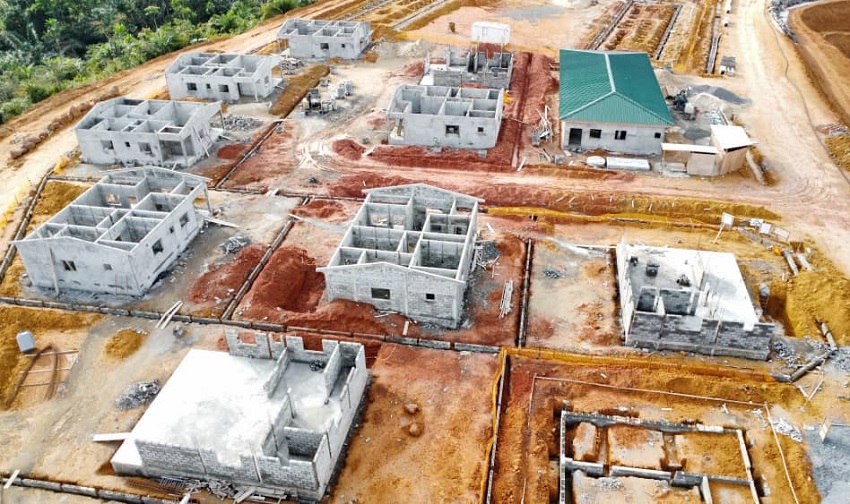
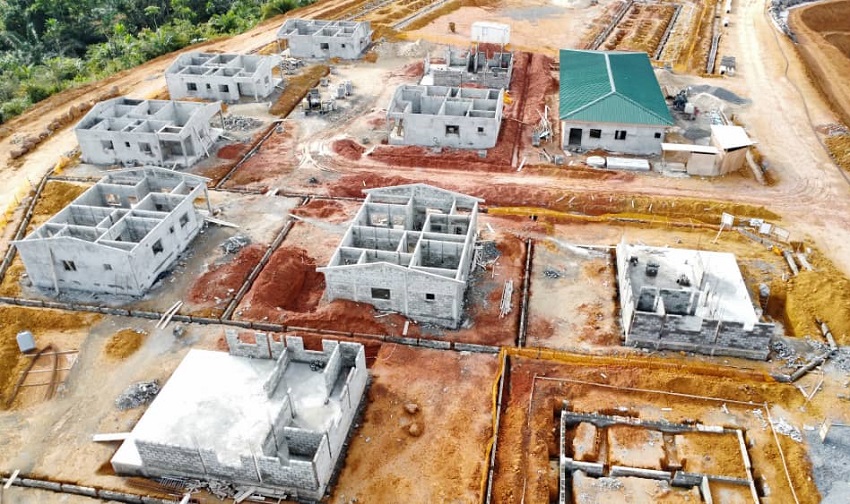
The presidential strategy is firmly rooted in this understanding. The ongoing construction projects in areas like Cocobeach, Makokou, Oyem, Bifoun, and various districts within Libreville, reflect a commitment to territorial rebalancing rarely seen on this scale in Gabon’s recent history. This is a crucial step towards fostering equitable Gabon development.
Cultivating a localized economy
The impact of this policy cannot be measured solely by kilometers of roads or the number of buildings erected. It is anchored in a robust economic conviction: national development can no longer be confined to a handful of decision-making centers.
Each new infrastructure is conceived as a catalyst for economic activity. A new road opens up markets for agricultural producers. A modern hospital enhances a city’s appeal. A university retains local talent. A housing program stimulates the construction sector. Behind every achievement lies a chain of economic effects capable of profoundly transforming territories and fostering local prosperity.
This approach aligns with prominent international trends. Nations such as Morocco, Rwanda, and Senegal have demonstrated that proactive territorial development policies can accelerate growth while simultaneously alleviating social tensions. These examples provide valuable insights for African politics.
For Gabon, this strategic direction could also facilitate the emergence of new regional economic poles, designed to complement the historical roles played by Libreville and Port-Gentil, contributing significantly to overall Gabon development.
A renewed social contract between state and citizens
Beyond its economic implications, this policy carries a profound political dimension. It aims to re-establish and strengthen the bond between the State and its populace.
In many regions, presidential tours and project monitoring missions have successfully placed local concerns at the forefront of public action. This methodology marks a departure from a governance style often perceived as detached from ground realities.
However, the true challenge is just beginning. Public expectations are immense. Citizens will not judge this ambitious vision by speeches alone, but by tangible results visible in their daily lives: roads delivered on schedule, operational hospitals, functional educational facilities, and reliable access to water and electricity. It is on this concrete terrain that the credibility of the presidential promise for Gabon’s equitable development will ultimately be determined.
The declaration “no locality will be left behind” signifies far more than an investment program. It embodies a fundamental concept of the Republic—one that rejects the notion of any territory being excluded from national progress. This commitment is central to evolving society Africa.
Should this vision be consistently translated into reality, it could represent one of the most profound transformations of the new Gabon. For the most resilient nations are not those that merely develop a few cities, but rather those that succeed in making every territory an active participant in their collective destiny. This is Oligui Nguema’s true gamble: to transform territorial equity into a powerful engine for national cohesion and shared prosperity for all Gabonese citizens.