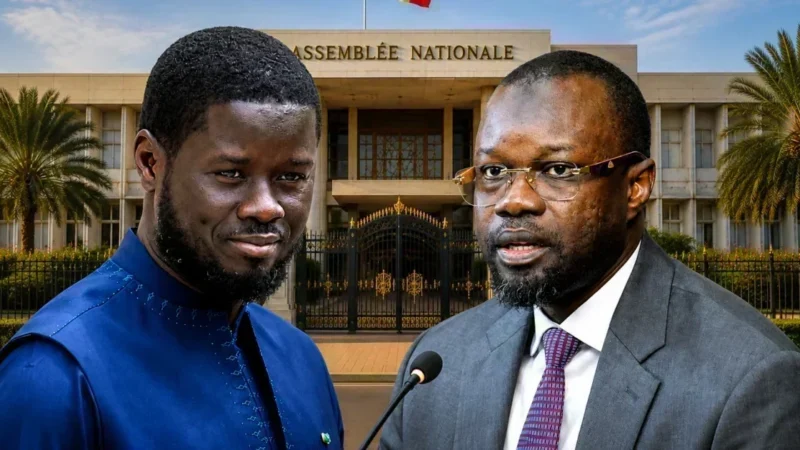
Senegal’s constitutional council faces scrutiny over sonko ruling
The Constitutional Council: from boldness to evasion
On February 15, 2024, the Senegalese Constitutional Council demonstrated surprising courage. Confronted with a significant institutional crisis, it fully embraced its mandate as the guardian of constitutional supremacy and the regulator of institutional operations.
However, on June 17, 2026, when presented with an appeal challenging the National Assembly Bureau’s decision to reinstate Mr. Ousmane Sonko as a deputy, the very same institution appeared to take a different path. The Council chose not to rule on the core of the dispute, instead declaring itself incompetent.
While this might initially seem like a purely technical decision, it, in fact, raises a much more profound question: how does the Constitutional Council currently perceive its role and its own established legal precedent?
This crucial debate warrants thorough examination.
The petitioners did not solely rely on Article 92, paragraph 3, of the Constitution, which pertains to the Council’s role as the arbiter of national election regularity, to establish its jurisdiction. They also cited Article 2 of the organic law governing the Constitutional Council, alongside two pivotal decisions from Senegalese constitutional jurisprudence: decisions n°08/2017 of July 26, 2017, and n°1/C/2024 of February 15, 2024.
Their argument unfolded in two stages. Firstly, they asserted the Council’s authority as the judge of the regularity of parliamentary elections. Secondly, they emphasized its fundamental role as the guardian of the Constitution and the regulator of institutional functioning within Senegalese politics.
It is precisely regarding this second foundational aspect that the Council’s silence is particularly concerning.
The decision issued on June 17, 2026, exclusively addresses the argument concerning electoral jurisdiction. It reiterates that the Council’s mission as an electoral judge concludes with the definitive proclamation of results, and the challenged decision occurred well after the legislative elections of November 2024. This reasoning is legally sound, yet it remains insufficient.
The appeal did not merely present an electoral difficulty; it, more significantly, highlighted a constitutional problem directly impacting the operational integrity of the Republic’s institutions.
The reintegration decision of May 24, 2026, indeed challenged several fundamental principles: the separation of powers, the rules governing parliamentary and ministerial incompatibilities, and adherence to the National Assembly’s internal legality as defined by its own rules of procedure. In essence, the debate centered on the conformity of an institutional act with constitutional requirements – a domain where the Constitutional Council’s institutional regulatory function finds its very purpose.
Given this context, how could the Constitutional Council disregard its own considerant 19 from its landmark decision of February 15, 2024, concerning the postponement of the presidential election? In that ruling, it forcefully affirmed: « In light of the spirit and letter of the Constitution and the law relating to the Constitutional Council, the Council must always be able to exercise its regulatory power to preserve the general interest, public order, peace, institutional stability, and the continuity of their functioning. » Through this solemn declaration, the Council was expected to definitively abandon a jurisprudence of incompetence, embracing a dynamic interpretation of its role as guardian of the constitutional order, enabling it to intervene whenever a major institutional crisis threatened the normal operation of public authorities.
Paradoxically, the Council chose to sidestep this fundamental question. It opted to shift the discussion towards the legal nature of the contested act, ultimately concluding its own incompetence.
This approach reveals a strategy of avoidance: resolving the matter through a procedural solution rather than a substantive answer. Such a tactic is not new in the history of constitutional litigation. When a constitutional judge wishes to avoid ruling on a sensitive issue, declaring incompetence offers a convenient escape. The consequence is that the fundamental constitutional question remains unresolved.
Even more surprising is the position articulated by Mr. Ousmane Sonko in his response brief. He contended that the Constitutional Council « cannot be called upon to rule on cases other than those expressly and restrictively provided for by the Constitution and the organic law. »
Such a stance is certainly astonishing. While defending the legality of his reintegration falls within the bounds of normal adversarial debate, advocating for a restrictive interpretation of the Constitutional Council’s powers is considerably more problematic for governance Africa.
For many years, those currently holding power, alongside the opposition, legal scholars, and civil society members, vehemently denounced the Council’s repeated declarations of incompetence, particularly when these prevented effective oversight of acts potentially undermining the Constitution and institutions. They then called for a more audacious constitutional judge, one more protective of liberties and more attentive to the preservation of the rule of law. It would be, to say the least, paradoxical if those who once fought against the culture of incompetence now become the architects of its resurgence.
For this is indeed the true stakes of this affair. The question was not merely whether Mr. Ousmane Sonko could reclaim a deputy’s seat. The paramount question was whether the Constitutional Council intended to continue the jurisprudential evolution initiated on February 15, 2024, or if it would revert to a formalistic and restrictive interpretation of its powers, impacting independent African journalism’s view of judicial oversight.
Regrettably, the decision of June 17, 2026, provides a troubling answer, signaling a return to a jurisprudence of incompetence.
Ultimately, this case poses a straightforward question: when a serious constitutional difficulty arises in the functioning of institutions, who is to address it if the Constitutional Council itself declines jurisdiction?
By declaring itself incompetent, the Council did not merely close a jurisdictional debate. It relinquished its jurisprudential ambition and left a major constitutional question unanswered.
Therefore, the decision of June 17, 2026, will be remembered less as a ruling on Mr. Ousmane Sonko’s parliamentary status and more as a moment of truth for Senegalese constitutional justice and African politics.
On February 15, 2024, the Council took a giant leap forward, broadening the scope of its mission. On June 17, 2026, it narrowed that scope, effectively taking two steps backward.
Each individual will assess which of these two stances better serves the authority of justice and the supremacy of the Constitution.
On February 15, 2024, the Senegalese Constitutional Council demonstrated surprising courage. Confronted with a significant institutional crisis, it fully embraced its mandate as the guardian of constitutional supremacy and the regulator of institutional operations.
However, on June 17, 2026, when presented with an appeal challenging the National Assembly Bureau’s decision to reinstate Mr. Ousmane Sonko as a deputy, the very same institution appeared to take a different path. The Council chose not to rule on the core of the dispute, instead declaring itself incompetent.
While this might initially seem like a purely technical decision, it, in fact, raises a much more profound question: how does the Constitutional Council currently perceive its role and its own established legal precedent?
This crucial debate warrants thorough examination.
The petitioners did not solely rely on Article 92, paragraph 3, of the Constitution, which pertains to the Council’s role as the arbiter of national election regularity, to establish its jurisdiction. They also cited Article 2 of the organic law governing the Constitutional Council, alongside two pivotal decisions from Senegalese constitutional jurisprudence: decisions n°08/2017 of July 26, 2017, and n°1/C/2024 of February 15, 2024.
Their argument unfolded in two stages. Firstly, they asserted the Council’s authority as the judge of the regularity of parliamentary elections. Secondly, they emphasized its fundamental role as the guardian of the Constitution and the regulator of institutional functioning within Senegalese politics.
It is precisely regarding this second foundational aspect that the Council’s silence is particularly concerning.
The decision issued on June 17, 2026, exclusively addresses the argument concerning electoral jurisdiction. It reiterates that the Council’s mission as an electoral judge concludes with the definitive proclamation of results, and the challenged decision occurred well after the legislative elections of November 2024. This reasoning is legally sound, yet it remains insufficient.
The appeal did not merely present an electoral difficulty; it, more significantly, highlighted a constitutional problem directly impacting the operational integrity of the Republic’s institutions.
The reintegration decision of May 24, 2026, indeed challenged several fundamental principles: the separation of powers, the rules governing parliamentary and ministerial incompatibilities, and adherence to the National Assembly’s internal legality as defined by its own rules of procedure. In essence, the debate centered on the conformity of an institutional act with constitutional requirements – a domain where the Constitutional Council’s institutional regulatory function finds its very purpose.
Given this context, how could the Constitutional Council disregard its own considerant 19 from its landmark decision of February 15, 2024, concerning the postponement of the presidential election? In that ruling, it forcefully affirmed: « In light of the spirit and letter of the Constitution and the law relating to the Constitutional Council, the Council must always be able to exercise its regulatory power to preserve the general interest, public order, peace, institutional stability, and the continuity of their functioning. » Through this solemn declaration, the Council was expected to definitively abandon a jurisprudence of incompetence, embracing a dynamic interpretation of its role as guardian of the constitutional order, enabling it to intervene whenever a major institutional crisis threatened the normal operation of public authorities.
Paradoxically, the Council chose to sidestep this fundamental question. It opted to shift the discussion towards the legal nature of the contested act, ultimately concluding its own incompetence.
This approach reveals a strategy of avoidance: resolving the matter through a procedural solution rather than a substantive answer. Such a tactic is not new in the history of constitutional litigation. When a constitutional judge wishes to avoid ruling on a sensitive issue, declaring incompetence offers a convenient escape. The consequence is that the fundamental constitutional question remains unresolved.
Even more surprising is the position articulated by Mr. Ousmane Sonko in his response brief. He contended that the Constitutional Council « cannot be called upon to rule on cases other than those expressly and restrictively provided for by the Constitution and the organic law. »
Such a stance is certainly astonishing. While defending the legality of his reintegration falls within the bounds of normal adversarial debate, advocating for a restrictive interpretation of the Constitutional Council’s powers is considerably more problematic for governance Africa.
For many years, those currently holding power, alongside the opposition, legal scholars, and civil society members, vehemently denounced the Council’s repeated declarations of incompetence, particularly when these prevented effective oversight of acts potentially undermining the Constitution and institutions. They then called for a more audacious constitutional judge, one more protective of liberties and more attentive to the preservation of the rule of law. It would be, to say the least, paradoxical if those who once fought against the culture of incompetence now become the architects of its resurgence.
For this is indeed the true stakes of this affair. The question was not merely whether Mr. Ousmane Sonko could reclaim a deputy’s seat. The paramount question was whether the Constitutional Council intended to continue the jurisprudential evolution initiated on February 15, 2024, or if it would revert to a formalistic and restrictive interpretation of its powers, impacting independent African journalism’s view of judicial oversight.
Regrettably, the decision of June 17, 2026, provides a troubling answer, signaling a return to a jurisprudence of incompetence.
Ultimately, this case poses a straightforward question: when a serious constitutional difficulty arises in the functioning of institutions, who is to address it if the Constitutional Council itself declines jurisdiction?
By declaring itself incompetent, the Council did not merely close a jurisdictional debate. It relinquished its jurisprudential ambition and left a major constitutional question unanswered.
Therefore, the decision of June 17, 2026, will be remembered less as a ruling on Mr. Ousmane Sonko’s parliamentary status and more as a moment of truth for Senegalese constitutional justice and African politics.
On February 15, 2024, the Council took a giant leap forward, broadening the scope of its mission. On June 17, 2026, it narrowed that scope, effectively taking two steps backward.
Each individual will assess which of these two stances better serves the authority of justice and the supremacy of the Constitution.