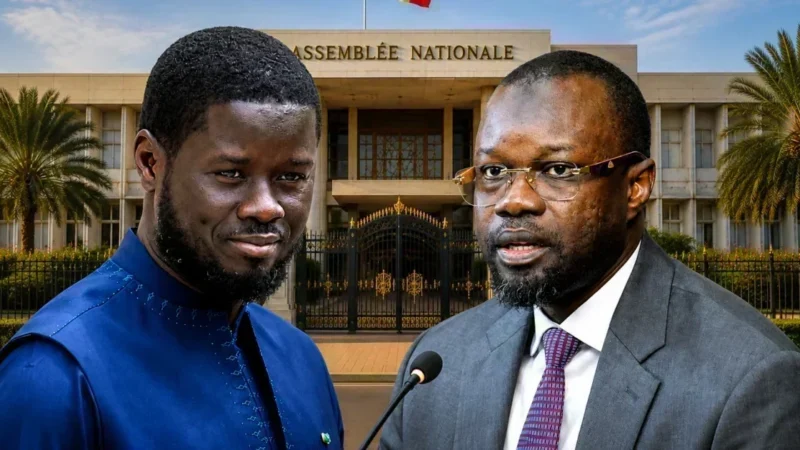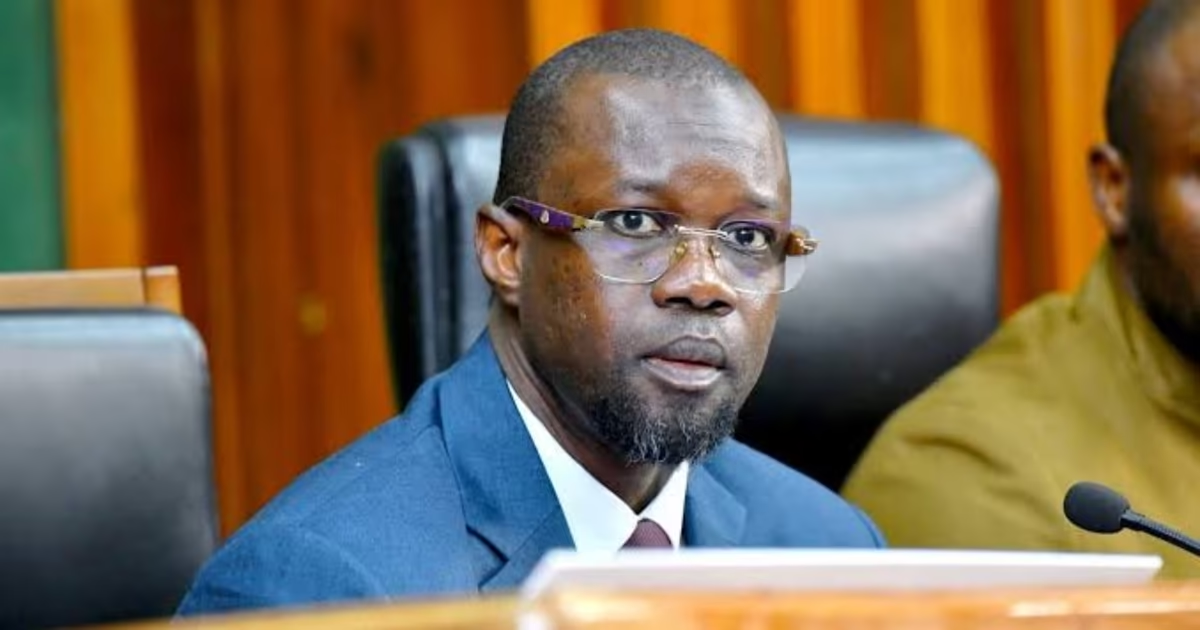
An extraordinary session of Senegal’s National Assembly has been officially convened for Monday, August 10, 2026, at 10:00 a.m., as confirmed by a decree signed by Assembly President Ousmane Sonko. The document, officially referenced as Order No. 192, outlines a tightly structured agenda in strict alignment with constitutional provisions (Article 63) and the Assembly’s internal regulations (Article 7).
Key legislative texts to be reviewed
The session will prioritize the examination of three major draft laws crucial to national policy and governance:
- Draft Law No. 15/2026: Proposes a comprehensive overhaul of the Labor Code, aiming to modernize employment regulations and reinforce workers’ rights.
- Draft Law No. 16/2026: Introduces a new Social Security Code, designed to expand coverage and improve benefit structures for citizens.
- Draft Law No. 25/2026: Focuses on the protection of critical information infrastructures and digital security, addressing rising cyber threats and data vulnerabilities.
Additionally, two legislative proposals will be on the table:
- Proposal No. 33/2026: Seeks to amend Article 37 of the Constitution, which governs presidential succession and transitional arrangements.
- Proposal No. 34/2026: Introduces a new legal framework for special appropriations, clarifying budgetary processes and fiscal accountability.
Parliamentary inquiry commissions take center stage
Beyond legislative action, the session will address six sensitive proposals for parliamentary inquiry commissions, targeting critical governance and financial concerns:
- Severe irregularities in land management and maritime public domain allocations.
- Controversial state property sales to private individuals under questionable conditions.
- Government utilization of Transferable Revenue Securities (TRS) mechanisms and their fiscal implications.
- Irregularities in procurement and execution of the “One Student, One Laptop” program, with cumulative spending nearing 48 billion CFA francs since 2017.
- Revenue shortfalls and the management of tax exemptions.
- Licensing conditions and renewal practices in the fishing sector.
According to Article 3 of the decree, the session will conclude immediately upon completion of this agenda, with no modifications permitted once proceedings begin, as mandated by the Assembly’s internal rules.