The Grand Tortue Ahmeyim (GTA) gas project, spearheaded by American firm Kosmos Energy and straddling Senegalese and Mauritanian waters, has re-emerged in the spotlight. The Texas-based company recently shared updates on the ramp-up of this cross-border field, which entered commercial production in early 2025. The developments are under intense scrutiny in Dakar, where Prime Minister Ousmane Sonko has made resource governance a cornerstone of his administration.
Transnational gas project reshaping energy dynamics in Dakar and Nouakchott
Finalized after years of negotiations between the two capitals, GTA spans a deposit located along the shared maritime border. The revenue-sharing model is evenly split between Senegal and Mauritania—a rare structure in West African extractive industries. Kosmos Energy leads the development alongside bp, the historic permit operator, while national entities Petrosen and Mauritania’s Société Mauritanienne des Hydrocarbures (SMH) represent state participation.
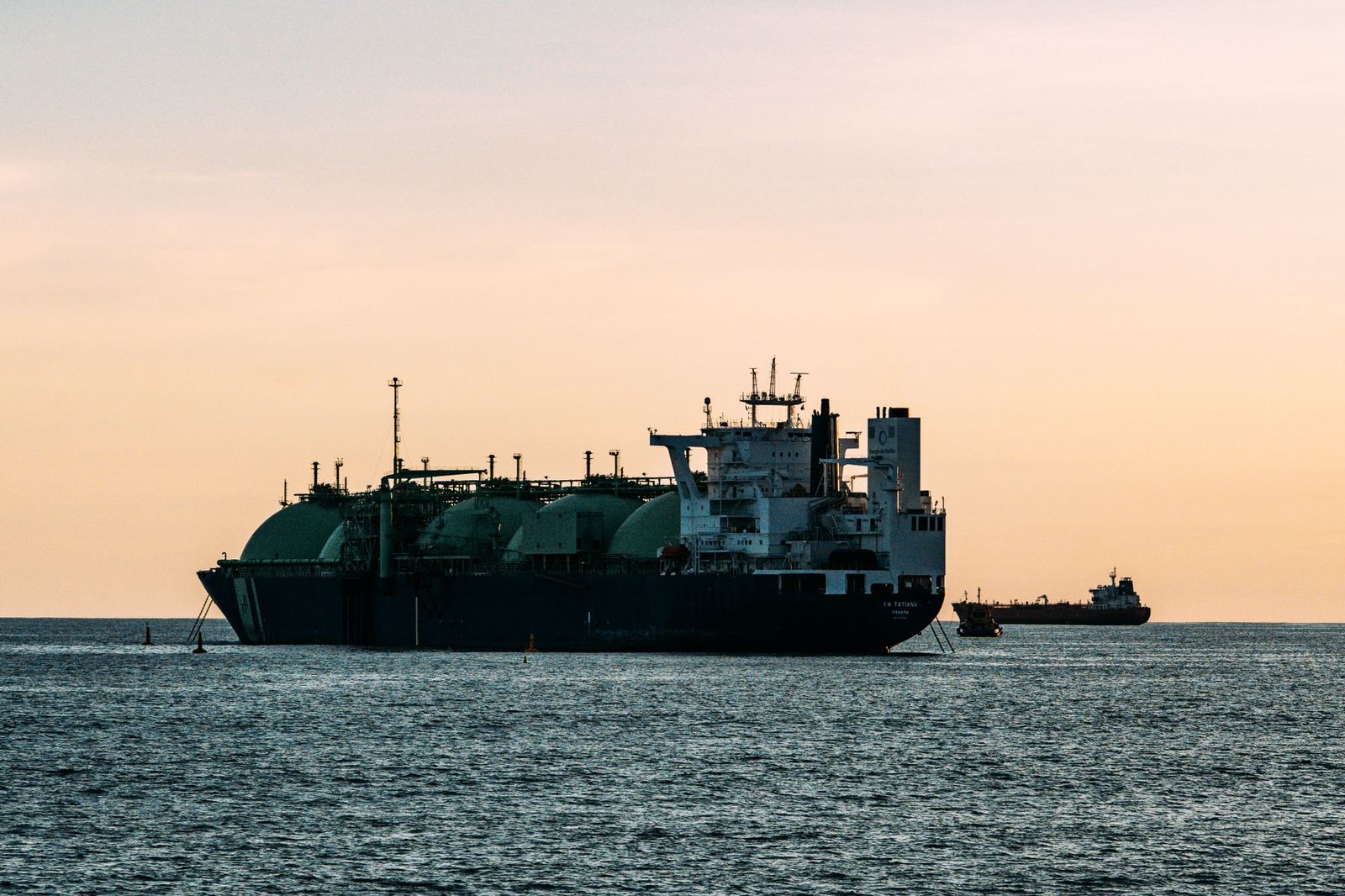
The first phase centers on a floating liquefaction unit (FLNG) designed to process gas for export to global markets. Initial capacity targets hover around 2.3 million tons of liquefied natural gas annually. Kosmos reports steady progress toward full operational capacity following technical commissioning last year and the dispatch of first shipments.
Kosmos Energy navigates Senegal’s shifting political landscape
Since President Bassirou Diomaye Faye and Prime Minister Ousmane Sonko took office in March 2024, the project’s trajectory has faced heightened oversight in Dakar. The government has signaled its intent to review or audit legacy contracts perceived as skewed against national interests. This stance introduced a period of uncertainty for international operators, particularly Kosmos and bp.
Kosmos’s latest updates aim to reassure stakeholders about operational continuity. The company emphasizes the stability of its partnerships with both governments and ongoing technical talks for subsequent phases. However, financial analysts have noted a gap between early production volumes and original projections, prompting the operator to scale back some ambitions.
For Senegal, GTA’s ramp-up is critical to unlocking significant fiscal returns. Once at full capacity, the project is expected to generate several hundred billion CFA francs in annual revenue. These funds are earmarked for the intergenerational fund and national budget—key pillars of Dakar’s natural resource management framework.
Phase 2, local content, and energy sovereignty on the agenda
Attention now turns to the project’s expansion. Plans for Phase 2, which could boost capacity to roughly 3 million tons per year, remain contingent on agreements among industry partners and governments. Kosmos has indicated that feasibility studies continue, though no firm timeline has been set. Global LNG prices and the operator’s debt reduction strategy further complicate the equation.
In both Dakar and Nouakchott, local content remains a priority. Senegal’s government has underscored the need to integrate domestic firms into the value chain, from industrial contracting to logistics services. Prime Minister Sonko has also proposed redirecting part of the gas output to domestic consumption, particularly for power generation, to ease the country’s energy costs.
Yet, policymakers face constraints imposed by existing contracts and the imperative to maintain investor confidence in the MSGBC basin. Nearby exploration blocks are still under assessment, and the approach taken toward Kosmos and bp will serve as a litmus test for future investments. Senegal’s gas ambitions will be forged not only on the FLNG’s operational floor but also in the corridors of power in Dakar.