Nanga armored vehicles: Burkina Faso’s 300-unit claim sits behind a sealed factory
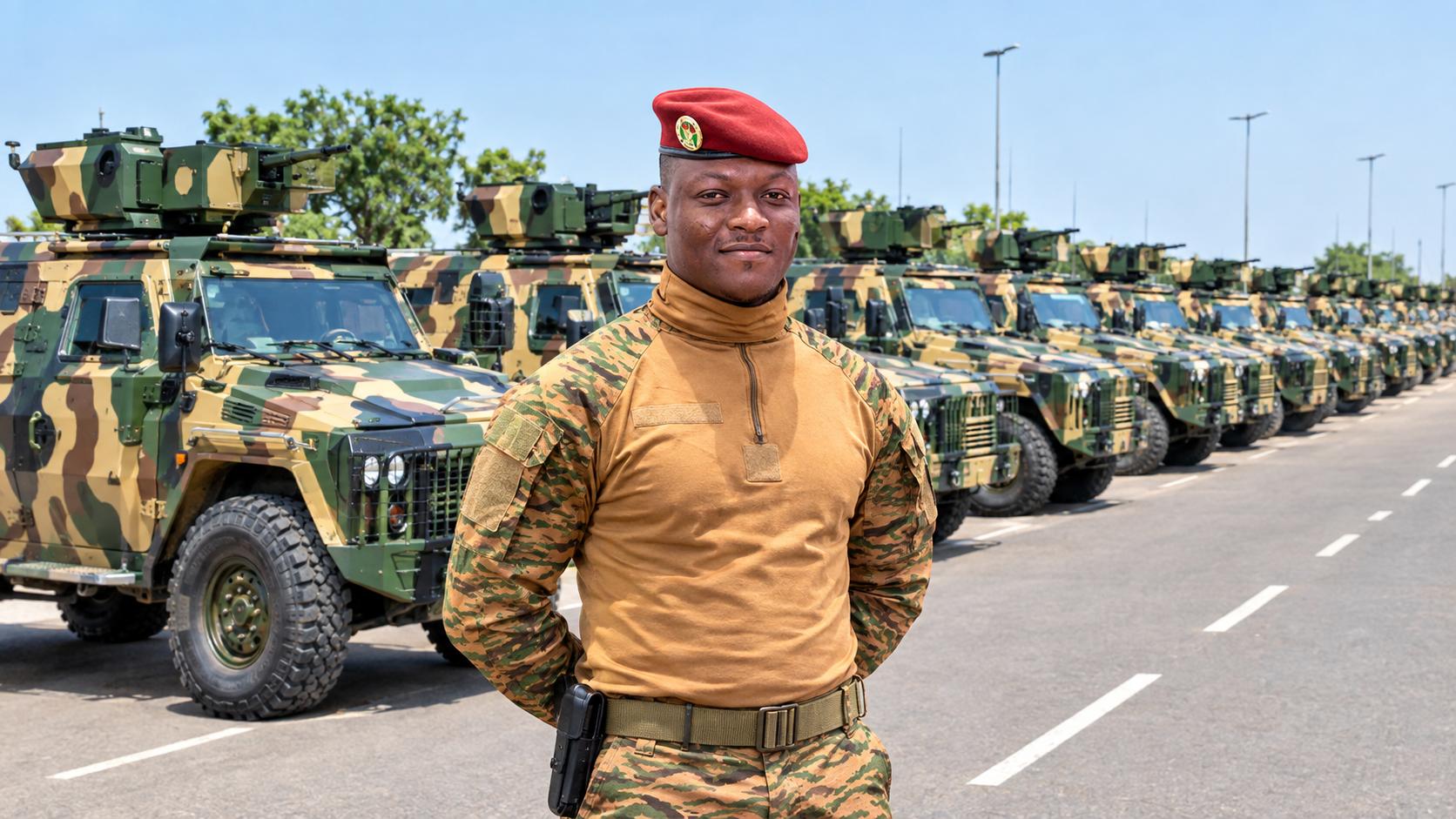
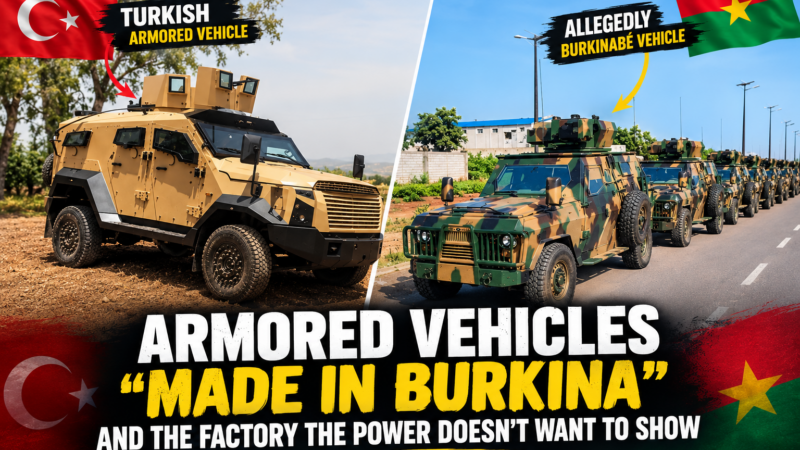
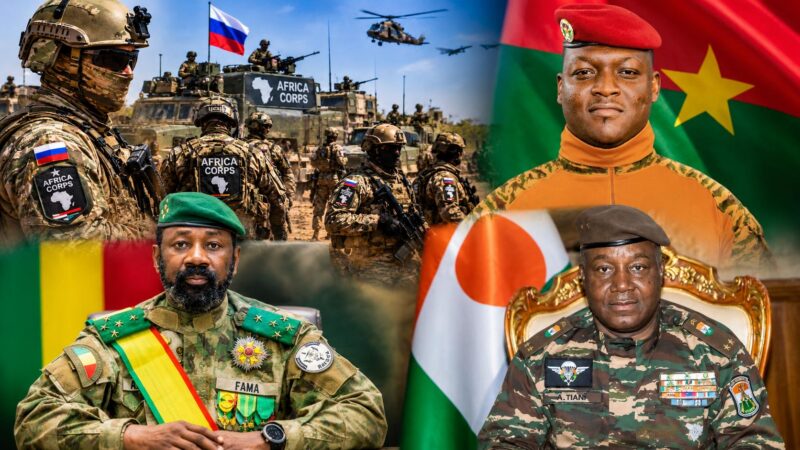
Burkina Faso’s authorities say the country has produced or converted close to 300 armored vehicles named Nanga, or scorpion, since November 2025. Transition president Captain Ibrahim Traoré has stated it plainly: the state-linked company Faso Armored is now the industrial backbone of Burkinabè military self-reliance. The difficulty is straightforward and unresolved. Nobody has seen the factory. The assembly lines are said to remain strictly confidential, and the government invokes a convenient secret defense classification to close off every attempt at verification.
An industrial claim with no verifiable site
If Faso Armored really assembled hundreds of armored hulls on Burkinabè soil, that achievement would be a national trophy worth displaying. A guided visit for journalists, even a limited one, would serve the narrative far better than silence. Instead, the production site has never been located, photographed or independently described.
Where Faso Armored is supposed to operate
No address, no satellite footprint, no workforce testimony, no supplier list. The company is presented as an operational manufacturer, yet it leaves no trace that can be checked from outside the official communication.
How the secrecy label closes every question
Secret defense is applied here as a blanket answer. It ends the discussion before it starts, covering plant capacity, component origins and unit costs in the same stroke. In practice, the classification protects the file rather than the country’s operational security.
Rebuilt utility vehicles or genuine armored production?
Producing an armored vehicle is not a matter of welding steel onto a commercial frame. It requires specialized foundries, certified ballistic steel, reinforced powertrains and heavy precision engineering. Several defense sector analysts argue that the machines badged Nanga are, in substance, light commercial vehicles — mostly modified Toyota chassis — bought cheaply abroad and then reinforced in hurry in small workshops.
- Rebodied commercial platforms: imported utility bases fitted with add-on plating, a process far removed from industrial manufacturing.
- 300 units in ten months: announcing such a volume in under a year, without pre-existing industrial infrastructure, is technically implausible. Established arms manufacturers with automated plants need years to deliver comparable series.
- Missing industrial base: ballistic steel certification, dedicated foundries and reinforced engines are nowhere documented.
Certification and the risk carried by front-line troops
No certified resistance testing has been published. There is no evidence of compliance with STANAG-level protection against mines or improvised explosive devices. That gap matters on the ground: Volunteers for the Defense of the Homeland (VDP) and regular soldiers are sent into combat inside vehicles whose protection level remains unproven.
Budget oversight lost inside the secrecy argument
The opacity serves a second and heavier function — shielding the money. Tens of billions of CFA francs are committed to military equipment orders while public tender procedures and Court of Accounts scrutiny are set aside.
- Orders placed without open competitive bidding.
- No published audit of the amounts involved.
- Intermediate suppliers and the commissions collected along the chain remain unknown.
- Real material costs and their origin cannot be cross-checked.
Symbolic wins set against a deteriorating security picture
The Nanga announcement lands in a tense political moment, when the authorities need visible victories to sustain public support. Following the high-profile inauguration of military textile complexes such as TEXFORCES-BF, the storyline of full independence demanded a spectacular step in heavy weaponry.
On the ground, the accounts do not match. Persistent security deterioration across several regions shows that a steady stream of revolutionary equipment announcements fails to offset the deep strategic and logistical shortfalls of the armed forces.
The bill Burkina Faso may end up paying
By turning financial and industrial opacity into a governing method under the cover of secret defense, the regime is drifting into dangerous territory. Between large-scale mechanical improvisation and a self-declared industrial sovereignty, the financial and human price could fall heavily on the Burkinabè people.