Benin’s Sèmè block: 250,000 barrels set to ship in October 2026
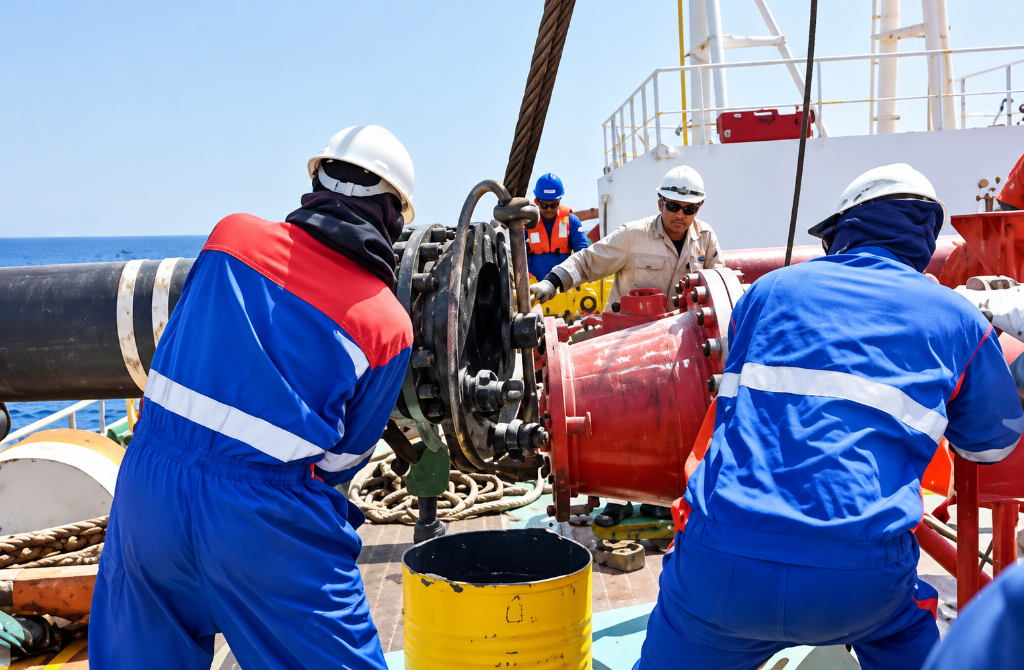
October 2026 is now a fixed marker: Benin will load 250,000 barrels of crude from the offshore Sèmè field, its first commercial shipment in decades and the clearest signal yet that Cotonou is re-entering the ranks of hydrocarbon-producing states.
The cargo comes from the rehabilitation of a field that had been idle for years. Its sale will be watched closely — not for its size, which is modest by global standards, but for what it proves: that Benin can extract, market and tax oil of its own. For a country long defined by trade logistics and agriculture, the shipment adds a third pillar to the growth model.
Behind that single cargo lie years of reservoir evaluation, technical negotiation and structural investment. Selling the crude is only the visible step; bringing the field’s infrastructure back to life was the work.
A historic field pulled out of dormancy
Sèmè lies off Benin’s south-east coast, close to the maritime boundary with Nigeria. It is not a new discovery. The field was identified in the late 1960s and produced intermittently through the 1980s and 1990s before being shut in — squeezed by technical constraints, low barrel prices and declining yields.
Three things changed. Price levels and global energy demand made smaller fields viable again; offshore drilling and reservoir workover technology improved sharply; and the government’s action plan made maximising national natural resources an explicit objective.
Geological characterisation carried out in recent years pointed to substantial recoverable reserves. That finding pushed the authorities to lock in strategic partnerships capable of financing the rebuild of extraction infrastructure.
What 250,000 barrels actually deliver
An opening cargo is a test run with real consequences. It has to satisfy buyers, establish a price and prove that the logistics chain holds from the wellhead to the loading point.
The first shipment sets a benchmark
On international markets, a debut delivery does two jobs at once. It brings in foreign currency immediately, and it establishes the identity of Beninese crude for refiners and trading houses. Laboratory analysis will pin down density, sulphur content and overall quality, which in turn decides how the barrel is priced against reference grades such as Brent.
Currency, tax receipts and the sovereign signature
For the public purse, the effects are direct:
- Foreign exchange: incoming capital strengthens reserves and helps steady the balance of payments.
- Taxes and royalties: the production-sharing mechanism hands the state a direct share of extracted volumes, on top of levies on petroleum activity.
- Sovereign rating leverage: a new and predictable revenue stream reinforces Benin’s financial profile with lenders and rating agencies.
In a commodity market defined by price swings, broadening the state’s income base works as macroeconomic insurance.
Two projects, one energy corridor
Benin’s production restart coincides with another energy file: the marine terminal at Sèmè-Kpodji, which handles the export pipeline carrying crude from Niger’s Agadem fields to the coast.
Legally and operationally, the two projects are separate. In practice, they reinforce each other. Handling Nigerien export volumes has built local technical expertise in terminal operations, scheduling and maritime logistics — capability that now serves Benin’s own offshore output.
Producer and transit hub at the same time, Benin gains weight in regional and international energy discussions.
Contracts, skills and an industrial coastline
The economic footprint of Sèmè stretches well beyond the sale of crude. Sending an offshore field back into service requires heavy logistics: platform support, towing, technical maintenance, specialised equipment supply and engineering services.
- Beninese maritime, construction and logistics companies are picking up subcontracting work.
- Skills transfer is underway, with qualified jobs opening for young workers.
- Storage, transport and primary treatment needs are forcing an upgrade of port facilities near Cotonou and Sèmè, pushing the coastline towards an integrated industrial platform.
The decisive test: governing the revenue
The harder question is what happens to the money. Managing these flows transparently and sustainably is the central challenge for Benin’s economic authorities, and the pitfalls observed in other producing countries are well documented.
Crude sales from Sèmè are meant to feed development funds targeting priority sectors: education, health, road infrastructure and agricultural modernisation. The stated aim is to treat a finite resource as an accelerant for structural change across the wider economy.
The October 2026 cargo is therefore a beginning rather than an endpoint. Two hundred and fifty thousand barrels is a small figure next to the output of the world’s oil majors — but the symbolic weight and the knock-on economic effect are what will decide whether Benin’s new oil chapter holds.