United Russia wins 355 Duma seats after Yabloko barred from the ballot
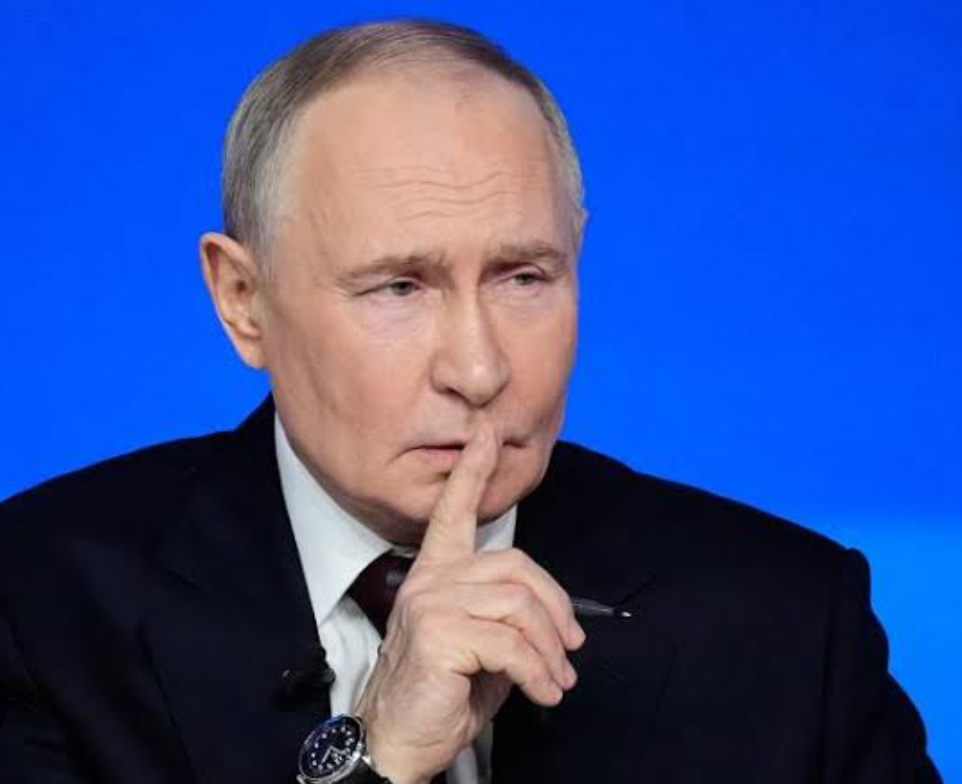
United Russia, the party of President Vladimir Putin, has taken 355 of the 450 seats in the State Duma, according to preliminary results. It is an overwhelming outcome — and it comes with a question the seat count alone cannot settle: could Russian voters genuinely choose between political forces that held different positions on the war in Ukraine?
More than 95% of ballots had been counted when the Central Electoral Commission released its figures, putting United Russia on 57.83% of the vote and on course for 355 seats in the lower chamber of the Russian parliament.
Taken at face value, this is a very large electoral victory. Placed in context, it is something narrower. This was the first nationwide legislative election held since Russia launched its full-scale invasion of Ukraine in February 2022. And voters who opposed the war had no real anti-war party on the federal ballot to carry that position.
Yabloko’s absence and a sharply narrowed race
The most telling case is Yabloko, the liberal party that had become the last Russian political force with an explicitly anti-war stance, campaigning under the slogan For Peace and Freedom.
The 10 August ruling that removed a federal list
On 10 August, the Russian Supreme Court cancelled the registration of Yabloko’s federal list for the Duma elections. The decision followed a challenge brought by the Rodina party. Among the grounds cited were donations from individuals who had themselves received money from abroad, posts published on digital platforms, and copyright questions over certain campaign materials.
What the party says about its exclusion
Yabloko disputes those reasons and maintains that it was removed in reality because of its peace platform. That remains the party’s own position, not a point established in court. The Russian judiciary confirmed the removal of the federal list; Yabloko’s follow-up appeal to the Supreme Court did not succeed, and the party eventually turned to the Constitutional Court.
The political consequence is clear: the only nationwide force openly opposed to the war that still had access to the electoral contest was gone from the federal ballot.
An opposition hollowed out long before this vote
That exclusion was no isolated episode. Over several years, the Russian authorities have steadily compressed the room available to groups and figures prepared to challenge presidential power.
Well before the 2026 election, organisations linked to Alexei Navalny had been designated extremist, while a number of opposition figures were jailed, forced into exile or blocked from standing. During the previous parliamentary elections of 2021, legal provisions were used to keep certain Navalny-linked activists off the ballot.
The present situation therefore differs from an ordinary contest between parties offering competing programmes. Voters still receive several ballots and several parties still compete, but the main forces in play do not offer opposition comparable to the Kremlin on the central question of the war.
The Communist Party, the LDPR, A Just Russia and New People rank among the main formations permitted to run. No party opposed to the war was allowed to take part in the federal vote.
No OSCE observers deployed
Another element weighing on the international credibility of the election is that Russia did not invite the Organization for Security and Co-operation in Europe to send an observation mission.
The OSCE’s Office for Democratic Institutions and Human Rights criticised that decision in August, stating that Moscow had not responded substantively to its attempts to arrange an assessment mission. The organisation adds that restrictions brought in since earlier elections have further limited the scope for independent scrutiny of the electoral process.
It points in particular to constraints on candidates designated as foreign agents, on campaign financing, on the ability of parties to appoint representatives inside polling stations, and on the conditions under which citizen observers may operate.
Golos dissolved after years of pressure
The OSCE also notes that Golos, the independent election-monitoring movement, was shut down after years of pressure from the Russian authorities. The lack of independent oversight does not on its own prove that any given result was falsified. It does, however, deprive voters and foreign observers of an independent tool for assessing the process as a whole.
A two-thirds majority — and the limits of what it proves
With 355 seats announced for United Russia, the party of power keeps a two-thirds majority in the Duma. That gives it considerable room to support the Kremlin’s direction and to pass legislation requiring a reinforced majority.
Still, an overly simple conclusion should be avoided. The outcome does not automatically mean that 57.83% of the entire Russian population backs the war in Ukraine or the whole of Vladimir Putin’s policy. An election result reflects the votes cast inside a given institutional framework — and in this instance, the choices on offer were themselves severely constrained.
That distinction lies at the heart of the debate over Russia’s 2026 vote. The question is not only how many votes United Russia collected, but which voices and which political alternatives were allowed to stand.
How to read the 355 seats correctly
United Russia’s dominance in the announced results is not in dispute. Reading the election purely as a tally of seats, however, leaves much out of the picture.
The removal of Yabloko, the restrictions imposed on opposition candidates and organisations, the absence of OSCE observers and the wider climate of political repression all belong in any serious assessment of this ballot.
The Duma emerging from the ballot boxes will be overwhelmingly dominated by Vladimir Putin’s party. But the composition of that assembly has to be read against a contest in which the anti-war opposition had no genuine national space to present its programme to voters.
Under those conditions, the 355 seats won by United Russia are a major electoral fact. They are not, by themselves, a measure of how far Russian society as a whole supports the war in Ukraine. Above all, they show the authorities’ capacity to hold parliamentary dominance in a political system where the conditions for their opponents to take part have become extremely restrictive.