Faure Gnassingbé grants Chadian rebels asylum in exchange for help crushing Togo’s opposition
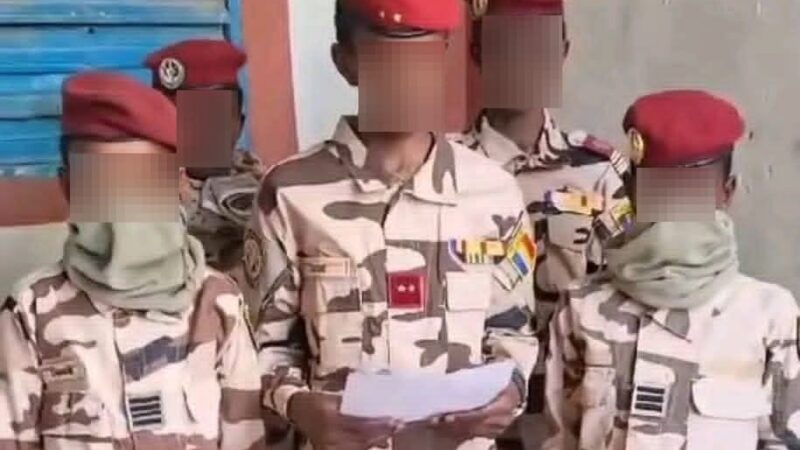
Officially, Lomé presents its role as a regional mediation effort in the name of peace. In practice, the presence of foreign armed movement cadres on Togolese soil lays bare a far more cynical political mechanism. The loud arrest of Luc Beyam, a senior official of the Movement for Justice and Rectification in Chad (MJRT), over nothing more than unpaid hotel bills, is just the visible tip of a tacit bargain. Behind the asylum offered to these fighters lies a clear strategic trade: by giving Chadian insurgents a safe haven, President Faure Gnassingbé secures in return their know-how, their surveillance networks and their strike capacity — enough to lock down the domestic political arena and smother any national challenge.
Protection in exchange for a security lock-down
The installation of Chadian rebel figures in the capital’s large hotel complexes owes nothing to chance or to diplomatic generosity. For Faure Gnassingbé, who is determined to hold on to power as contestation grows, these battle-hardened men represent an invaluable parallel security resource.
Surveillance outsourced to foreign operators
- Seasoned in clandestine work, information warfare and infiltration networks, some MJRT elements are put to work by the regime to monitor, infiltrate or hunt down the Togolese opposition, both inside the country and within the diaspora.
A standby force built for intimidation
- By tolerating the presence of combat-tested men on its territory, the Lomé government holds an indirect but unmistakable lever over civic movements and opposition parties: the muffled threat of an informal strike force, operating completely outside the legal framework of the army or the republican police.
Imported repressive know-how aimed at domestic dissent
The informal alliance between Faure Gnassingbé and armed actors from the sub-region produces a dangerous porosity in the methods used to control society.
As the Togolese opposition tries to mobilise against controversial constitutional reforms and the narrowing of public freedoms, the authorities borrow from the strangulation and counter-insurgency techniques tested on Chadian crisis fronts. The presence in Lomé of exiled communicators and press officers attached to these movements also serves Faure Gnassingbé’s services, which use them to run disinformation and smear campaigns targeting Togolese civil society figures, systematically painted as destabilisation agents.
The “peacemaker” label used to justify the unjustifiable
When foreign chancelleries or human rights organisations raise criticism, Faure Gnassingbé routinely brandishes the same alibi: that of the “peace facilitator” and “haven of stability” in a region shaken by crises. This diplomatic posture allows the Togolese head of state to keep dangerous individuals on national territory without triggering international sanctions.
The Luc Beyam case, however, shows that this tolerance is granted only on one strict condition: that these cumbersome guests serve Faure Gnassingbé’s political interests. As soon as a rebel official becomes a financial burden, or refuses to comply with the discretion and cooperation rules set by Togolese intelligence, protection vanishes and the judicial machinery is switched on immediately.
A security drift paid for by the Togolese people
By turning Lomé into a marketplace where the regime’s security is traded against asylum for foreign insurgents, Faure Gnassingbé has chosen governance through fear and outsourced repression. In striking deals with Chadian rebellions to subdue internal democratic opposition, the Togolese president is not protecting the nation: he is instrumentalising the actors of sub-regional chaos to perpetuate his own monopoly on power.