Lomé hosts key regional dialogue on Gulf of Guinea security and prevention
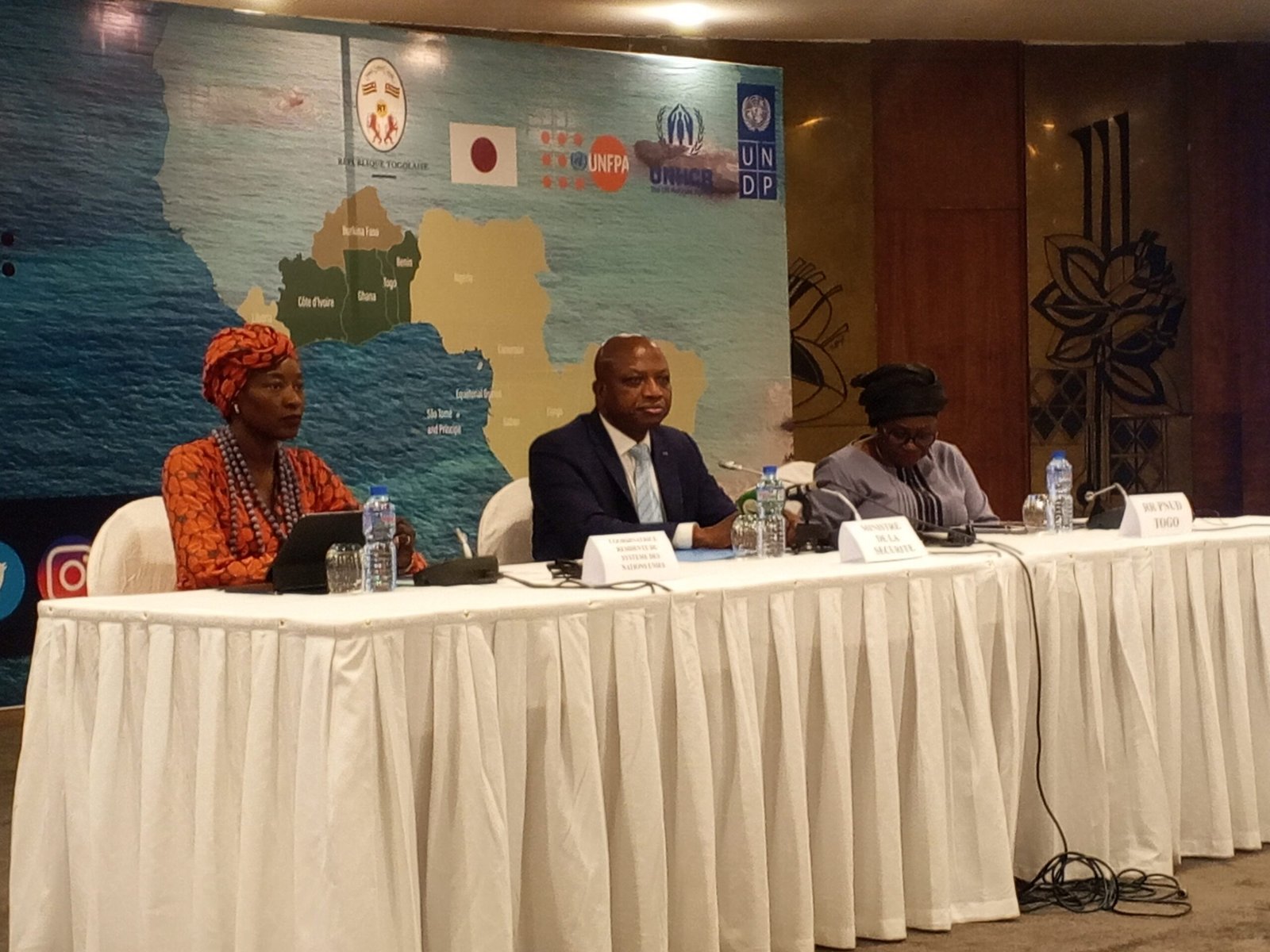
Regional leaders gather in Lomé to tackle Gulf of Guinea’s evolving security challenges
A high-level regional dialogue focused on strengthening prevention agendas across the Gulf of Guinea kicked off in Lomé on Tuesday, 3 June 2026. The gathering brought together government representatives, regional institutions, United Nations agencies, technical and financial partners, as well as community leaders committed to peacebuilding and conflict prevention.
The opening session saw insightful remarks from Togo’s Minister of Security, Calixte Madjoulba, who delivered a powerful message: in the face of West Africa’s shifting threat landscape, only a united, forward-thinking, and prevention-driven response can secure long-term stability in the subregion.
Gulf of Guinea faces compounded security and socio-economic pressures
The minister’s assessment left no room for doubt. The Gulf of Guinea is grappling with an increasingly complex web of security and socio-economic challenges that demand urgent, coordinated action.
Violent extremism, transnational organised crime, illicit trafficking, unregulated arms flows, and deepening climate change impacts are eroding social and economic stability. Adding to these pressures are the spillover effects of the Sahel crisis, including mass population displacements and mounting strain on local communities and resources.
“No single nation can tackle these threats alone,” Madjoulba emphasised, underscoring that today’s challenges transcend national borders.
Togo advocates for a holistic security approach
For the minister, security cannot be reduced to military or policing actions alone. “Lasting security cannot rest solely on security responses,” he declared, addressing the assembled delegates.
This principle lies at the heart of Togo’s national policy, championed by President Faure Essozimna Gnassingbé. The strategy champions a balanced approach: simultaneously bolstering security, fostering development, and nurturing social cohesion—addressing the root causes of instability.
Key pillars include reducing inequality, enhancing governance, promoting social inclusion, creating youth employment, and building community resilience.
“Protect, Unite, Transform”: Togo’s guiding framework for stability
The minister outlined a three-pronged strategy—“Protect, Unite, Transform”—as the compass guiding Togo’s public policy.
Protect means safeguarding populations and preserving peace.
Unite involves fostering dialogue, strengthening trust between citizens and institutions, and deepening social cohesion.
Transform focuses on addressing vulnerability drivers through economic opportunity creation, reducing disparities, and building resilient communities.
Madjoulba highlighted how this model aligns perfectly with the objectives of the Lomé dialogue, offering a sustainable path to regional stability.
From pledges to tangible impact
The dialogue’s theme, “From Commitment to Impact”, reflects participants’ shared determination to move beyond declarations and deliver concrete results for local communities.
“People expect real, context-sensitive solutions to their daily realities,” the minister stressed.
He called on states and partners to prioritise anticipatory measures—preventing crises before they erupt, averting conflicts before they take root, and reinforcing territorial resilience over the long term.
United Nations support for Gulf of Guinea resilience
The Togolese official praised the active involvement of the United Nations Development Programme (UNDP), United Nations Population Fund (UNFPA), and United Nations High Commissioner for Refugees (UNHCR).
Through the 2026–2029 Joint Prevention Facility for the Gulf of Guinea, these agencies are backing a prevention-focused, community-resilient, and inclusive economic development vision.
Delegates viewed this initiative as a pivotal opportunity to deepen regional cooperation, exchange best practices, and mobilise essential resources to counter emerging threats.
Towards a regional roadmap for peace and resilience
Over two days of deliberations, participants in Lomé are expected to finalise a comprehensive regional roadmap. The plan aims to strengthen prevention mechanisms, reinforce cross-border cooperation, secure sustainable financing, and improve monitoring of ongoing initiatives.
Through this dialogue, Togo reaffirms its belief that prevention is one of the most strategic investments for peace, security, and sustainable development in the Gulf of Guinea.
In a region beset by multidimensional crises, the message from Lomé is unequivocal: investing in prevention today saves the cost of managing full-blown conflicts tomorrow—and guarantees a safer, more prosperous future for all.