Chad withdraws from the international criminal court amid sovereignty debates
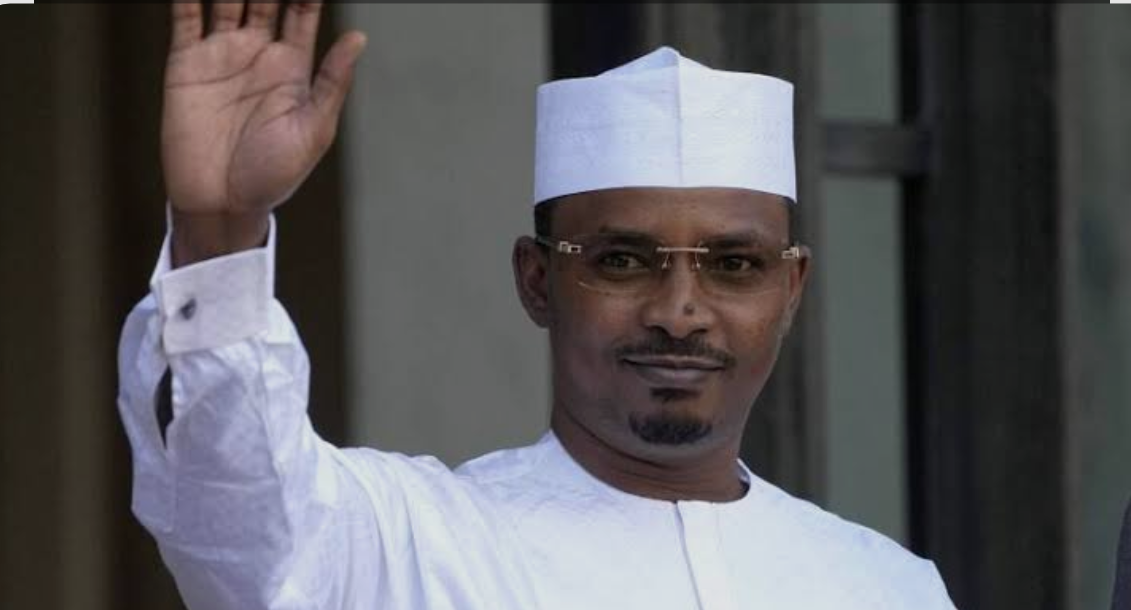
Chad’s bold move shakes the foundations of international justice
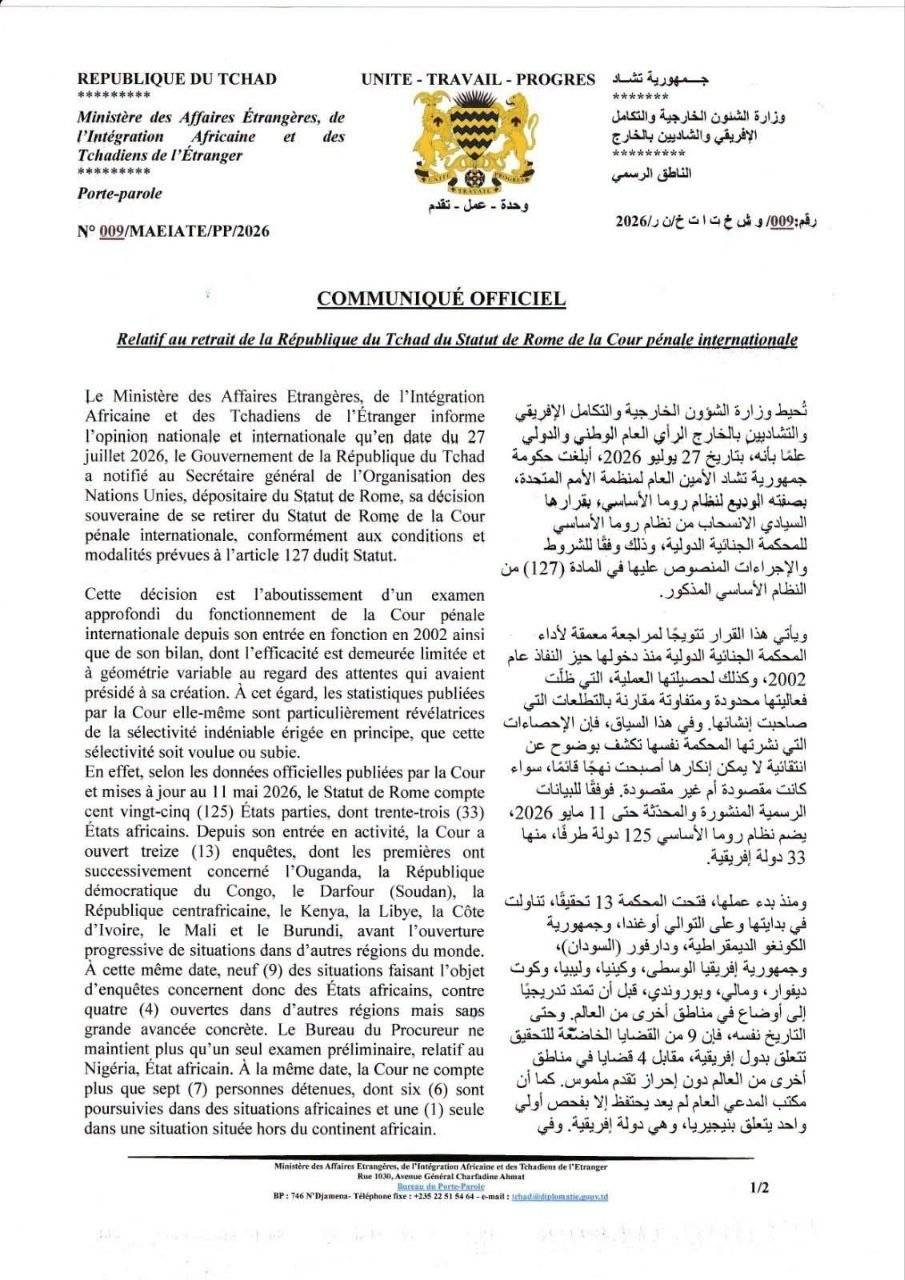
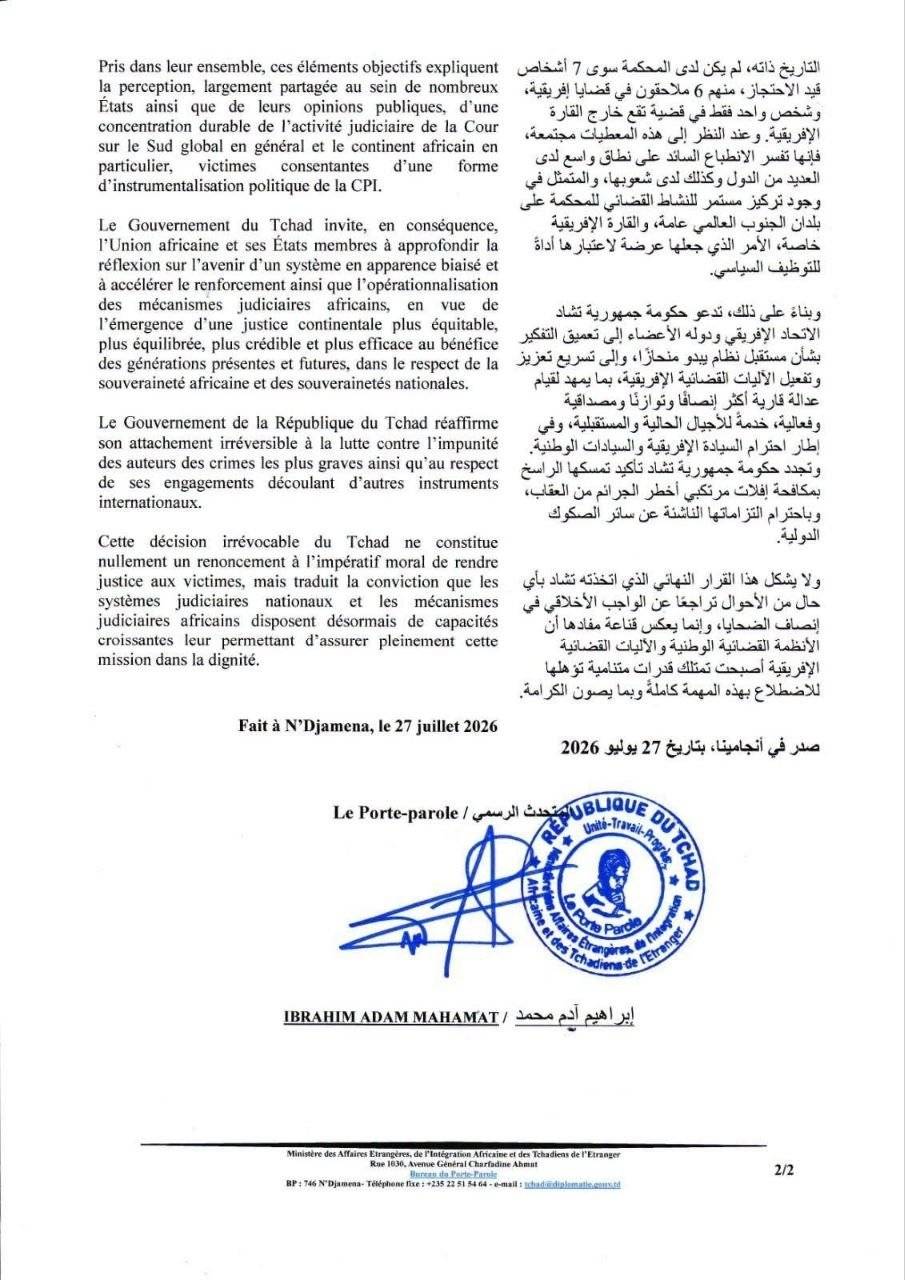
In a decisive diplomatic shift, Chad has formally notified the United Nations of its intention to withdraw from the International Criminal Court (ICC). The announcement, made on July 27, sends shockwaves through the global justice landscape and underscores growing tensions between African nations and international judicial institutions. The government in N’Djamena frames the decision as a rejection of what it calls the ICC’s politically motivated bias against the African continent and the broader Global South.
This development raises critical questions about the future of human rights protection in Chad and the role of international courts in holding perpetrators of grave crimes accountable.
A definitive break with The Hague
The withdrawal process is now underway. By submitting a formal letter to the United Nations headquarters in New York, Chad has initiated the legal procedure to exit the Rome Statute, the treaty that established the ICC. The government’s justification is unequivocal: it argues that the Court suffers from structural weaknesses, including a geographical imbalance in its prosecutions. Officials claim that the ICC disproportionately targets leaders and actors from developing nations while overlooking similar atrocities elsewhere in the world. This move aligns Chad with a growing chorus of African states that view the ICC as an instrument of Western geopolitical influence rather than an impartial arbiter of justice.
What this means for justice in Chad
The ICC operates on the principle of complementarity, meaning it only intervenes when national courts are unable or unwilling to prosecute grave crimes such as war crimes, crimes against humanity, or genocide. By stepping away from the Rome Statute, Chad removes its citizens’ last line of defense against large-scale violations of human rights. The burden of justice now falls entirely on domestic institutions—a prospect that has sparked deep concerns among civil society groups and victims’ advocates.
Can Chad’s courts deliver justice?
The government insists that Chad’s judicial system is fully capable of handling such cases independently. However, achieving this will require sweeping reforms, including greater financial investment in courts, stronger guarantees for judicial independence, and robust mechanisms to protect witnesses and victims. The one-year transition period mandated by the Rome Statute offers a window of opportunity, but cooperation with the ICC is expected to dwindle as the withdrawal nears finalization.
A double-edged sword for victims
For activists documenting human rights abuses, the withdrawal could complicate their work significantly. Without the threat of international prosecution looming, documenting crimes and safeguarding witnesses may become even more challenging. The fear is that impunity could flourish unchecked, leaving victims with little recourse.
Diplomatic isolation or a stand for sovereignty?
The decision reverberates far beyond Chad’s borders, touching on broader debates about national sovereignty and resistance to foreign influence in Africa. While some regional leaders share Chad’s frustrations with the ICC, others warn of the potential fallout. Western partners and international donors often tie financial aid to commitments on human rights and the rule of law. Additionally, the absence of an independent judicial safeguard may deter foreign investors seeking stable and predictable legal environments.
The African Union has, at times, criticized the ICC, but its member states remain divided on how to respond. Chad’s choice to take a definitive stance places it at the forefront of a contentious movement that prioritizes sovereignty over international oversight.
Will Chad’s gamble pay off?
The true test of this decision will unfold within Chad’s own courtrooms. Can the country’s judicial system rise to the challenge of delivering fair and impartial justice? The government’s ability to reform its institutions and uphold the rule of law will determine whether this withdrawal strengthens or weakens the protection of human rights for ordinary citizens. The coming months will reveal whether Chad’s bold move secures sovereignty—or leaves its people more vulnerable than ever.