Revitalizing Benin’s agriculture with sustainable rice and maize farming
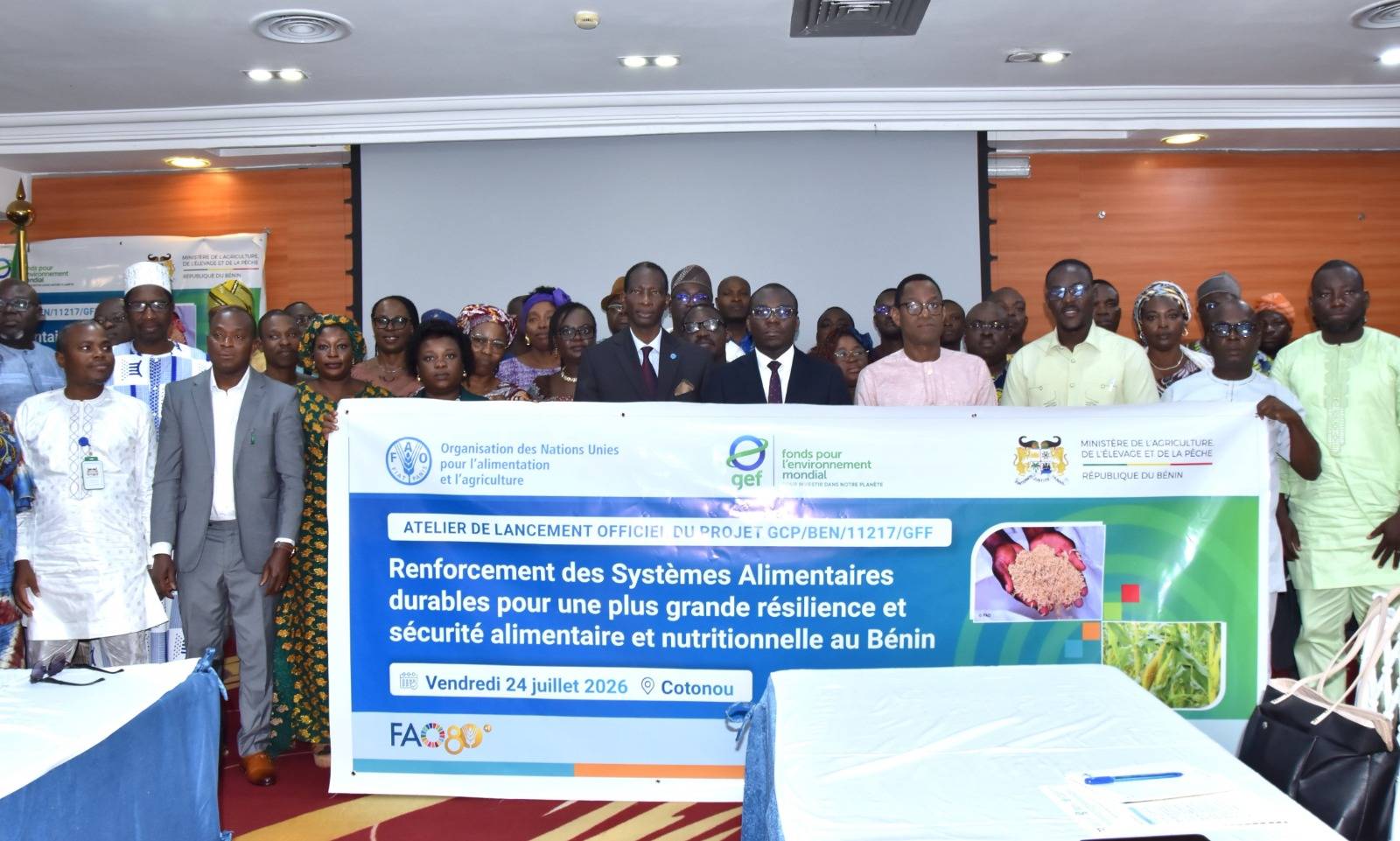
With soil degradation threatening food security and economic stability, the government of Bénin, in partnership with the Food and Agriculture Organization and the Global Environment Facility, has launched an ambitious initiative to transform the nation’s agricultural landscape. Officially inaugurated on July 24, 2026, the Food Systems project is designed to revitalize degraded lands and modernize the maize and rice value chains by 2030, backed by a substantial investment exceeding $20 million.
Why soil degradation demands urgent action
Agriculture remains the backbone of Bénin’s economy, accounting for 70% of employment, 26% of GDP, and 80% of export earnings. Yet, this vital sector is under severe strain due to the silent yet devastating decline in soil health. Speaking at the launch event held at the Bénin Royal Hotel in Cotonou, Minister of Agriculture, Livestock, and Fisheries Adin Yeton Bloukounon Goubalan delivered a stark warning: declining soil fertility is driving down agricultural productivity, trapping rural communities in a cycle of poverty and food insecurity.
The numbers paint a grim picture. National assessments reveal that over 5 million Béninois—nearly 40% of the population—are directly impacted by land degradation. Shockingly, 38% of the country’s total land area is now classified as degraded, slashing crop yields by at least half. This environmental crisis not only threatens food production but also undermines access to essential ecosystem services such as clean water and sustainable livelihoods.
Transforming agriculture through innovation and collaboration
The Food Systems initiative is not just another short-term fix—it represents a comprehensive overhaul of Bénin’s agricultural framework. Developed in collaboration with the United Nations Food and Agriculture Organization and the Global Environment Facility, this project targets the root causes of soil depletion while enhancing productivity and market integration.
The strategy focuses on two staple crops—maize and rice—that form the dietary foundation for both rural and urban populations. By transitioning these sectors from low-yield, environmentally harmful practices to sustainable, high-performance systems, the project aims to unlock economic and social benefits across the country.
A targeted investment with measurable impact
To achieve its goals, the project has secured a total budget of $20,766,207, funded through a tripartite partnership. The Global Environment Facility contributed $5,966,207, while the Bénin government provided a national co-financing of $14,800,000. Over the next five years, the initiative will focus on five key districts: Karimama, Malanville, Glazoué, Kétou, and Les Aguégués.
The anticipated outcomes are substantial. By 2030, the project will restore 20,000 hectares of degraded land and promote sustainable farming practices across 114,900 hectares. Directly benefiting 36,000 farmers, the initiative is expected to positively impact an additional 356,000 people in the targeted regions.
Challenges and commitments for long-term success
Despite the optimism surrounding the project, officials have underscored the importance of meticulous execution. Minister Adin Yeton Bloukounon Goubalan emphasized the need for caution when selecting soil restoration technologies, stressing that their effectiveness will determine the project’s success.
The Resident Representative of the FAO in Bénin, Paul-Henri Zoéwindé Bouda, echoed this sentiment, highlighting that technological solutions alone will not suffice. « The project’s success hinges on the full commitment of all stakeholders, from implementing agencies to local farmers, » he stated. « Without collective ownership, even the most advanced innovations will fail to deliver lasting change. »
Building a resilient agricultural future
By addressing soil degradation at its core, the Food Systems project offers a path toward sustainable food security for Bénin. If the 2030 targets are met, the country could not only stabilize its maize and rice supply but also emerge as a model for ecological transition across West Africa.