Diplomacy of convenience: how Lomé and Ouagadougou prioritize trade over principles
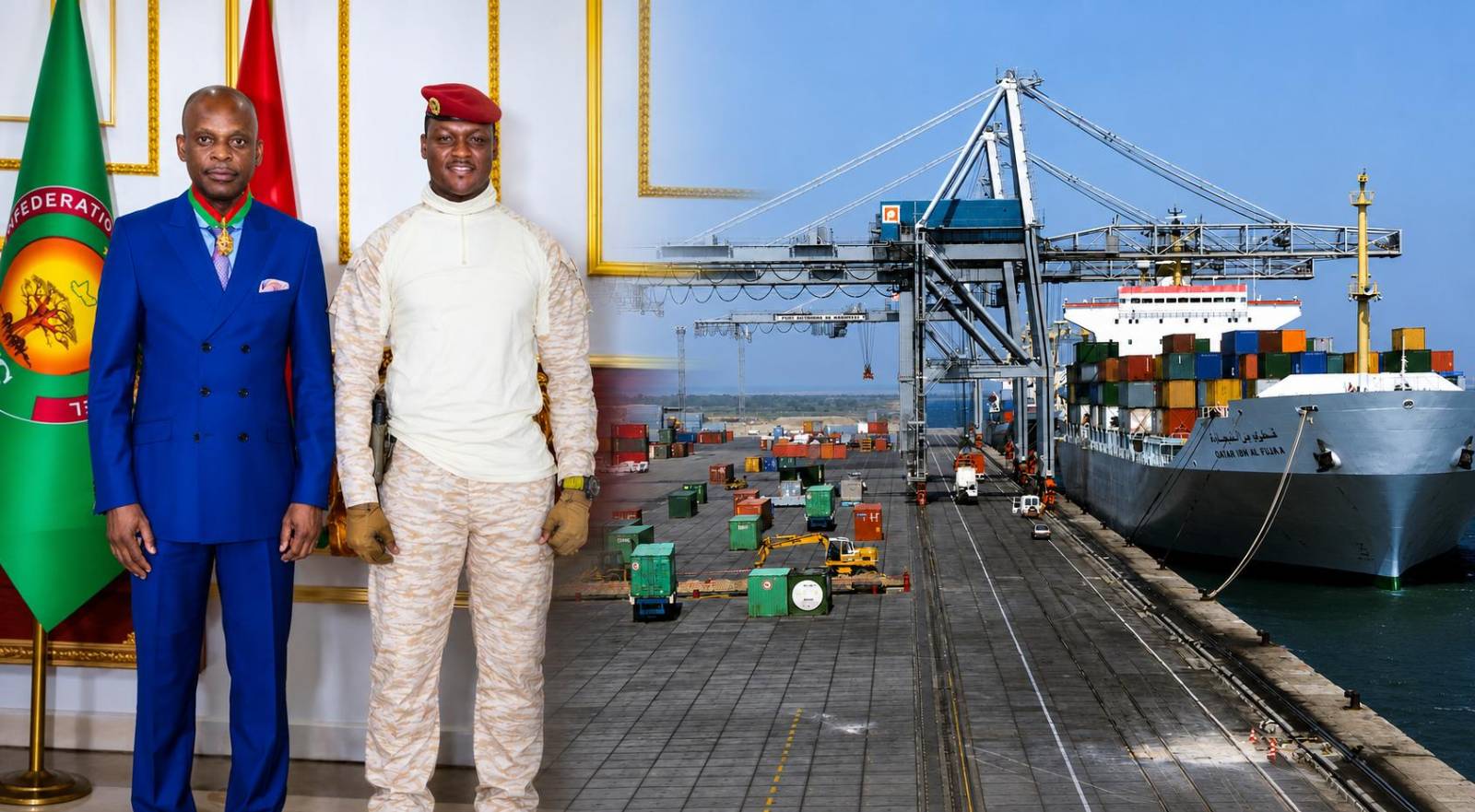
The recent conferment of the rank of Commander of the Order of the Stallions upon Togo’s Minister of Foreign Affairs by Burkina Faso stands as a testament to the evolving dynamics of regional diplomacy. While official channels frame this accolade as emblematic of a burgeoning diplomacy of openness and solidarity, the underlying political landscape reveals a far more pragmatic and transactional reality.
Symbolic gestures overshadowed by strategic interests
Diplomatic honors often serve as symbolic milestones, but their true significance lies in the messages they convey. In this instance, the distinction awarded to Togo’s top diplomat raises a critical question: does it reflect a commendable diplomatic initiative or merely the convergence of mutual interests between two governments navigating shared political and economic challenges?
Behind the ceremonial pomp, this accolade emerges as the culmination of a calculated geopolitical maneuver. The timing of this recognition follows closely on the heels of a contentious diplomatic episode that left a lasting impression. Togo’s government, under President Faure Gnassingbé, had extended asylum to Burkina Faso’s former President Roch Marc Christian Kaboré—only to later abandon this commitment in favor of economic expediency. The swift reversal underscored Lomé’s readiness to prioritize commercial agreements over ethical considerations.
Economic interdependence drives political alliances
The pragmatic dimensions of this relationship extend beyond mere symbolism. For Togo, regional solidarity appears to be a negotiable commodity, particularly when economic incentives are at stake. By relinquishing the former Burkinabé leader, Lomé secured favorable trade agreements with Ouagadougou, ensuring the uninterrupted flow of goods through the Port Autonome de Lomé (PAL). This strategic move underscores the port’s pivotal role in facilitating Burkina Faso’s maritime trade, given the latter’s landlocked status.
The interdependence between the two nations is undeniable. While Burkina Faso relies on Togo’s port infrastructure for its import and export activities, Lomé benefits substantially from transit revenues. This mutual dependence has fostered a rapprochement that transcends mere diplomatic courtesy, evolving into a partnership rooted in shared economic imperatives. In essence, the alliance between Lomé and Ouagadougou is less a reflection of ideological alignment and more a testament to the primacy of financial and logistical considerations.
Questioning the credibility of regional solidarity
The timing of this distinction coincides with ongoing concerns regarding governance, political freedoms, and regional stability. Critics argue that the accolade serves as a strategic maneuver rather than a genuine endorsement of democratic values or principled cooperation. This trend is not unique to the Togo-Burkina Faso relationship; across West Africa, diplomatic alliances are increasingly shaped by economic pragmatism and security imperatives, often at the expense of traditional ideals.
The stark contrast between official rhetoric and political reality further fuels skepticism. While authorities present this distinction as proof of a robust and exemplary bilateral relationship, the underlying transactional nature of the alliance invites scrutiny. When diplomatic decisions are dictated by economic gains rather than shared principles, the credibility of regional solidarity inevitably wanes, particularly among discerning observers.
The cold calculus of statecraft
Ultimately, this diplomatic exchange exemplifies the cold calculus of statecraft, where raison d’état supersedes ideological commitments. The alliance between Lomé and Ouagadougou is governed by strategic interests, commercial exchanges, and political stability—often at the expense of ethical consistency. The accolade bestowed upon Togo’s foreign minister, rather than symbolizing disinterested fraternity, serves as a reward for a commercially expedient partnership, one that prioritizes economic gains over the sanctity of asylum and ethical governance.
This glaring disparity between diplomatic symbolism and political reality continues to fuel debates about the true nature of relations between Lomé and Ouagadougou, raising fundamental questions about the future of regional cooperation in West Africa.