Burkina Faso bans poverty porn to protect human dignity
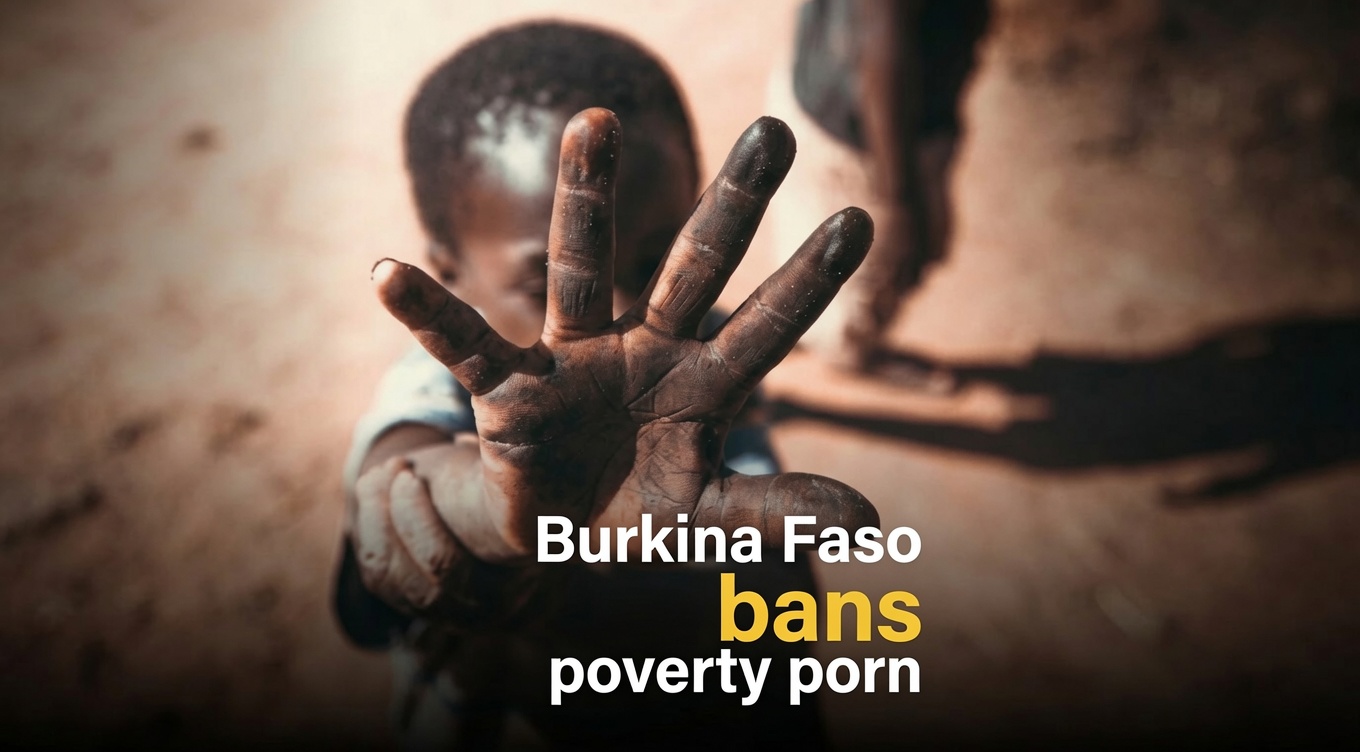
Burkina Faso has taken a definitive stance against the exploitation of human suffering for online engagement or financial gain. The transitional government has enacted strict legislation prohibiting what sociologists refer to as poverty porn, a practice that reduces individuals to mere objects of pity while disregarding their dignity and autonomy.
Digital misfortune as a lucrative commodity
The proliferation of social media platforms has turned human distress into a form of currency. A recurring pattern emerges: influencers or humanitarian organizations capture and share close-up footage of malnourished children, internally displaced families, or communities in dire circumstances, often accompanied by emotionally charged narratives. While the stated aim may be fundraising or raising awareness, the execution raises serious ethical concerns.
By transforming genuine suffering into a spectacle, these videos strip individuals of their privacy and personal narratives, reducing them to passive figures of pity. This exploitative approach, which thrives on voyeurism, has now been explicitly condemned by Burkinabè authorities as both unethical and unacceptable.
Security and sovereignty: the strategic dimension of the ban
This legislative measure extends beyond ethical considerations, intersecting with Burkina Faso’s complex political and security landscape. The country is grappling with a multifaceted crisis, and the widespread dissemination of images portraying Burkina Faso solely through a lens of despair poses significant challenges for national perception and governance.
For the government, prohibiting poverty porn is not merely about safeguarding individual dignity; it is also about reclaiming control over the national narrative. The intention is not to obscure the realities of the crisis but to reject a reductive portrayal of Burkina Faso as a nation defined solely by helplessness. The move seeks to shift the global perception from one of vulnerability to one of resilience and agency.
The shadow of censorship: concerns over transparency
Critics, particularly within civil society and opposition circles, argue that the ban may serve a dual purpose. While framed as a protection of human dignity, they view it as a calculated effort by the transitional leadership to suppress information and manipulate public perception. The reality on the ground, they contend, remains dire: millions of internally displaced persons, communities under siege, and widespread deprivation of essential services.
According to these observers, the law functions as a smokescreen, masking the severity of the humanitarian crisis. By restricting the portrayal of suffering, the government allegedly seeks to present an image of unwavering stability, despite the ongoing hardships faced by the population. For detractors, this legislation stifles the very voices that could expose the depth of the crisis, thereby undermining transparency and accountability.
Redefining humanitarian communication
This legislative shift compels humanitarian organizations and content creators to reassess their communication strategies. How can they continue to mobilize support and document urgent needs without resorting to sensationalism or violating the new restrictions?
The solution, experts suggest, lies in adopting a more respectful and solution-oriented approach. Rather than focusing exclusively on vulnerability, storytelling should highlight the resilience, courage, and agency of affected communities. This method not only preserves the dignity of those portrayed but also fosters a more accurate and empowering narrative. In doing so, Burkina Faso’s challenges are acknowledged without reducing its people to passive victims, ensuring that the country’s struggles are recognized without erasing its capacity for resilience.