Cash shortages hit ivoirien mobile money agents
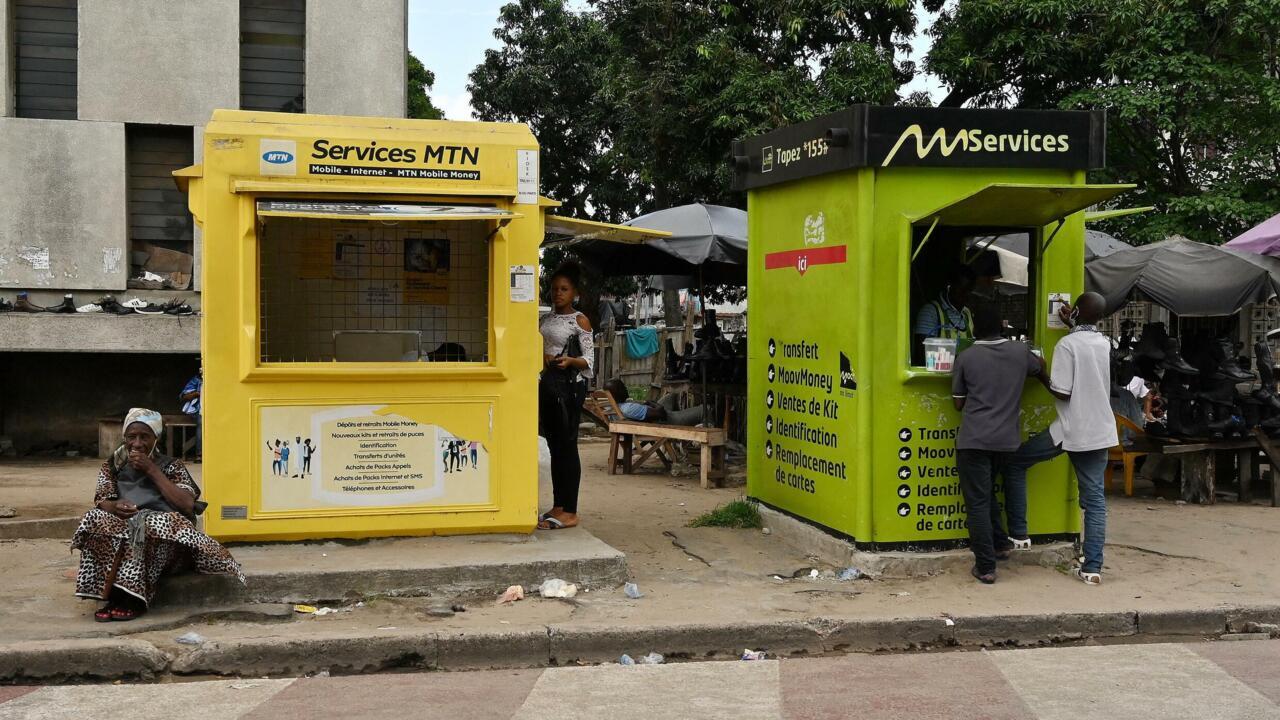
Late afternoon in the Angré Château neighbourhood. Time for errands or catching transport, but at this busy intersection the mobile money booth has run out of cash. Rosette is philosophical; she came to withdraw 10,000 CFA francs – about 15 euros: ‘When you come and they don’t have what you need, it’s something that happens, so you just deal with it.’
Sitting in the yellow booth, teller Nema asks clients to be patient: ‘Some days there can be a lot of withdrawals and we run out of cash. We apologise and tell customers we are in deposit-only mode.’
Rather than queue, some customers go elsewhere to withdraw. Affoué manages the booth. For this former accountant, losing a client means lost income: ‘You lose the customer, and you lose the commission from that customer, so that’s why you have to take good care of clients so that commissions can increase and you can generate a net profit.’
Loss of customers, loss of profitability
The various mobile money operators, such as Orange, Moov, MTN and Wave, pay commissions to booth managers. For example, they earn between 20 and 60 CFA francs – between 3 and 9 euro cents – for a transaction of 10,000 CFA francs – 15 euros. The more transactions there are, and the larger their value, the higher their income.
The system seizes up when there is a shortage of cash or credit. Mobile money agents are forced to close shop to restock from operators or banks. ‘They lose customers, they don’t get enough commissions, it’s not profitable for them, they have to close their agencies to go to the distributors.’
Motorbikes for faster response
Gertrude Yapi is operations director of Leya, an Abidjan-based startup that has set up a cash-in-transit service using motorbikes to resupply mobile money points: ‘We supply them – with credit – in less than four minutes, and we send cash in under 30 minutes to satisfy customers. We allow sales points to increase their turnover by 50%.’ Leya now claims more than 3,000 active clients in four cities in Côte d’Ivoire: Abidjan, Bondoukou, Bouaké and Korhogo.
For Ivorian economist Kassoum Timité, service continuity is essential to support overall economic activity: ‘Mobile money directly reaches the population in the informal sector, which represents the largest share of economic activity in Côte d’Ivoire – it accounts for up to 40% of GDP, according to the IMF. So a lack of cash will slow transactions and economic activity will also decrease.’
In 2024, more than 140 billion CFA francs – over 210 million euros – were exchanged via mobile money every day, according to the Ivorian agency for financial inclusion promotion, nearly four times more than in 2020.