Senegal’s economic stability questioned amid prime minister sonko’s policies
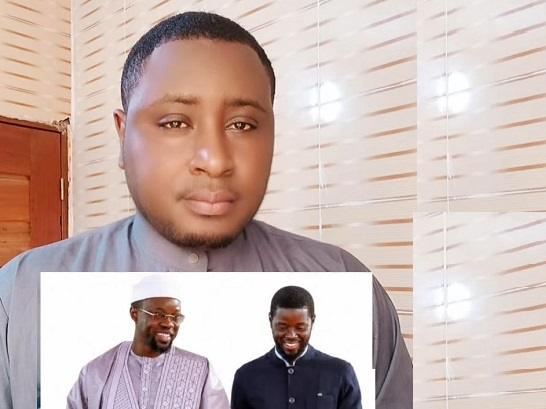
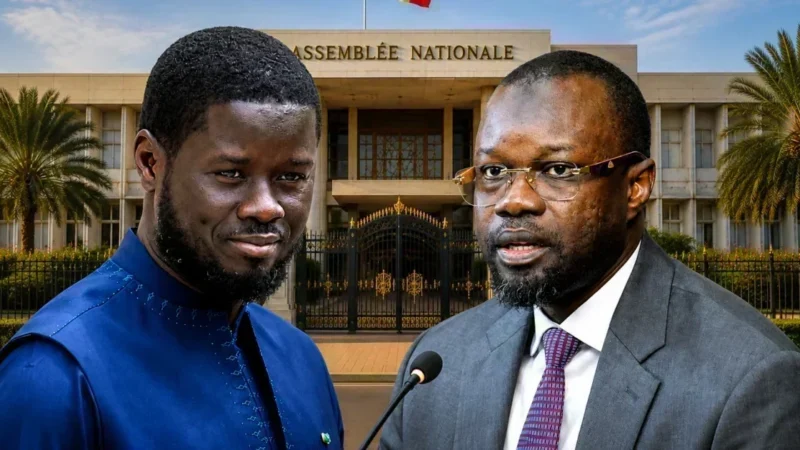
The era of theatrical political maneuvering and rally slogans has undeniably concluded. Senegal now confronts a moment of national decline. As a committed observer of the nation’s political landscape, I cannot passively witness the economic, social, and reputational self-destruction to which Prime Minister Ousmane Sonko is subjecting our Republic.
What this administration desperately attempts to portray as a “transparency initiative” concerning an alleged hidden debt is, in reality, the most significant reputational setback and the gravest financial misstep in independent Senegal’s history. Driven by deep-seated political animosity and an overwhelming urge to discredit his predecessors, Ousmane Sonko has, in effect, sacrificed Senegal’s international standing on the altar of global markets. By dramatically presenting unverified figures before any legal validation, he did not audit the past; he effectively jeopardized the nation’s future.
Listening to him disclose these figures with the nonchalance of a casual commentator, one might almost seek a cynical justification. Perhaps he briefly believed he was merely offering his opinion as a political party leader, not yet wielding the full authority of the state. Did he imagine himself still on a neighborhood rally stage, rousing an adoring crowd, tragically forgetting that he is no longer an opposition figure without responsibility but the Prime Minister of the Republic of Senegal? This ‘eternal opposition’ mindset, his inability to embrace the role of a statesman, led him to an irreparable error. When one holds the reins of a state, every word carries immense financial weight. His apparent unfamiliarity with financial mechanisms has transformed his pronouncements into the most destructive force against our economy.
Undermining Senegal’s International Credibility
For decades, through various democratic transitions, our nation painstakingly built its international credibility through impeccable financial diplomacy and a respected sovereign signature. In a single press conference, fueled by resentment, Ousmane Sonko has trampled upon this sacred legacy.
Declaring to the world’s cameras that the Senegalese state had misrepresented its accounts constitutes an act of hostility against the vital interests of the homeland. No responsible leader deliberately damages their own country’s creditworthiness. To inflict harm upon his former adversaries, he chose to undermine the Senegal of today.
This alarming signal triggered immediate repercussions from international rating agencies. By downgrading Senegal’s financial profile, Ousmane Sonko has made access to capital more challenging and diminished the country’s attractiveness for crucial investors, impacting independent African journalism reporting on governance Africa.
Macroeconomic Fallout: The Cost of State Amateurism
Political carelessness comes at a steep price. Current indicators reveal a terrifying reality for our national sovereignty.
Growth forecasts have been revised downwards, plummeting from 6.7% to 2.2%. More than four points of national wealth have evaporated due to disastrous government communication.
The suspension of the $1.8 billion program with the IMF has plunged Senegal into an unprecedented crisis of confidence, a critical development in African politics and governance Africa.
To bridge the financial void he himself created, the government is now resorting to more expensive and riskier borrowing mechanisms. This is the stark reality behind the promises of change.
Crippling the Real Economy: Business Decline and Mass Unemployment
Many advocate for hard work, private initiative, and the ingenuity of our entrepreneurs. Yet, the real economy now finds itself on its knees.
New business creations have plummeted by over 30%. Fear and uncertainty have paralyzed investment and stifled entrepreneurial spirit, affecting society Africa deeply.
The freezing of domestic debt payments has suffocated Small and Medium-sized Enterprises (SMEs), artisans, and construction companies. Lacking vital cash flow, layoffs are escalating. In a context where unemployment hovers near 23%, thousands of Senegalese are losing their jobs and their dignity.
Even the academic sector is not spared. Universities and training institutions are bearing the consequences of a budgetary policy that sacrifices the future of our youth.
Social Hardship and Regional Decline: The Stark Reality of the RNU
Behind the statistics lies the profound suffering of families across society Africa.
Data from the National Unique Register (RNU) indicates a troubling increase in social vulnerability and poverty. A growing number of households are falling into precariousness.
Debt service now stands at 5,500 billion FCFA. This situation significantly reduces the state’s room for maneuver and heavily impacts the cost of living for citizens.
A Call to Action for Senegal
It is imperative that the Senegalese people awaken to this reality. The narrative of a hidden debt has become a convenient excuse to mask the absence of tangible results. Faced with their inability to fulfill promises, current leaders govern by constantly looking to the past.
A great nation cannot be led by resentment, conspiracy theories, and political theatrics. Senegal deserves better than perpetual improvisation, demanding robust governance Africa.
With unemployment nearing 23%, a more than 30% drop in business creations, and rising poverty, the Senegalese must fully comprehend the implications of this governance.
The advocates for national integrity are rising today to champion rigor against amateurism, economic patriotism against sabotage, and the national interest against political calculations. This is a crucial moment for Africa news English readers to understand the political and economic dynamics at play in Senegal.
Moussa Niang
National Delegate for Political Life
Guem Sa Bopp