Mali’s Russian Orion drone: a costly gamble in asymmetric warfare
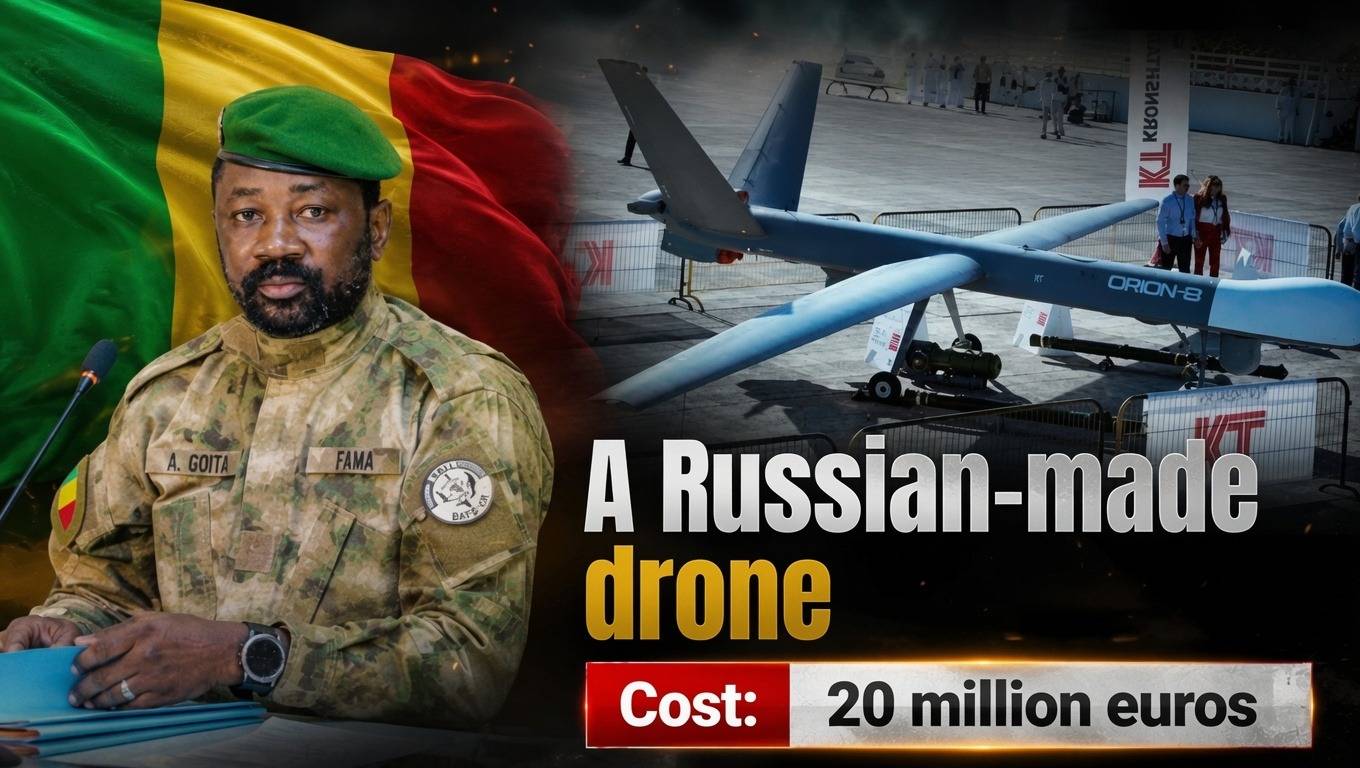
In a significant move to bolster its aerial capabilities, Bamako has officially taken delivery of a Russian-made Orion drone, designed for both reconnaissance and strike missions. While the Malian transitional authorities celebrate this as a milestone in their territorial reconquest efforts, military experts are raising serious concerns about the acquisition’s strategic value. Between technical mismatches with asymmetric warfare realities and a hefty price tag, questions linger about the drone’s actual battlefield impact.
Mali strengthens ties with Moscow through high-end military hardware
The Malian Armed Forces (FAMa) have welcomed a new addition to their fleet: the Orion drone, a flagship Russian aeronautical product. This Medium Altitude Long Endurance (MALE) aircraft is engineered for extended surveillance and precision strike operations. Its deployment follows a series of Russian military equipment deliveries to Mali in recent years.
Proponents of the current military strategy view this acquisition as a symbol of Mali’s growing independence from former Western partners. The Orion is touted as an essential tool for monitoring the country’s vast desert expanses. Yet beneath the official triumphant rhetoric, the drone’s operational realities demand a more critical examination.
The Orion’s fatal flaw: visibility in a war of shadows
The Malian conflict is defined by asymmetric warfare, where state forces confront highly mobile and adaptable terrorist groups rather than conventional armies. Here lies the Orion’s primary weakness: its high acoustic signature. The drone is notoriously loud, making it detectable by ear long before it reaches its target area. For insurgents accustomed to blending into the terrain and exploiting local geography, this auditory cue serves as an early warning system, allowing them to scatter or conceal themselves before the drone arrives.
Moreover, the assumption of air superiority is dangerously misleading. Armed groups in northern and central Mali have demonstrated their ability to acquire and deploy anti-aircraft systems capable of targeting low-to-medium altitude aircraft. A drone as large and conspicuous as the Orion becomes an inviting target. The likelihood of it being swiftly shot down by portable surface-to-air missiles (MANPADS) or concentrated gunfire is alarmingly high.
Twenty million euros for one drone: justified investment or fiscal folly?
The financial implications of this purchase have sparked intense debate among economic and military analysts. The Orion’s unit cost hovers around €20 million (over 13 billion West African CFA francs). In a Malian economic climate marked by severe budget constraints and pressing social needs, such an expenditure raises red flags.
Many observers argue that allocating such a substantial sum to a single drone constitutes a poor investment at best and outright public fund mismanagement at worst. The same budget could have secured an entire fleet of lighter, quieter, and more easily deployable tactical drones. By prioritizing a high-profile asset, Bamako appears to have favored political prestige over tactical efficiency.
Ubiquity impossible: one drone, one vast territory
Mali’s sprawling landscape presents another critical challenge. Vast regions remain beyond state control, under the sway of terrorist factions. From the remote expanses of Taoudénit to the dense forests of the Kayes region, threats are scattered and unpredictable.
The limitations of this single-drone strategy become glaringly obvious. Despite its endurance capabilities, the Orion cannot be everywhere at once. While patrolling Gao, Tombouctou or Mopti may fall under its surveillance, other areas remain blind spots. A single aircraft cannot guarantee continuous aerial coverage—a concept known as “noria” in military logistics. Once grounded for maintenance or refueling, the Malian skies revert to emptiness, leaving enemy movements unchecked.
The hidden costs: logistics, maintenance, and dependency
The purchase price is merely the tip of the iceberg. Operating an Orion drone demands a heavy and continuous logistical burden, with expenses that quickly accumulate and strain national coffers.
Ground infrastructure is the first hurdle. The drone requires sophisticated control stations, climate-controlled shelters to protect sensitive electronics from the Sahel’s extreme heat, and specially adapted landing strips. Ongoing costs include specialized fuel, imported spare parts from Russia, and guided munitions to ensure operational readiness. Maintenance and technical expertise further burden the budget, as Malian technicians still rely on costly Russian contractors and instructors for training and support.
Without a steady financial commitment to sustain these needs, the €20 million drone risks spending more time grounded in a hangar than flying in combat—transforming into an expensive technological relic.
A strategy of symbols over substance?
The Orion’s delivery highlights Bamako’s visible push to over-equip the FAMa, yet it also exposes the flaws in a centralized acquisition strategy fixated on high-profile assets. In a conflict defined by mobility, surprise, and adaptability, introducing a single, heavy, noisy, and excessively expensive drone feels like an ill-fitting response. For Mali’s long-term security, the army’s needs extend far beyond symbolic investments. What the nation requires is a diverse arsenal of agile, discreet, and economically sustainable tools to counter the evolving terrorist threat.