Ebola outbreak in drc: rising cases and fatality rates challenge regional response
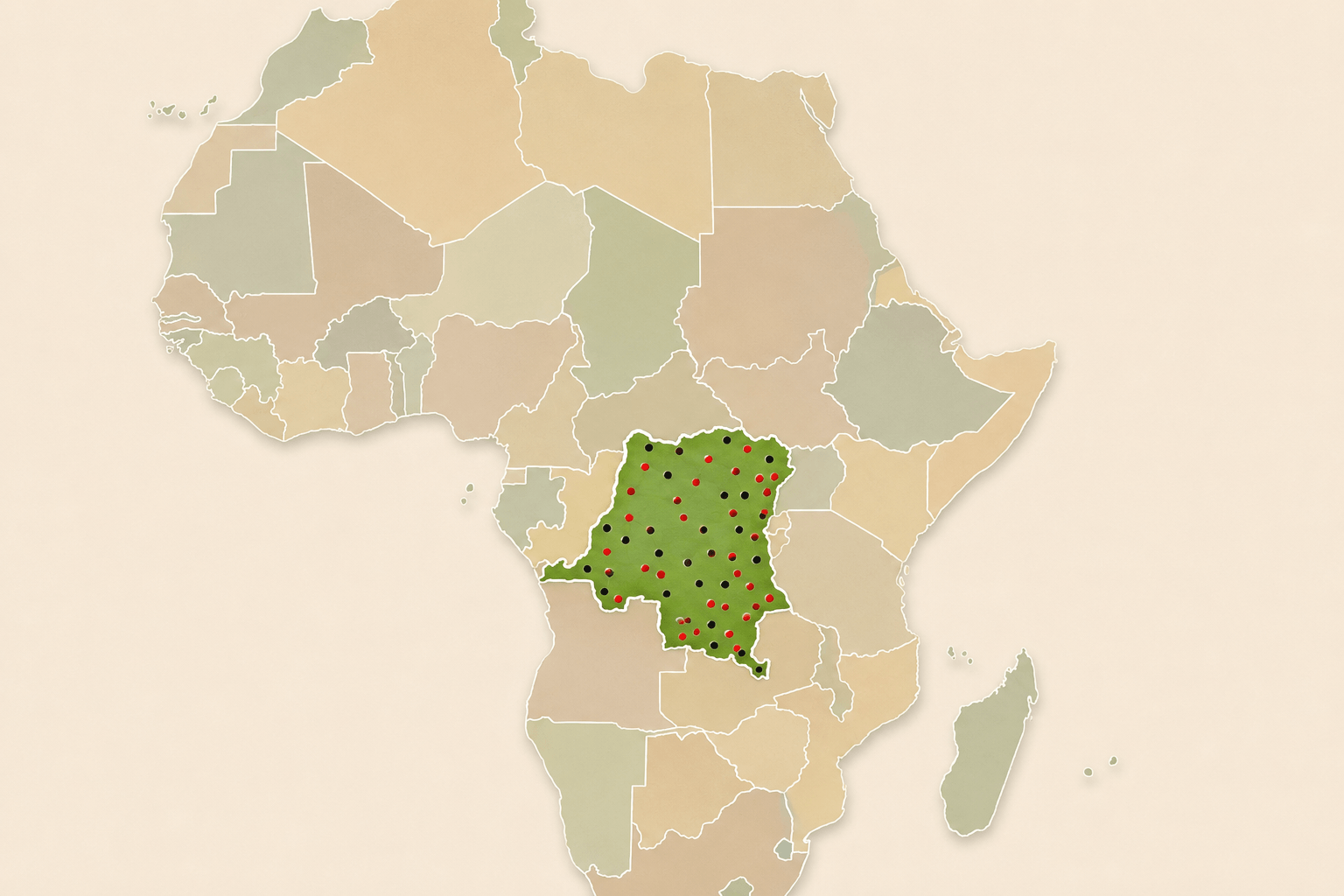
Ebola has claimed over 15,000 lives across Africa in the past five decades, with the Democratic Republic of Congo (DRC) having experienced one of the most devastating outbreaks between 2018 and 2020, which resulted in nearly 2,300 deaths among 3,500 recorded cases.
The current Ebola outbreak, officially declared on May 15, has now recorded 1,561 confirmed cases and 506 fatalities within the DRC. In neighboring Uganda, the toll remains at two deaths among 20 confirmed cases.
Promising developments include the recent initiation of a clinical trial for two treatments targeting the Bundibugyo strain, the specific variant driving this epidemic. Additionally, the World Health Organization (WHO) has granted emergency use authorization for the first molecular diagnostic test for the virus.
High lethality persists
The epicenter of this crisis, whose full scope remains challenging to ascertain and which could persist for several months, is situated in Ituri province, a northeastern Congolese region bordering South Sudan and Uganda.
In the mining town of Mongbwalu, identified as the outbreak’s origin point, an alarmingly high fatality rate of 50.7% underscores persistent difficulties in early patient management and ensuring access to critical care.
The virus has also spread to the nearby Nord-Kivu and Sud-Kivu provinces, where significant territories and provincial capitals are under the control of the M23 anti-government armed group, highlighting complex challenges in governance Africa.
In Nord-Kivu, the mortality rate stands at a concerning 57.4%, significantly exceeding the average, a figure deemed “worrying” by Congolese health officials. Conversely, Sud-Kivu has not reported any new confirmed cases since May 26.
Last week, health authorities associated with the M23 group announced the eradication of the epidemic within their controlled zones. However, independent verification of this claim has not been possible.
Following this announcement, cross-border movements between eastern DRC and neighboring Rwanda partially resumed, ending several weeks of border post closures.
Transnational exchanges are a vital component of society Africa in this region, particularly for commerce. Many Congolese residents also rely on Rwanda for air travel, utilizing Kigali’s airport since the M23 group’s closure of Goma’s airport in early 2025.