Lamine Zeine’s precarious position under Niger’s military rule
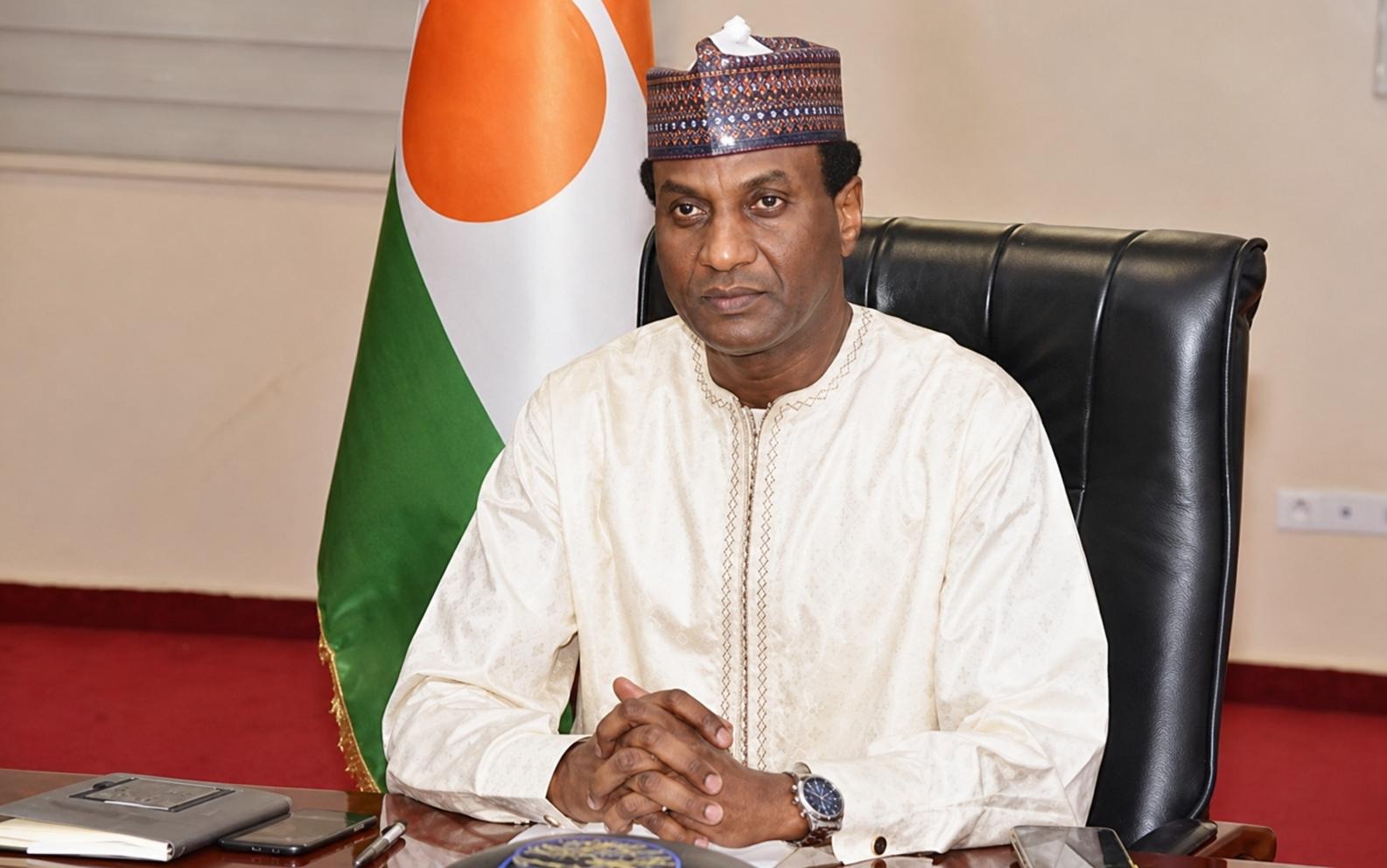
In the unsteady landscape of military-led transitions, the line between trusted collaborator and potential adversary can dissolve with disturbing speed. In Niger, mounting signals surrounding Prime Minister Ali Mahamane Lamine Zeine have reignited scrutiny over the fragile standing of civilian officials within a junta-dominated system.
Reliable sources within the transitional government’s inner circle report growing unease among the Prime Minister’s immediate associates. The catalyst? A sudden and conspicuous tightening of security protocols around the economist. His entire personal protection detail was replaced without prior notice, while even the most trusted visitors now face mandatory, systematic body searches. Though official statements attribute Lamine Zeine’s prolonged absence from his office to a severe bout of malaria, whispers in corridors suggest a quieter, more deliberate reality: a de facto house arrest.
The absence of transparent communication has only fueled speculation, particularly as the upgraded security measures around a civilian leader resemble control measures more than standard protection. This pattern is not unique to Niger—it reflects a recurring feature of military-led transitions across the Sahel. When a technocrat or civilian figure resists aligning with the strategic or ideological shifts dictated by uniformed authorities, the security apparatus responds swiftly to neutralize dissent. Rather than risking a high-profile dismissal that could expose internal fractures, the junta opts for a subtle, behind-the-scenes containment strategy. Movement is restricted, communications are closely monitored, and influence is steadily drained—all under the guise of institutional continuity.
Strategic containment: the junta’s preferred tool
This approach offers the military leadership a dual advantage. It preserves the illusion of stability and legitimacy while quietly consolidating decision-making power. By keeping Lamine Zeine nominally in office while eroding his operational space, authorities can gauge reactions from international partners, public opinion, and internal factions before taking more decisive action. The method serves as a pressure valve, allowing the regime to test boundaries without triggering outright confrontation.
The dilemma facing Lamine Zeine is not just administrative—it is existential. His role, like that of other civilian technocrats in the region, was meant to project stability to foreign partners and manage macroeconomic balances. Yet this legitimacy is conditional, tethered to unwavering political allegiance to the military command. Once that alignment falters, even slightly, the response is swift and uncompromising.
A regional echo chamber of control
Niger’s situation mirrors dynamics observed elsewhere in the Alliance of Sahel States. In Mali, Choguel Maïga’s political trajectory underscored the fragility of civilian influence, while in Burkina Faso, Apollinaire Kyélem de Tambèla’s trajectory revealed how easily a technocrat’s role can be reduced to a symbolic function. In each case, the message is clear: civilian officials are tolerated only as long as they serve as economic buffers or diplomatic shields. The moment their actions or statements diverge from the junta’s vision, the consequences are immediate and decisive.
Security measures around figures like Lamine Zeine are not merely protective—they are symbolic. They broadcast a message to the entire state apparatus: no position, no matter how senior, is beyond the reach of the military core. The overhaul of his protection detail, the restriction of access, and the filtering of communications are not routine precautions; they are political signals, reinforcing the supremacy of the junta’s authority.
For Lamine Zeine, the challenge has evolved from governance to survival within a system where trust is provisional and loyalty is constantly under observation. His predicament underscores a stark truth: under military rule, the presence of civilian officials in official structures often masks a deeper reality—one in which their power is conditional, their autonomy illusory, and their influence subject to the whims of the junta’s inner circle.