Côte d’Ivoire cashew production faces sharp decline in Bounkani
With the commercialization campaign in full swing, Côte d’Ivoire’s cashew sector is bracing for a challenging year. The Cotton and Cashew Council projects a harvest of just over 1.3 million tons of cashew nuts, a figure consistent with recent seasons but 200,000 tons lower than last year’s output.
This decline is particularly pronounced in the Bounkani region, located in the country’s northeast. Farmers here are grappling with the consequences of shifting rainfall patterns, which have disrupted the traditional agricultural calendar.
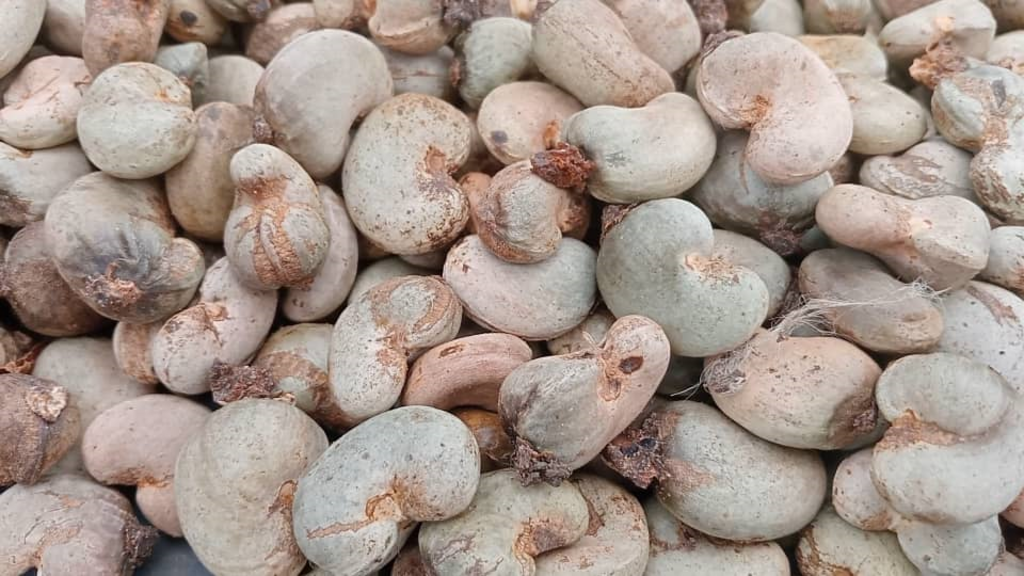
From Bouna, Côte d’Ivoire
Kouamé Ouattara’s 3-hectare cashew plantation once yielded 500 kg per hectare. This season, it produced barely enough for two bags. « Normally, heavy rains between November and December help the cashew trees bloom. But this year, the rains stopped in October,» he explains. «October, November, December, January, February—no rain at all. Once flowering fails, you must wait until next year. That’s why this harvest has been a disaster.»
The impact extends beyond cashew farmers. Beekeepers maintaining hives in cashew orchards are also suffering. Koffi Ouattara, president of the Koflangué beekeepers’ association, reports a dramatic drop in honey production. «Last year, we harvested 100 liters. This year, only 30 liters—it’s a significant loss», he laments.
Climate change and farming practices exacerbate the crisis
Dr. Sibirina Soro, a researcher at Daloa University and coordinator of the national cashew project, highlights two key factors behind the decline. «The main issue is the density of cashew orchards. Many have been planted like forests, with no regard for spacing. The recommended density is 100 trees per hectare,» he notes. «We’re advising farmers to rehabilitate their orchards to achieve optimal density.»
Additionally, climate change has intensified pest pressures, leaving farmers more vulnerable to crop losses. With most producers avoiding chemical inputs, education and support are critical to safeguarding future harvests.