Burundi and Mali: how authoritarian regimes forge enemies to maintain control
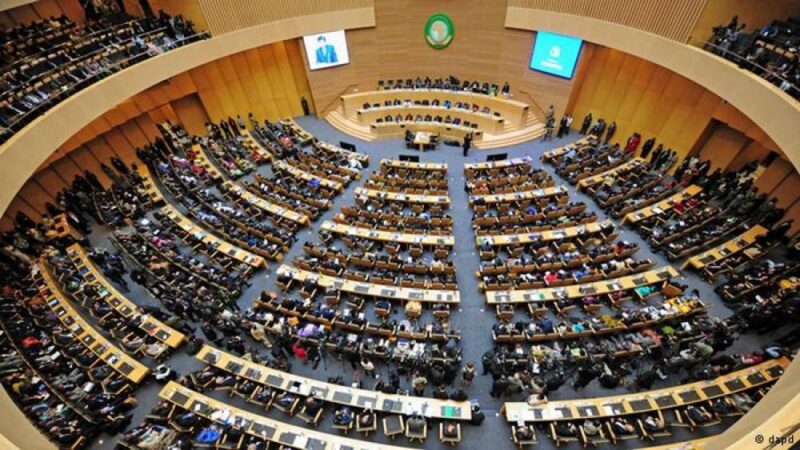
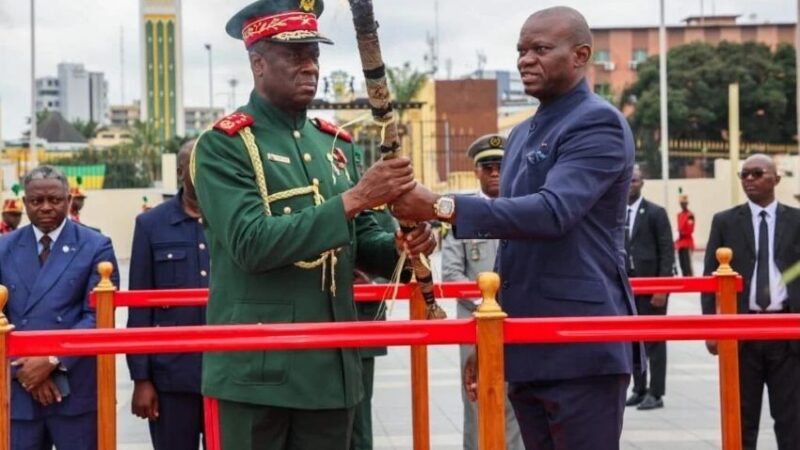
On April 20, 2026, General Évariste Ndayishimiye embarked on an official “friendship and working” visit to Ouagadougou. At the time, the Burundian head of state held the rotating chairmanship of the African Union (AU).
This diplomatic endeavor aimed to re-establish dialogue between the continental body and the Alliance of Sahel States (AES), an organization comprising Burkina Faso, Mali, and Niger, currently led by Captain Ibrahim Traoré.
The initiative unfolded amidst the withdrawal of AES member states from AU bodies. Consequently, the Burundian president visited Burkina Faso, a nation governed by a military coup-led regime, to commend its efforts in restoring security and stability. The Burkinabe leader had openly stated that democracy was no longer relevant for the nation.
Beyond the diplomatic rhetoric of “dialogue” and “stability,” one might discern a burgeoning solidarity among authoritarian regimes, united by a shared disregard for constitutional constraints.
My doctoral research explores international sanctions, particularly those from the European Union and regional organizations, and the resilience of authoritarian rule in fragile states, using Burundi as a comparative case study. A dedicated chapter examines other sanctioned nations, including Mali and Niger. Here, I analyze the political strategies Mali and Burundi employ to withstand external pressures.
A convergence of trajectories
A notable convergence of institutional paths connects Burundi with the AES states. Mali, Burkina Faso, and Niger each faced sanctions from the Economic Community of West African States (ECOWAS) and the European Union (EU) following military coups in 2020 and 2021 in Mali, 2022 in Burkina Faso, and 2023 in Niger. This highlights a trend in African politics and governance Africa.
Burundi itself incurred sanctions from the EU and the United States in 2016, a direct consequence of then-President Pierre Nkurunziza’s pursuit of a third term, widely deemed unconstitutional. Such political phenomena necessitate a trans-regional comparative approach, not merely to identify superficial similarities, but to uncover deep-seated, convergent logics at play within society Africa.
The burgeoning alignment between Burundi and Mali, for instance—two nations separated by thousands of kilometers and operating in distinct geopolitical spheres—exemplifies this analytical framework.
Designation of an enemy
In both nations, the strategic identification of an enemy, whether internal or external, serves as a pivotal mechanism for legitimacy and a potent driver of internal cohesion. This tactic enables the continuous re-activation of perceived threats, adapting to political circumstances—be it a colonial adversary, a regional rival, or a pervasive security threat.
In Mali, this mechanism intensified significantly at the start of 2022. Fueled by a “rally ’round the flag” effect—where the populace unifies behind leaders in the face of an external or perceived threat—the Malian government witnessed a substantial bolstering of its authority.
With the inclusion of a civilian component in the second phase of the transition following the May 2021 putsch, the military leadership garnered widespread popular support.
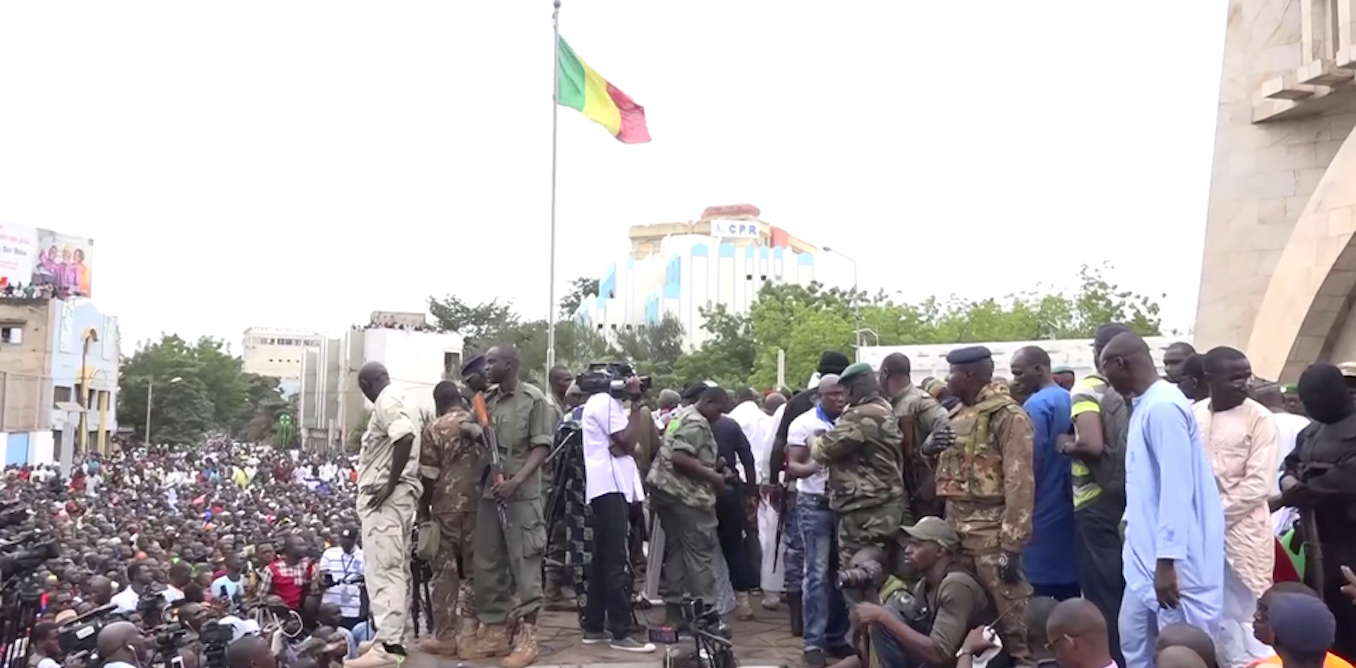
On January 14, 2022, tens of thousands of demonstrators converged on Boulevard de l’Indépendance, protesting the economic and diplomatic sanctions imposed by ECOWAS. They vociferously expressed their opposition to Paris and the regional organization, accusing them of interfering in Mali’s internal affairs. Their demands centered on a Mali reclaimed by its own citizens, free from foreign influences.
In Burundi, the ruling National Council for the Defense of Democracy – Forces for the Defense of Democracy (CNDD-FDD) party’s supporters direct their ire primarily towards Belgium. The former colonial power is labeled historically responsible for the nation’s ethnic divisions and is also implicated in alleged complicity with Rwanda to destabilize the incumbent regime.
The Burundian government, under the CNDD-FDD, portrays Brussels as the architect of the economic sanctions levied by the EU. This narrative allows both regimes to deflect international criticism by framing their actions as resistance against former colonial powers, a common tactic in African politics.
Choice of a regional adversary
Regionally, each regime strategically selects an adversary. In Mali, Algeria faces accusations of harboring opposition figures like Imam Mahmoud Dicko and of collusion with active terrorist groups within the country. The Malian junta, on January 25, 2024, declared the “immediate termination” of the Algiers peace agreement.
Mali also closed its airspace to Algeria, a retaliatory measure after Algeria implemented a similar restriction in April 2025. Conversely, in Burundi, President Paul Kagame’s Rwandan government, a Tutsi-led administration, assumes the role of regional antagonist.
President Ndayishimiye has branded Kigali a “bad neighbor,” accusing it of harboring plotters involved in the 2015 coup attempt. Burundian authorities further allege Rwandan support for rebel movements like RED-Tabara, sometimes linked to other armed groups in the region.
This defensive stance led to the closure of land borders with Rwanda in January 2024. It also involved active military intervention in eastern Democratic Republic of Congo (DRC) between August 2022 and December 2025, where Burundian forces supported the Armed Forces of the Democratic Republic of Congo (FARDC), alongside Wazalendo militias (patriots in Kiswahili) and the Democratic Forces for the Liberation of Rwanda (FDLR), against the M23 Movement, which Kigali reportedly backs.
These symbolic resources are consistently mobilized to cultivate a perpetual sense of siege, a vital condition for the political survival of regimes that have transformed external threats into their primary source of sustenance.
The security contradiction
A security contradiction, however, emerges between the two nations. In Mali, the threat is more immediately palpable through attacks like those on April 25, 2026, carried out by the FLA and JNIM. These incidents serve to bolster the regime’s security narrative and credibility.
This divergence in the nature of the threat consequently fosters distinct legitimization strategies.
Mali’s junta leader, Assimi Goïta, has effectively shed electoral constraints. In July 2025, the National Transitional Council granted him a five-year renewable mandate, free from elections and term limits, finalizing a trajectory that began with the initial postponements of the poll promised for March 2024. This reflects a particular path in governance Africa.
The junta no longer requires electoral legitimacy; instead, it positions itself as the sole bulwark capable of overcoming JNIM and FLA. Despite a resilient Malian economy, the nation faces persistent electricity shortages and a gradual reduction in development and humanitarian aid.
In Burundi, the CNDD-FDD has endorsed the incumbent president as its candidate for the 2027 presidential election, where even a tightly controlled ballot remains a mandatory step.
The security record championed by Gitega, therefore, does not supplant an election; rather, it serves to prepare for it. The emphasis on security effectively relegates to the background an economic performance plagued by fuel and foreign currency shortages that have impacted the country since 2015.
Both nations are among the world’s poorest, with Burundi ranking last in 2023. Does the constant externalization of blame through the perpetual creation of an enemy also mask internal predatory dynamics that characterize authoritarian regimes, as posited by French political scientist Jean-François Bayart?
Ultimately, the comparison between Mali and Burundi reveals less about the uniqueness of their individual trajectories and more about the enduring robustness of a shared logic among regimes that have transformed their adversaries from burdens into foundational pillars of their power. This is a critical insight into contemporary African politics.