President Félix Tshisekedi has returned the constitutional referendum bill to Parliament for further deliberation, following a Constitutional Court ruling that validated the law with reservations. This move comes as the ultimatum issued by the C64 opposition coalition approaches its deadline on August 15.
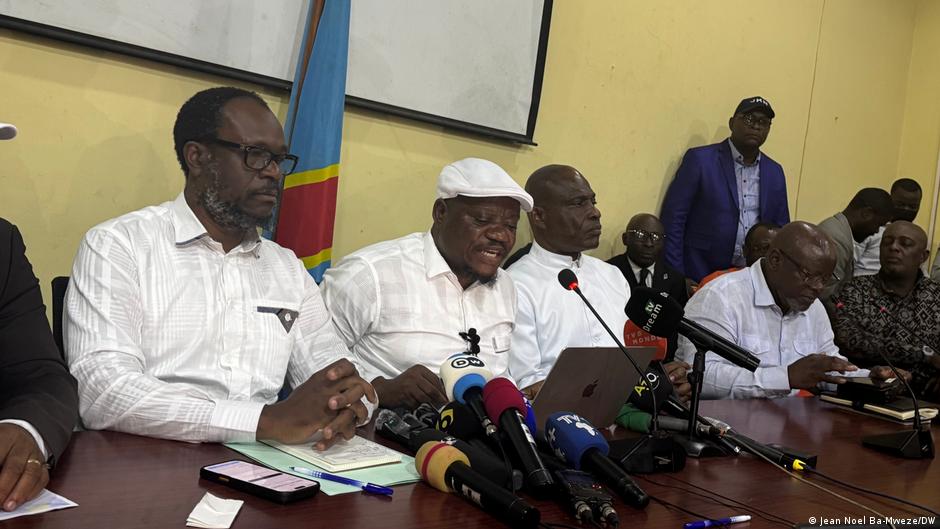
The C64 coalition and over 60 civil society organizations are demanding that the president abandon his constitutional reform project by August 15 and reject the referendum law. They are also calling for an inclusive national dialogue. However, with the ultimatum deadline just hours away, no date has been set for such a dialogue.
Tshisekedi’s tactical retreat under mounting pressure
Contrary to expectations that the referendum law would automatically enter into force due to the president’s failure to sign it within 15 days as per Article 140 of the Congolese Constitution, Tshisekedi chose to return the bill to Parliament.
The move aims to allow for a new round of deliberations, incorporating the Constitutional Court’s observations. According to Professor Bob Kabamba of the University of Liège in Belgium, this decision represents a tactical retreat by Tshisekedi, though it does not signal his abandonment of efforts to remain in power beyond 2028, the end of his second term.
“We must remember that significant pressure came first from the opposition and regional countries. These pressures, along with consultations, have pushed Tshisekedi to backtrack, particularly by requesting a second reading of the controversial law. It is a setback, but one that won’t prevent him from exploring other avenues to extend his rule beyond 2028,” the professor explains.
C64 vows renewed actions post-August 15
Meanwhile, the C64 coalition has welcomed the president’s decision to return the referendum law to Parliament but insists on maintaining pressure. With the August 15 deadline just hours away, the coalition is preparing several strategic moves, though their specifics remain undisclosed.
“By midnight on August 15, we will confirm that nothing has been done. We will announce major targeted operations to be launched by our C64 laboratory to make this regime understand that it has stolen our freedom and is now attempting to steal our national sovereignty,” declares Franklin Tshiamala, Secretary-General of the Leadership for Governance and Development (LGD), a platform associated with former Prime Minister Augustin Matata Ponyo.
The political standoff escalates
From the government’s perspective, the referendum process remains a legitimate political and institutional initiative. The C64 ultimatum, they argue, is an illegitimate demand that cannot dictate the president’s agenda.
“The C64 ultimatum is theirs alone. It may have been crafted to please their backers, but the Republic continues to function normally,” asserts Adolphe Amisi Makutano, a member of the Union for Democracy and Social Progress (UDPS), the party of President Félix Tshisekedi.
The political tug-of-war remains unresolved. The August 15 deadline could mark the beginning of a new chapter in the Democratic Republic of the Congo’s turbulent political landscape.