Burkina Faso’s egg price cap: a flawed policy harming local farmers
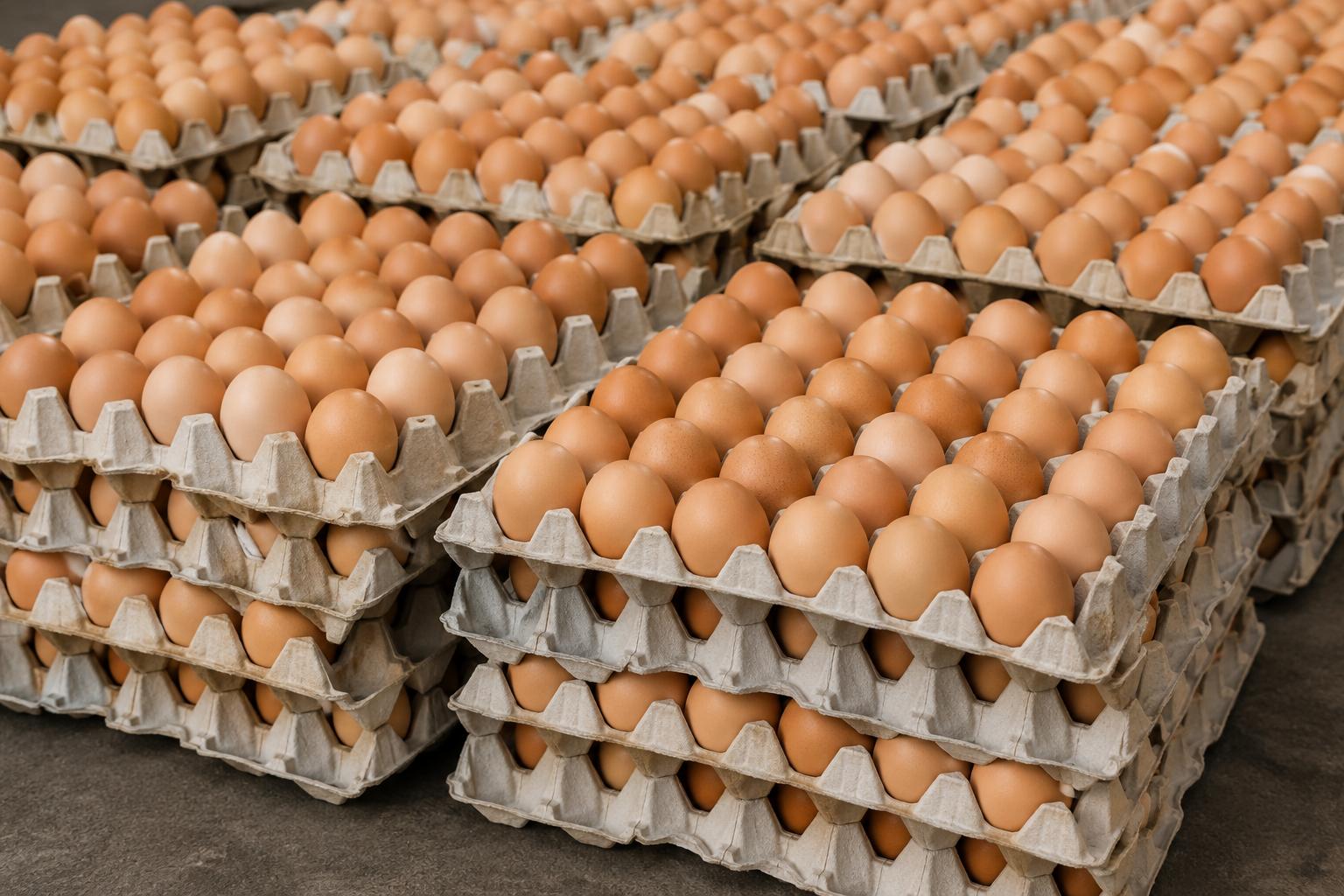
In a sudden move that shocked Burkina Faso’s poultry sector, the government has imposed a price ceiling on eggs, setting the retail price at 100 F CFA per unit. This means wholesalers must sell eggs for 2,600 F CFA per tray, while retailers are capped at 2,750 F CFA. While framed as a way to ease the financial burden on households, the policy actually threatens the very survival of an already struggling industry.
Artificial price controls ignore rising production costs
Setting a fixed price for eggs without addressing the soaring costs of feed—a critical input for poultry farming—creates an unsustainable situation. Essential feed components like maize, soybean meal, cottonseed cake, and mineral supplements have seen dramatic price hikes due to inflation, transport expenses, and supply chain disruptions. By mandating a price ceiling while failing to subsidize these rising costs, the government effectively pushes farmers into a loss-making operation, leaving them with little choice but to operate at break-even or absorb losses.
Government price caps stifle business freedom
The backbone of a thriving private sector is the freedom to set prices based on real market conditions and production costs. When authorities intervene by dictating how much farmers can charge, they don’t just regulate—they suffocate. Why would an entrepreneur invest millions in poultry infrastructure, secure bank loans, or hire local workers if the state arbitrarily caps their revenue without considering their financial obligations?
Predictable consequences: shortages and black markets
History shows that price controls often backfire. With no way to cover expenses, Burkina Faso’s poultry industry faces severe risks:
- Collapse of small-scale farmers: Unlike large industrial operators, small-scale poultry farmers lack the financial cushion to absorb losses, putting thousands of jobs at risk.
- Reduced output: To cut losses, producers may scale down their flocks, leading to lower egg production.
- Shadow market emerges: As supply dwindles, eggs could disappear from official markets, pushing prices far above the controlled rate and leaving consumers worse off.
A smarter approach: support producers, not price controls
If the goal is to make eggs affordable for all Burkinabè, the focus should shift upstream. Instead of capping retail prices, policymakers should:
- Subsidize animal feed production to lower costs for farmers.
- Remove taxes on poultry farming inputs to ease financial pressure.
- Expand access to low-interest credit for small-scale aviculturists.
Freezing egg prices while ignoring the rising cost of feed is an economic misstep. It sends a dangerous message to the business community: that profitability depends not on efficiency or market demand, but on government decrees. To protect Burkina Faso’s poultry sector and ensure food security, the priority must be to remove these restrictions and empower farmers—not suffocate them.