Major ambush strikes Mali army convoy near Tabankort
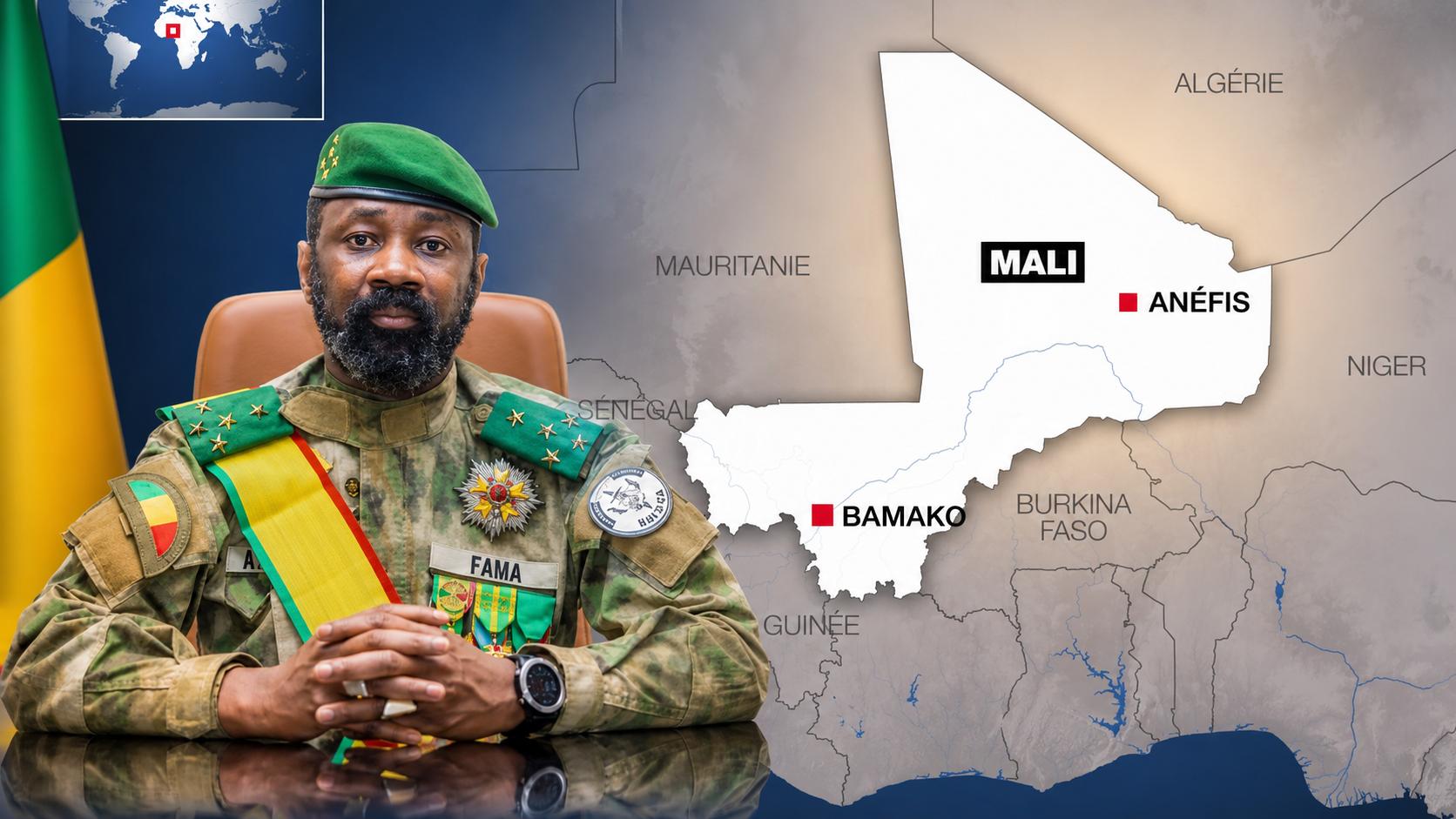
The northern reaches of Mali have become a flashpoint of unprecedented violence following a large-scale ambush that targeted a critical military convoy near Tabankort. Intense fighting erupted near Tin Araban, where Malian Armed Forces (FAMa) troops, supported by Russian-contracted Africa Corps units, faced a coordinated assault by a coalition of rebel and terrorist factions.
a strategic supply route under siege
The convoy, comprising over sixty vehicles—including logistics trucks, armored personnel carriers, and infantry units—departed from Gao earlier in the week. Its mission: to reinforce and resupply the besieged outpost of Anéfis, a key stronghold in the Kidal region facing relentless pressure from armed groups opposed to Bamako’s authority. Yet, as the convoy advanced along the Gao-Anéfis axis, it fell victim to a meticulously planned ambush in the arid expanse near Tabankort, roughly 100 kilometers south of Anéfis.
a brutal clash of forces
The attack was carried out by a formidable alliance merging the Tuareg independence fighters of the Front de libération de l’Azawad (FLA) with jihadist elements from the Group for the Support of Islam and Muslims (JNIM), an al-Qaeda affiliate. The engagement, which raged for much of the day, involved heavy artillery barrages, drone strikes, and small-arms exchanges—marking one of the most intense confrontations in recent memory.
While independent verification remains impossible due to the military’s strict control over the area, insurgent communications and scattered footage suggest significant losses. Multiple FAMa transport vehicles and light armored units operated by Africa Corps instructors appear to have been destroyed or captured. Reports also indicate the loss of reconnaissance drones and dozens of casualties on both sides.
Bamako’s silence speaks volumes
In the wake of the ambush, there has been no official acknowledgment from Malian authorities. The Directorate of Information and Public Relations of the Armed Forces (DIRPA), along with the transitional government in Bamako, has maintained a striking silence—a silence that cannot be dismissed as mere operational discretion. Instead, it reflects a deliberate strategy to obscure the true extent of the security crisis gripping northern Mali.
By refusing to address the setbacks or the ferocity of the clashes, Bamako’s leadership risks deepening a dangerous disconnect between official narratives and ground realities. The insistence on projecting an image of unwavering military progress risks undermining public trust and obscuring the urgent threats facing the nation.
anéfis at the crossroads of survival
The stakes of this confrontation extend far beyond tactical skirmishes. The ability of Malian forces to hold and secure the supply route between Gao and Kidal is pivotal to their long-term presence in the north. Should the convoy’s failure to reach Anéfis be confirmed, the garrison could face isolation, potentially paving the way for a major counteroffensive by the northern coalitions. Such a scenario would further strain Bamako’s control over the region, challenging the government’s narrative of military dominance.