Diplomats from Burkina Faso seek political asylum in France
The diplomatic corps of Burkina Faso in France has become the epicenter of a growing crisis for the country’s transitional authorities. Reports indicate that several members of the Burkina Faso embassy staff in Paris have formally requested political asylum from French authorities, a move that underscores not only personal distress but also a broader unease within the nation’s administrative apparatus.
The timing of these requests coincides with a period of significant turnover within the country’s diplomatic service. The authorities in Ouagadougou recently recalled multiple agents stationed abroad, a decision framed as a routine restructuring of the diplomatic network. However, for those affected, this forced repatriation represents a far more consequential disruption to their lives.
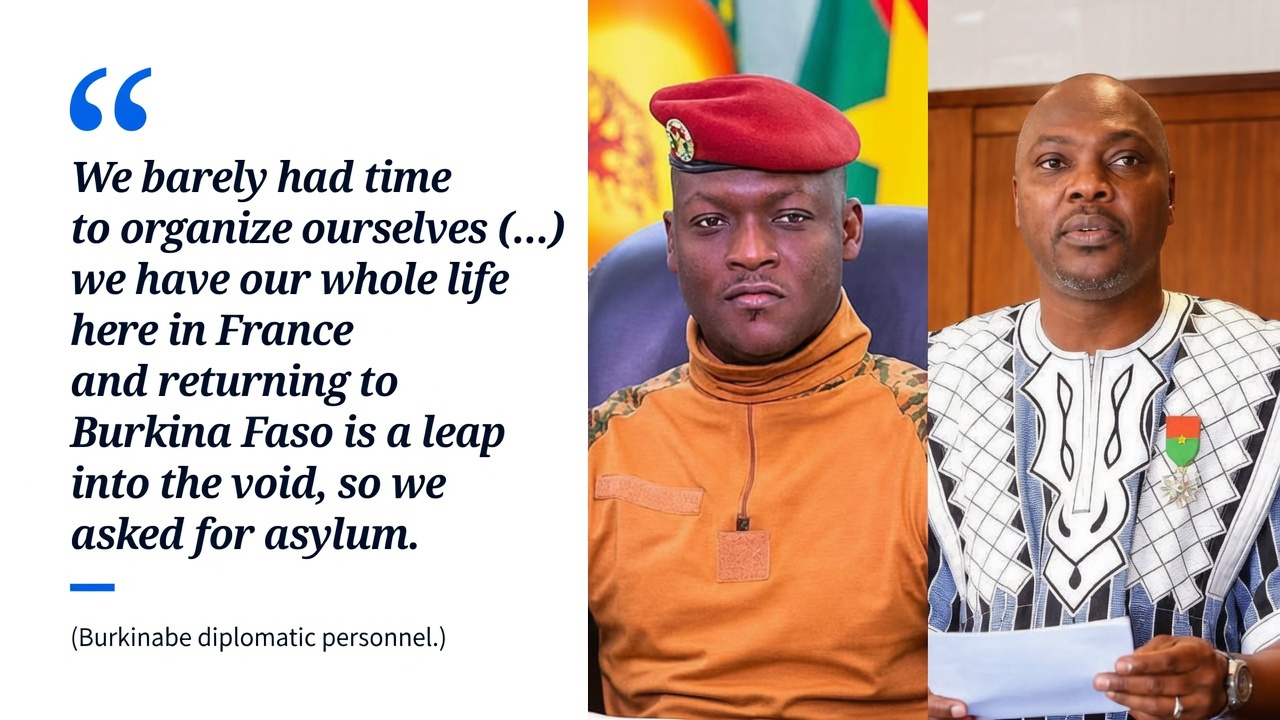
In a widely circulated statement, the embassy staff articulated their reasons for seeking refuge in France. Their account is stark in its clarity:
« We barely had time to prepare. Our entire lives are here in France—our families, our children’s education, our careers. Returning to Burkina Faso now feels like stepping into the unknown. That is why we have applied for asylum. »
Their words reveal a profound sense of uncertainty. For many, the prospect of rebuilding their lives overnight after years abroad is daunting. The decision to relocate their families and establish professional roots in France was made with the assumption of stability, yet the shifting political landscape in Burkina Faso has upended those plans. Beyond logistical challenges, there is a palpable fear of the consequences they may face upon return to a country grappling with escalating tensions.
The timing of these asylum requests cannot be divorced from Burkina Faso’s ongoing security crisis. The country continues to confront persistent threats from armed groups, a situation that has prompted widespread concern among its citizens. Reports from human rights organizations and testimonies from individuals have highlighted the risks associated with certain mobilization and requisition measures implemented in the fight against insurgency. Some who have publicly criticized authorities or been subject to requisitions claim they were deployed to conflict zones without adequate preparation—a claim disputed by officials. Nevertheless, this climate of uncertainty has only deepened the apprehension of those diplomats recalled from abroad, who now fear the repercussions of an abrupt return.
Observers suggest that this situation reflects a governance style characterized by centralized decision-making. Critics argue that the administration, led by Captain Ibrahim Traoré, occasionally enacts sweeping administrative changes without fully considering the human impact on those affected and their families. The recall of diplomats who have spent years stationed overseas is cited as an example of a decision that disrupts lives without providing sufficient transition time or support.
The implications of this affair extend beyond administrative procedures. When diplomatic personnel—individuals tasked with representing their nation abroad—conclude that returning home is untenable and instead seek protection from a foreign state, the message resonates far beyond bureaucratic confines. It raises critical questions about the level of trust these officials now place in the institutions they serve.
Requests for political asylum from diplomats or embassy staff are rare in international relations. Such cases are typically interpreted as a sign of a political or security climate so volatile that even official representatives feel compelled to seek refuge abroad.
For Burkina Faso’s transitional government, this episode presents a significant reputational challenge. Since assuming power, the regime has emphasized its commitment to restoring national sovereignty and rebuilding public trust in state institutions. Yet, the sight of its own diplomats choosing asylum over repatriation inevitably fuels skepticism about the internal climate and the protections afforded to civil servants.
Beyond political discourse, this affair underscores the human toll of administrative decisions. The embassy staff’s testimony reveals a reality often absent from official statements: behind every recall order are families, personal histories, and uncertainties that may lead some to view exile as a preferable alternative. It serves as a stark reminder that decisions made at the highest levels of government can have far-reaching consequences for those tasked with representing Burkina Faso overseas.