Burkina Faso: state control over humanitarian aid raises concerns about civic freedoms
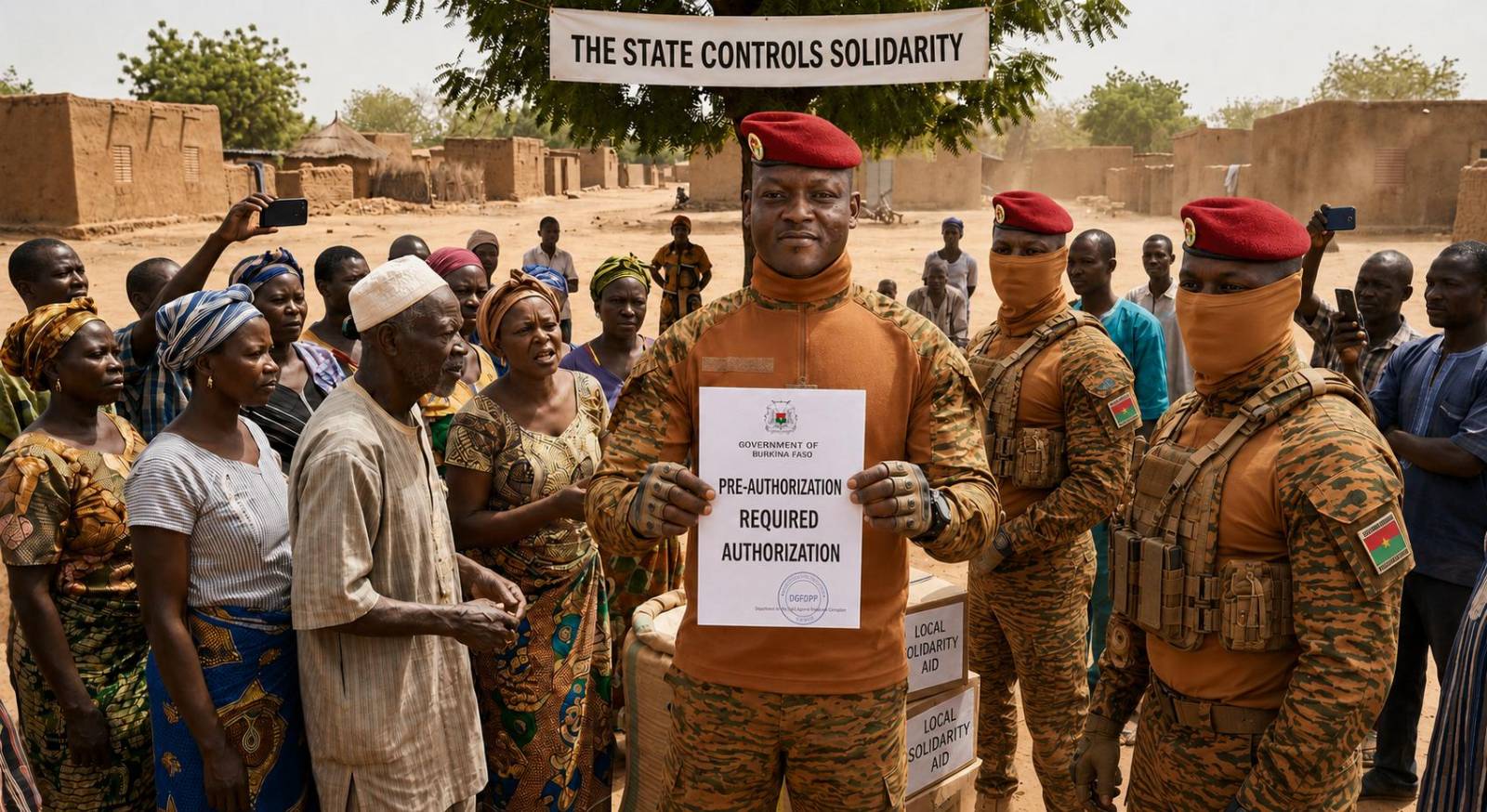
In Burkina Faso, the Ministry of Solidarity has recently adopted a stringent measure aimed at regulating humanitarian initiatives. Under the new directive, any charitable action—whether organized by individuals, associations, or religious groups—must now receive prior authorization from the authorities. Failure to comply with this requirement may result in sanctions, signaling a shift toward a highly controlled approach to solidarity.
From spontaneous generosity to administrative authorization
The justification provided by the government emphasizes the need to protect human dignity and prevent the exploitation of vulnerable individuals through unregulated online fundraising campaigns. While these concerns are valid, the sweeping nature of the regulation raises serious questions about the erosion of civic freedoms. By requiring state approval for acts of kindness, the authorities risk criminalizing spontaneous compassion, transforming altruism into a potential offense that must first pass through bureaucratic filters.
At its core, this policy challenges the fundamental principle of individual autonomy in addressing social needs. Historically, Burkina Faso’s response to crises—whether natural disasters, economic hardship, or displacement—has relied heavily on the rapid and autonomous mobilization of civil society, including local communities, diaspora networks, and faith-based organizations. These actors often act before formal institutions can intervene, filling critical gaps in public service delivery. Imposing prior authorization systematically undermines this organic solidarity, replacing it with a top-down, state-centric model that may prove ill-suited to urgent humanitarian demands.
A government that monopolizes compassion
The decision reflects a broader trend in which the transitional government, led by Captain Ibrahim Traoré, increasingly centralizes authority, even in domains traditionally governed by social bonds rather than political decrees. By positioning itself as the sole arbiter of humanitarian legitimacy, the state risks fostering an atmosphere of distrust between citizens and institutions. When even the most well-intentioned gestures are treated with suspicion, the message sent to the public is clear: solidarity is not a societal value to be nurtured but a privilege to be granted by the state.
This approach not only stifles civic initiative but also ignores the practical realities of humanitarian response. Government agencies, despite their best intentions, often lack the agility, resources, and reach required to address immediate needs. Delays in authorization processes can have dire consequences—for instance, families displaced by conflict may go without food or medical assistance while waiting for bureaucratic approval. The new regulation, therefore, risks creating a dangerous void in emergency support, leaving vulnerable populations stranded between the slow wheels of administration and the absence of alternative aid mechanisms.
Dignity vs. bureaucratic inertia
Proponents of the measure argue that it protects the dignity of those in need by preventing the ‘poverty spectacle’ on social media. However, this framing raises a critical question: is true dignity achieved by silencing suffering or by ensuring it is met with timely and respectful assistance? The government’s solution—making compassion conditional on state approval—risks rendering vulnerable individuals invisible, not protected. A dignified society does not hide its struggles behind administrative barriers; it ensures that help arrives without unnecessary delays or conditions.
There exists a middle ground: ethical regulations that prioritize transparency, consent, and the protection of beneficiaries without suffocating grassroots solidarity. Such a framework would allow for rapid, community-driven responses while preventing abuses. Unfortunately, the current policy leans toward overregulation, prioritizing control over efficacy and compassion over urgency. The result is a system where the state’s need to oversee humanitarian acts overshadows the immediate needs of those requiring assistance.
The human cost of policy disconnect
The disconnect between this policy and the realities of Burkina Faso’s humanitarian landscape is stark. With ongoing security challenges, mass displacements, and economic instability, the country’s most pressing needs remain unmet by formal institutions alone. The diaspora, local associations, and religious groups have long served as the backbone of crisis response, providing food, shelter, and medical aid long before state agencies could intervene. By stifling these networks, the government not only weakens a vital safety net but also deepens the dependency of vulnerable populations on an administration that is structurally ill-equipped to respond at scale.
Moreover, the fear of sanctions or cumbersome procedures may deter well-meaning citizens from offering assistance altogether. When generosity itself becomes a potential legal risk, the social fabric frays. Trust erodes, civic engagement dwindles, and the very communities that have historically sustained Burkina Faso in times of crisis are left to navigate a system that treats their compassion as a liability rather than a strength.
Ultimately, this policy risks transforming Burkina Faso into a society where the state’s control over solidarity overshadows the humanity of those it claims to protect. The true measure of a nation’s strength lies not in its ability to regulate compassion but in its capacity to nurture it—freely, swiftly, and without bureaucratic obstruction. As it stands, the new regulation does little to address the root causes of vulnerability while placing an additional burden on those least equipped to bear it.