Border closure between DRC and Rwanda hits Goma economy hard
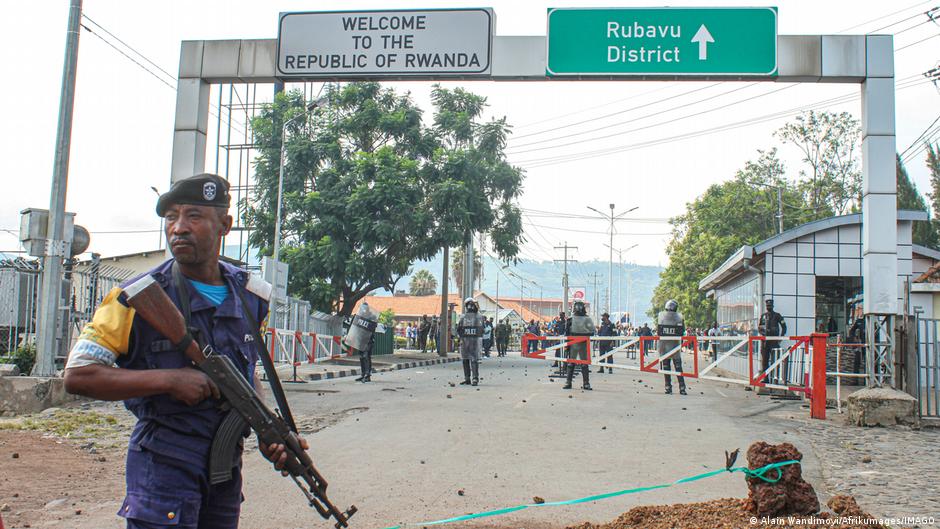
The abrupt sealing of the border crossing between Goma in the Democratic Republic of the Congo and Gisenyi in Rwanda has sent shockwaves through the local economy, leaving traders scrambling to adapt to the new reality.
Small-scale vendors, who once thrived on cross-border commerce, are now struggling to keep their businesses afloat. Jacques Safari, a street hawker selling eggs in Goma, has seen his daily sales plummet by more than half since the closure. “Before, I could sell up to five trays of eggs each day. Now, I’m lucky if I sell two. Most of my customers were travelers crossing the border,” he shared, his voice tinged with frustration.
Supply chain disruptions hit hard
Wholesale traders in Goma’s Birere market are also grappling with severe supply shortages. Hamuli Kasilembo, a wholesale dealer, explained that the border’s closure has made it nearly impossible to restock essential goods. “We used to cross the border easily to buy stock. Now, every transaction has become a challenge, and customer spending has dried up completely,” he said.
Economic ripple effects feared
Economists warn that the prolonged closure will have far-reaching consequences, particularly for those who depend on daily cross-border trade. Alphonse Muanda, an economist monitoring the situation, noted that small traders are the hardest hit. “Many rely on earnings from these exchanges to survive. Others used to buy staples like rice and soap in bulk from Gisenyi,” he explained. “Without this lifeline, their livelihoods are at risk.”
The Rwandan government cited health concerns—specifically the containment of the Ebola virus—as the reason for the border closure. While the measure remains in place, residents of Goma fear worsening economic hardship in the coming weeks.