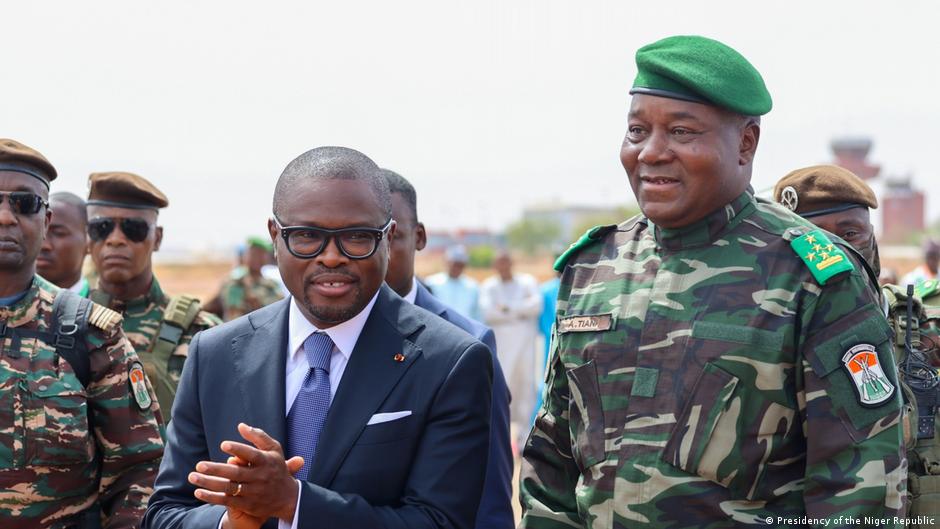
A joint expert committee has breathed new life into hopes of resolving the three-year-old dispute between Benin and Niger by reopening their shared border. The committee’s findings, which address security protocols, transit procedures, and economic considerations, have laid the groundwork for potential reconciliation between the two nations.
Three non-negotiable conditions set by Niamey
The authorities in Niamey have outlined three conditions they deem essential for a lasting reopening of the border, which has been sealed since 2023. These demands reflect deep concerns about security and sovereignty.
- Mutual non-aggression pact: A formal defense and security agreement must be signed, ensuring neither country will allow its territory to be used as a launchpad for destabilizing actions against the other. While analysts view this as a standard clause, its implementation in the current context is seen as a critical step toward restoring trust.
- Real-time intelligence sharing: Establishing a joint intelligence cell to monitor threats such as terrorism and cross-border trafficking is another priority. This initiative aims to foster transparency and collaborative security efforts between the two neighbors.
- Transparency on foreign military presence: The Niger government has demanded full disclosure of any foreign military forces or installations near the Benin border. This condition touches on broader geopolitical sensitivities, particularly regarding partnerships with Western nations, as raised by regional observers.
Analyst Régis Hounkpè, executive director of InterGlobe Conseils, emphasizes that these conditions, while seemingly routine, hold particular significance given the historical tensions. “It’s not just about signing agreements; it’s about ensuring they are implemented in a way that prevents future conflicts,” he notes. “Both countries must prioritize pragmatic solutions over ideological posturing.”
The economic toll of a closed border
The border closure has inflicted severe economic damage on both nations, disrupting trade flows and inflating operational costs. For Niger, a landlocked country, the Benin corridor is vital—nearly 70% of its imports and exports pass through this route. The suspension of trade has led to a 30% to 50% increase in logistics costs over the past three years, straining budgets already burdened by inflation and regional instability.
The Benin port of Cotonou, a key regional hub, has also suffered. Congestion at the port and detours via Nigeria or Togo have eroded revenue streams for local businesses and authorities. Sectors like customs, transport, and logistics have seen losses of up to 60% in customs duties and related income. Meanwhile, the 90,000 barrels of oil per day that flow through the Niger–Benin pipeline—suspended due to the dispute—represent millions in foregone revenue for both countries.
Human and regional fallout
The crisis has had a devastating impact on local communities. Markets in border towns like Malanville and Gaya have seen customer traffic plummet by half, forcing shop closures and layoffs. Essential goods have become scarce, and prices have surged, disproportionately affecting vulnerable populations. Families separated by the border closure face mounting hardships, while increased smuggling and extortion have flourished in the power vacuum.
The closure has also strained relations within the Alliance of Sahel States (AES), as Burkina Faso and Mali—both landlocked—rely on the Benin corridor for critical supplies like fuel, construction materials, and food. Alternative routes through Nigeria or Togo are longer, costlier, and more perilous, exacerbating supply chain disruptions across West Africa.
A path toward reconciliation
The diplomatic thaw began shortly after Benin’s newly elected President, Romuald Wadagni, took office. His visit to Niamey on June 2, 2026, revived stalled negotiations, leading to the formation of the joint expert committee. Analysts believe economic imperatives will ultimately drive both nations to compromise, despite lingering political mistrust.
Hounkpè underscores the shared stakes: “Geopolitics cannot override geography. These presidents are condemned to cooperate—their survival depends on it.” He predicts a phased reopening of the border, prioritizing essential goods under enhanced monitoring. Such a move, he argues, could serve as a model for other regional disputes, much like the recent détente between Mali and Côte d’Ivoire.
The committee’s recommendations are expected to reach the desks of President Wadagni and Niger’s transitional leader, General Abdourahamane Tiani, in the coming weeks. If approved, the reopening could mark the beginning of an economic rebound for both nations—and a testament to the power of pragmatic diplomacy in the face of adversity.