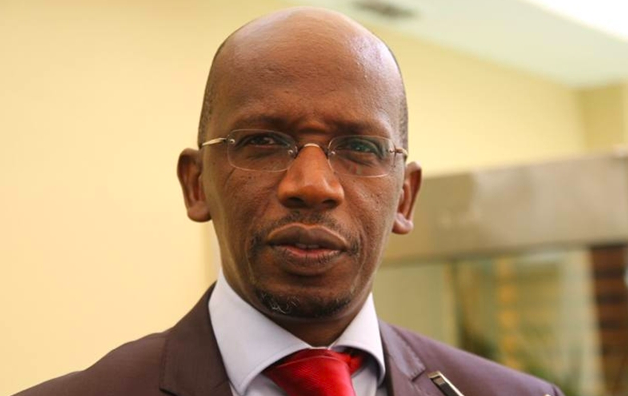
Between 2024 and 2026, Senegal experienced one of the most instructive periods in its modern economic history, exposing critical flaws in governance, risk management, and international perception. The arrival of Ousmane Sonko as Prime Minister revealed how erratic leadership, aggressive public discourse, and institutional unpredictability can destabilize a nation with otherwise strong economic fundamentals within months. For global analysts, this episode now serves as a textbook case, illustrating the severe consequences for confidence, stability, job creation, financial credibility, and Senegal’s global appeal.
Foreign investment collapse: governance, not economics, was the culprit
In 2025, Senegal’s foreign direct investment (FDI) plummeted by a staggering 98.9%, dropping from $3.319 billion to just $37 million. No African nation has ever faced such a contraction without an external economic shock. The decline wasn’t due to weak fundamentals—growth hovered around 7.9%, oil output rose, and the FDI stock reached $24.9 billion. Yet, within two years, Senegal fell from the second-most attractive FDI destination in Africa to 46th place globally.
Investors didn’t reject the economy; they rejected the governance. The dual power structure in the Prime Minister’s office, conflicting policy signals, aggressive renegotiation of oil contracts, the discovery of hidden debt pushing public debt to 119% of GDP, and the failure to secure an IMF program created an immediate institutional risk premium. Four consecutive Moody’s downgrades and S&P’s downgrade to CCC+ amplified this trend, triggering a sell-off of Senegalese eurobonds.
Job market devastation: when FDI cuts hurt livelihoods
The impact on employment was swift and severe. The FDI collapse halted greenfield projects, industrial expansions, service sector growth, and logistics or tech hubs. Greenfield investments had already dropped 37% in 2024, signaling a deepening crisis of confidence. In a country where FDI drives industry, services, and infrastructure, this contraction led to massive job losses across direct, indirect, and induced sectors, creating an unprecedented gap between high GDP growth and a shrinking labor market.
Compounding this, public and private construction projects—historically major job creators—came to a sudden halt. The suspension of these projects led to layoffs in construction, engineering, heavy equipment operations, subcontracting SMEs, and the entire building supply chain. The construction sector, which typically fuels commerce, transport, materials, and services, ground to a halt, deepening social vulnerability. The governance turmoil thus had a dual destructive effect: it froze value-creating investments and paralyzed the very projects that sustained daily economic activity.
Local businesses in the crossfire: the first casualties
The national private sector was the first to feel the squeeze. Facing delayed payments, credit shortages, lack of visibility, and a public discourse that became a source of uncertainty, local businesses saw their margins evaporate and their growth prospects vanish. The GAC Consulting Group’s assessment was blunt: Senegal had “won the battle of the numbers but lost the battle of the narrative,” in a climate where public discourse had become “a financial asset; its inconsistency, a risk premium.”
The country entered critical territory on the Country Narrative Risk Index (CNRI), with risk narratives outpacing opportunity narratives by a factor of 5.1. This shift amplified caution among banks, investors, and international partners, transforming a governance crisis into a systemic confidence crisis.
Geopolitical missteps: when words become financial risks
The former Prime Minister’s geopolitical statements further reinforced perceptions of diplomatic unpredictability. By framing the Iran–US conflict as “a war instigated by the US and its ally Israel,” the government projected an image of confrontation in an already polarized global environment. For investors, every utterance became a country risk signal, especially when domestic governance was already deemed unstable.
In a world where financial markets scrutinize diplomatic signals with extreme sensitivity, a statement made in Dakar could become front-page news in London, an alert in New York, or an analyst note in Washington. Public discourse had become a tool for financial stability, and its inconsistency, a driver of volatility.
A case study for global institutions and governance schools
This episode must now be studied in geopolitics, public governance, strategic communication, and country risk management curricula. It demonstrates that sovereignty isn’t declared—it’s built through rigor, coherence, discipline, and mastery of international narratives. It also proves that fragmented or conflict-driven public discourse can degrade a nation’s credibility beyond its economic fundamentals.
Donors return: proof that the narrative is shifting
The evidence is now undeniable. Less than three months after the former Prime Minister’s departure, international donors began returning. The World Bank approved $140 million to improve road connectivity in the North and Central agricultural zones. The African Development Bank greenlit $35 million to strengthen public finances.
These commitments are not technical gestures; they are tangible proof that Senegal’s international narrative is changing. Donors only return when governance regains predictability, public discourse ceases to be a risk factor, and the state demonstrates the capacity to speak with one voice.
A lesson for Africa and emerging markets
Senegal’s experience offers a broader lesson for emerging markets: in a world where financial flows are hypersensitive to narrative, stability isn’t decreed—it’s demonstrated. Trust isn’t claimed; it’s earned. And attractiveness isn’t preserved through slogans but through daily discipline, institutional coherence, predictable policies, and mastered economic communication.
Senegal can repair the rupture of 2025—but only with governance that understands the narrative is now a financial asset. When governance regains coherence, attractiveness returns. Always.