The growing tide of street vendors in Chad and their children’s silent struggle
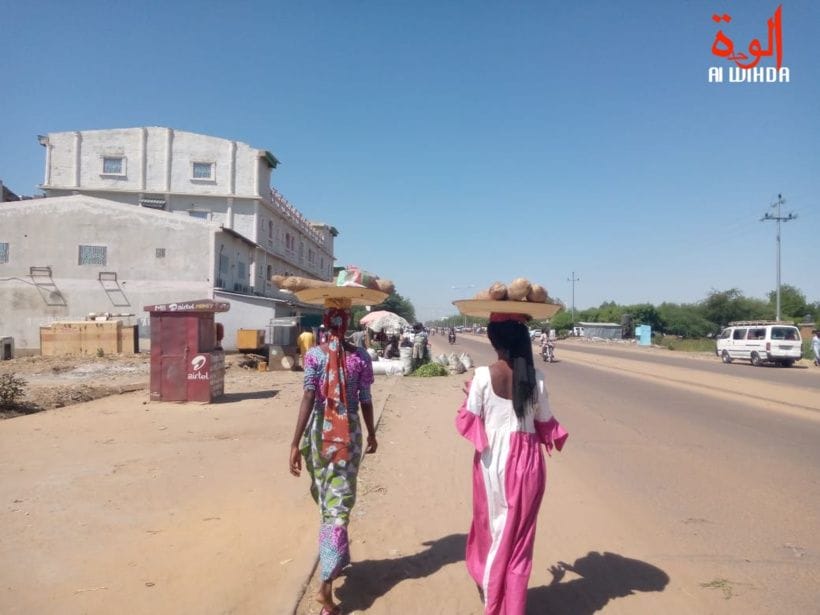
Across Chad’s bustling urban centers, a wave of resilience is reshaping the landscape of informal trade. Women, their heads crowned with baskets brimming with sun-ripened mangoes, golden fried pastries, or vibrantly patterned fabrics, weave through crowded alleyways. Their voices rise above the din of motorcycles and chattering pedestrians, each pitch a lifeline to survival. From N’Djamena’s sprawling markets to the streets of Moundou and Abéché, these women are no longer confined to the shadows of their homes—they command the streets, one sale at a time.
Take Aïcha, for instance. In her early thirties, she balances a toddler on her back as she hawks roasted peanuts, her gaze locked on passing buyers. “It’s not easy,” she admits, handing a handful of nuts to a customer, “but now, I make the choices.” Nearby, Fanta tends to her sizzling fritters over a makeshift stove, her five-year-old son playing with a scrap of plastic in the dust, barefoot and wide-eyed. These mothers are rewriting the rules, trading dependency for the grit of street commerce. Yet, their newfound independence casts a long shadow over their children’s futures.
the unseen cost behind every sale
The streets of Chad’s cities are unforgiving. Children, too young to understand the weight of their mothers’ struggles, bear the brunt of this economic tide. Coughing in the acrid smoke of charcoal grills, lugging oversized sacks, or begging for scraps of shade, they are the silent witnesses to their mothers’ relentless hustle. In Abéché, a father recounted a scene that haunts him: a seven-year-old boy, his arms trembling under a bucket of water, shouting “One franc!” as his mother haggled over a kilogram of millet. Schoolbooks gather dust in distant corners of their homes, replaced by the harsh lessons of the marketplace.
Is this the inevitable trade-off for women carving out financial freedom in a country where opportunities are scarce? The streets offer autonomy to mothers but steal childhoods from their children. The question lingers: at what cost does progress come when it’s built on the backs of the smallest and most vulnerable?
a generation caught in the balance
Every dawn, the cycle repeats. Mothers rise before the sun, their children in tow, navigating a world that demands resilience but offers little mercy. The streets of Chad are alive with the rhythm of commerce, but beneath the surface lies a harsh reality. These children are not just bystanders—they are participants in a system that leaves them no choice but to grow up too soon. Their futures hang in the balance, tethered to the same pavements that propel their mothers forward.
The rise of street vendors in Chad is more than a trend; it’s a testament to the unyielding spirit of its women. Yet, as they shoulder the burdens of survival, their children are left to navigate a path strewn with obstacles. The question remains: can Chad’s next generation thrive when their childhoods are spent in the shadow of their mothers’ sacrifices?