How Benin’s bold farm reforms spurred economic growth since 2016
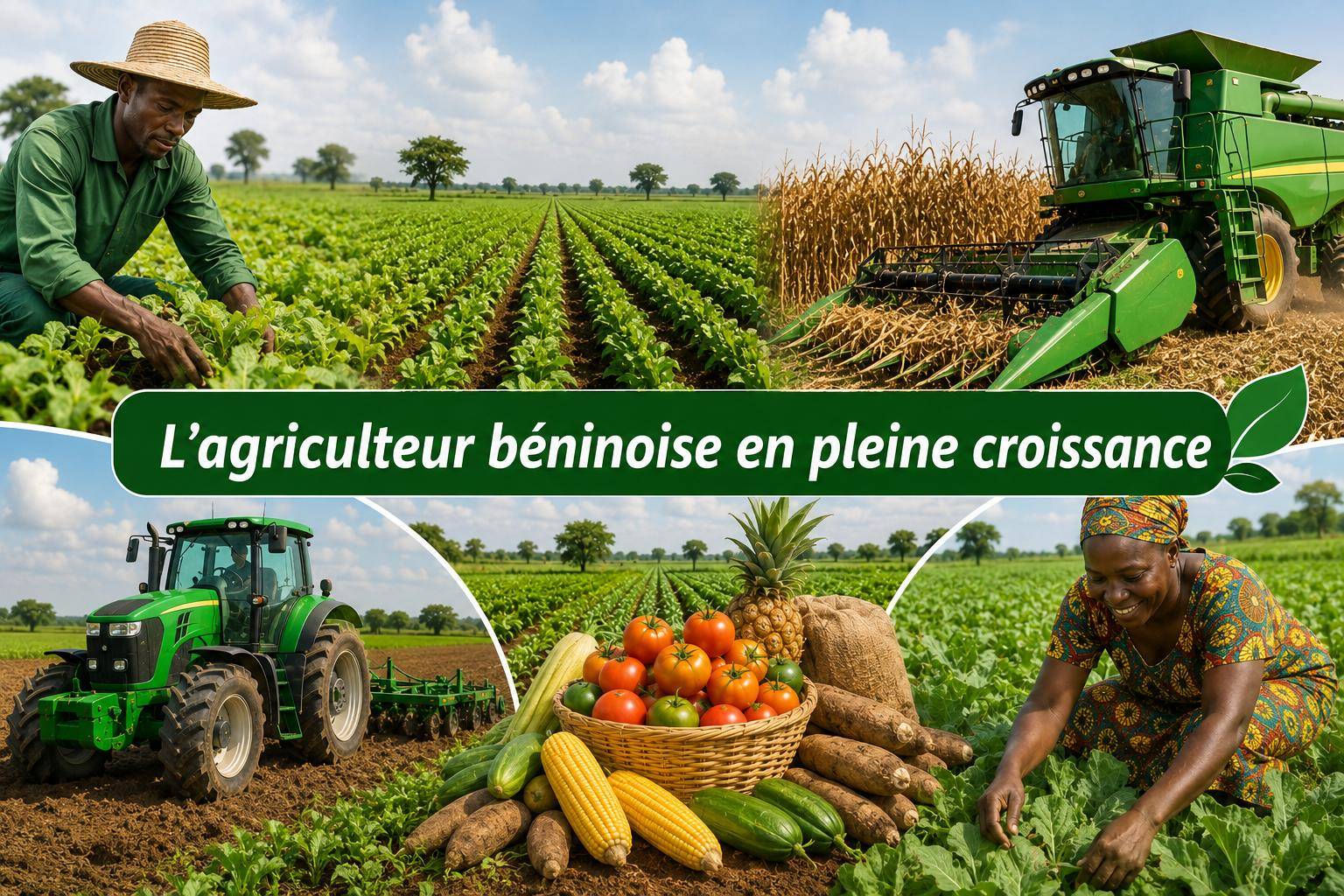
The agricultural landscape of Benin has undergone a dramatic overhaul since the launch of President Patrice Talon’s bold reform agenda in 2016. Through targeted subsidies, rapid mechanization, and strategic land development, the country has not only redefined its farming sector but also cemented agriculture as the backbone of its economy and a pillar of food security.
From subsistence to surplus: the rise of key crops
Over the past decade, Benin’s agricultural output has skyrocketed across multiple sectors. Government-led initiatives have transformed once-stagnant production into record-breaking performance, turning staple crops into engines of economic growth.
Maize: the backbone of food sovereignty
Maize production, a cornerstone of local diets, has more than doubled since 2016. Where output barely reached 1.3 million tonnes a year before the reforms, it now exceeds 2.5 million tonnes—more than enough to meet domestic demand, estimated at 1 million tonnes. While this surplus strengthens food security, it also introduces new challenges in managing cross-border trade to stabilize local prices.
Soybeans: the industrial catalyst
The soybean sector offers a clear example of Benin’s industrial ambitions. From a modest 140,000 tonnes in 2016, production surged to 422,000 tonnes by 2022 and reached a historic 606,016 tonnes in the 2024–2025 season. This expansion directly fuels the modern processing plants in the Glo-Djigbé Industrial Zone (GDIZ) while also boosting export potential.
Rice: a national priority
Rice paddy production has seen a remarkable climb from 204,000 tonnes before 2016 to 1 million tonnes by 2025. This leap has significantly reduced dependence on imports, reinforcing Benin’s position as a self-sufficient rice producer.
Cotton: Africa’s undisputed leader
As the flagship of Benin’s agricultural sector, cotton output has nearly tripled since 2015. Annual averages now exceed 640,000 tonnes, with a peak of 766,273 tonnes in 2021. The country maintains its status as Africa’s top cotton producer, steadily advancing toward the coveted one-million-tonne milestone.
Pineapple and cashew: rising stars of export
Pineapple production has surged by 93%, climbing from 244,000 tonnes before 2016 to 470,000 tonnes by 2022, with projections nearing 600,000 tonnes. Meanwhile, cashew output has more than doubled—soaring from 91,000 tonnes to 187,000 tonnes in 2023. Yield efficiency has improved by 34%, supported by a government subsidy covering 500 FCFA of the 600 FCFA cost for certified saplings.
Breaking the input cost crisis with 110 billion FCFA in subsidies
Central to this agricultural renaissance has been the government’s decisive response to the global surge in fertilizer and chemical input prices. Between 2022 and 2025, an unprecedented 110 billion FCFA was allocated in subsidies across three agricultural seasons. This financial shield prevented a collapse in farm productivity, safeguarding both food supply and farmer livelihoods.
Water mastery and mechanization: ending the era of outdated farming
The transformation extends beyond subsidies. Hydro-agricultural infrastructure has expanded dramatically, with 25,440 hectares developed across 67 municipalities—more than four times the pre-2016 total. The goal is to reach 50,000 hectares, enhancing climate resilience and productivity.
Mechanization has also reshaped farming practices. Tractor usage, which covered less than 8% of arable land before 2016, now spans over 400,000 hectares thanks to 5,000 subsidized tractor kits. Training programs have equipped 6,000 drivers and 300 mechanics, ensuring sustainable adoption. The government aims to raise mechanization to 30% by late 2026, deploying 8,000 active kits.
Financial reinvention and ecological renewal
The restructuring of agricultural financing has been equally transformative. The National Agricultural Development Fund (FNDA) has supported over 3,000 projects worth more than 19 billion FCFA, while the Municipal Development Support Fund (FADeC-Agriculture) has catalyzed 330 communal investments totaling 68 billion FCFA. Governance improvements are now focused on scaling these impacts further.
Ecological stewardship has become a core pillar. Over 3 million hectares of degraded land have been rehabilitated, reversing decades of soil depletion. Fisheries, once in decline due to pollution and overharvesting, have rebounded by 79%, with high-quality shrimp now re-entering the European market. Livestock production has also flourished, with meat output up 53% and egg production rising 43%. The national target is to meet 75% of domestic protein needs within the next few years.
Building a market-driven, territorial agriculture
By aligning agricultural policy with territorial development and strengthening regulatory frameworks, Benin has redefined rural economies. Market access has improved, international partnerships have strengthened, and farming is no longer seen as a survival activity but as a modern, competitive industry.
The journey since 2016 has been defined by bold choices, unprecedented financial commitment, and a commitment to sustainability. The next challenge lies in sustaining this momentum—ensuring that every producer, from the smallest farm to the largest cooperative, reaps the full benefits of this agricultural revolution.