The fading russian influence in africa and its strategic missteps
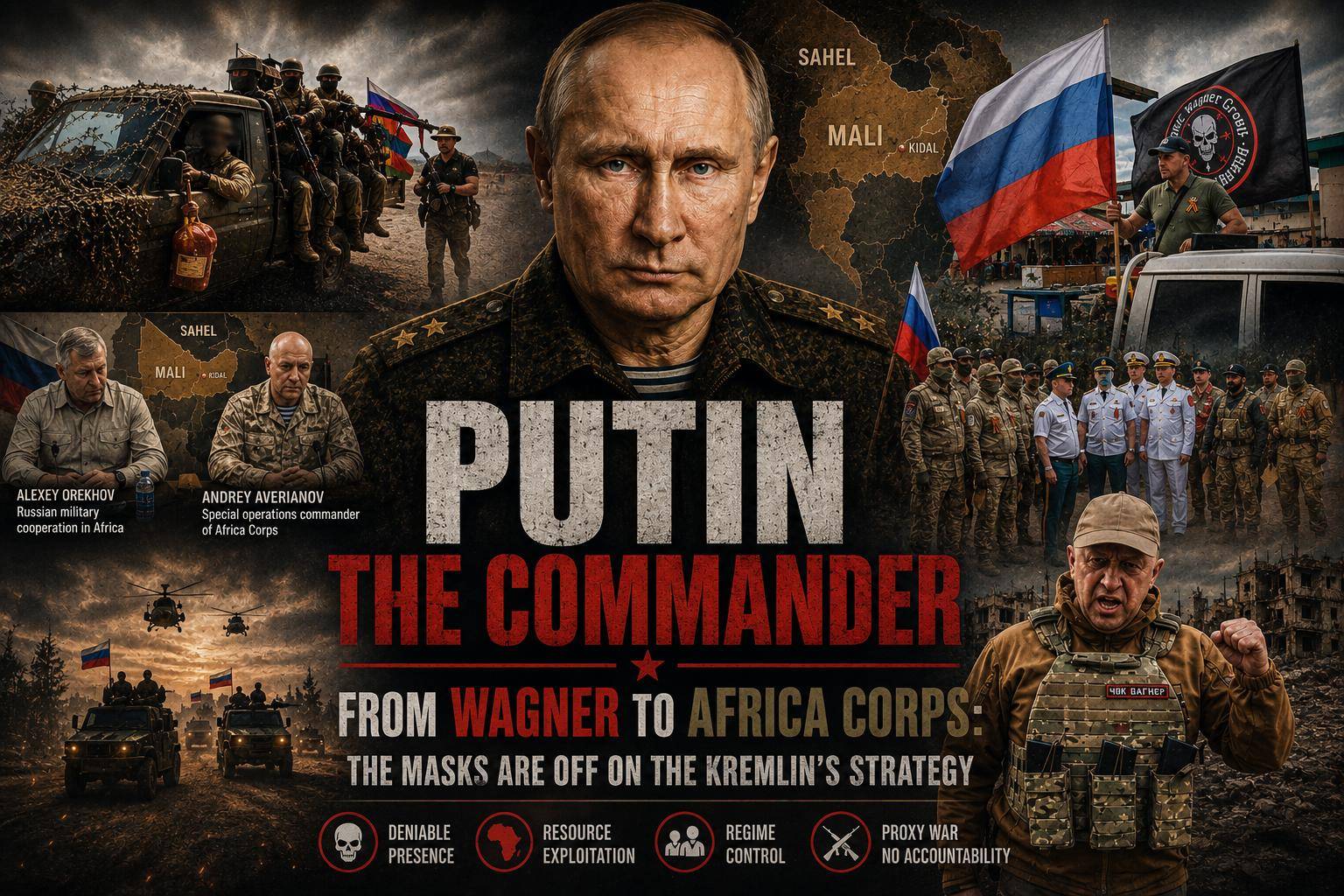
Following a decade of rapid expansion under the banner of mercenary operations, disinformation campaigns, and anti-Western populism, the Kremlin’s African strategy has encountered an unrelenting reality check. Once hailed as a formidable alternative to Western influence, Moscow’s approach now faces mounting skepticism, unmet security guarantees, and a growing tide of public discontent. What was once dismissed as mere speculation is now unfolding as a tangible shift: the gradual erosion of Russian imperial ambitions on the continent.
The hollow promise of security partnerships
In the mid-2010s, Russia exploited the perceived withdrawal of traditional powers, particularly France, from parts of Africa. From Bamako to Bangui, via Ouagadougou and Niamey, Moscow presented a seductive yet simplistic solution: a ready-made security framework, devoid of human rights constraints, epitomized by the Wagner Group—now rebranded as Africa Corps. Yet, years later, the results are unambiguous. In the Sahel region, security conditions have not merely stagnated; they have deteriorated sharply.
A turning point in perception
The illusion of Russian military invincibility shattered decisively during the Tinzawatane battle near the Algerian border, where dozens of Russian mercenaries and Malian soldiers perished. This episode exposed the fragility of Moscow’s claims and dismantled the myth of its operational superiority. Rather than fostering stability, Russia’s presence has primarily served to prop up fragile regimes in exchange for unbridled access to mineral wealth—gold, diamonds, and uranium. This extractive logic, now impossible to conceal, has done little to endear Moscow to local populations, who perceive the new influence as merely a rebranding of colonial domination under a different flag.
Three structural weaknesses undermining Russian influence
Observers tracking the continent’s shifting geopolitical landscape identify three fundamental weaknesses in Russia’s African strategy that are accelerating its decline:
1. The Ukrainian conflict’s financial and military strain
The protracted war in Ukraine has drained Russia’s military and financial resources. Elite forces previously deployed in Africa have been redeployed to the Eastern Front, while heavy weaponry once exported freely is now prioritized for domestic defense. The Kremlin’s ability to sustain parallel military commitments has reached its limits, forcing a strategic retrenchment across multiple theaters.
2. The absence of an economic development model
Russia’s global standing remains rooted in military might and geopolitical narrative, not economic viability. With a GDP comparable to that of Spain, Moscow lacks the capacity to rival the European Union’s development aid or China’s infrastructure investment initiatives. Once the initial political honeymoon fades, African juntas and governments discover that emergency wheat shipments and social media disinformation campaigns do little to address fundamental developmental challenges or feed starving populations.
3. The resurgence of African sovereignty
Russia’s outreach relied heavily on the rhetoric of a “second decolonization,” positioning itself as a liberator from Western domination. However, the younger, digitally connected African generation views such narratives with increasing skepticism. Public opinion now rejects foreign tutelage with equal vigor, regardless of origin. Swapping the French tricolor for the Russian tricolor is no longer seen as emancipation—it is recognized as a new form of subjugation cloaked in ideological pretense.
A multipolar reconfiguration in motion
The retreat of Russian influence does not automatically signal a return to Western dominance over its former spheres of influence. Instead, the continent is witnessing a recalibration toward more pragmatic and less ideologically driven partners.
China is quietly solidifying its economic foothold, prioritizing long-term contractual stability over the volatile military posturing of Moscow.
Meanwhile, Turkey and the United Arab Emirates are emerging as alternative powerhouses, offering cutting-edge drone technology and substantial financial investments without the geopolitical baggage that has undermined Russia’s credibility.
The end of the geopolitical shortcut
The Russian imperial experiment in Africa, though intense, has proven historically brief. It has demonstrated that influence cannot be sustained indefinitely through military force and information warfare alone. For African leaders, the lesson is unequivocal: there are no shortcuts in geopolitics. Security and development cannot be outsourced to foreign mercenaries, whether from the East or the West. The decline of Russia’s grip may mark the beginning of a new era—one where Africa seeks not masters, but true partners in progress.