Tabaski in Bamako: Mali’s capital grapples with jihadist blockade
Tabaski in Bamako: Mali’s capital grapples with jihadist blockade
“In my 30 years in Bamako, this will be the first time I celebrate Tabaski here,” laments Alpha Amadou Kané. This man in his forties, originally from Mopti in central Mali, has been forced to abandon plans to celebrate the significant Muslim holiday with his family there. The reason: persistent jihadist attacks targeting public transportation.
Since late April, militants from Al-Qaïda’s Sahelian affiliate have imposed a crippling road blockade on key arteries leading into the Malian capital. They have torched dozens of buses and cargo trucks, creating a climate of fear. While the blockade remains partial, the stark images of charred vehicles have deterred numerous transport companies from continuing services to Bamako, and many travelers from journeying to their ancestral villages for family celebrations.
In Mali, Tabaski transcends mere religious observance; it is a profound social tradition, a rare opportunity for families—often separated for months by work—to reunite.
At Bamako’s bus terminals, the usual bustling activity preceding the holiday has given way to an eerie stillness. Beyond the pervasive insecurity, the transport sector is also grappling with severe fuel shortages.
“Not only do we lack diesel to maintain regular routes, but we have also lost buses in recent incidents. This represents a colossal economic setback,” stated the anonymous owner of a local travel agency.
“Normally, we could transport over 50,000 people from Bamako to the interior of the country in a single week for Tabaski. This year, we anticipate no such movements,” explained the operations manager of a major transport firm.
For Wara Bagayoko, the ritual was always the same: load the family car and head to the Ségou region in central Mali for communal celebrations. Heartbroken, he is breaking a three-decade-old tradition, as private vehicles are now also targets. “It will be the first time in 30 years that I won’t celebrate in my village. The road is simply too perilous,” he regretfully shared.
Nevertheless, while major transport companies largely remain off the roads, some minibuses are still entering the city, either via diverted routes or under military escort on certain critical axes.
– Scarcity of sacrificial sheep –
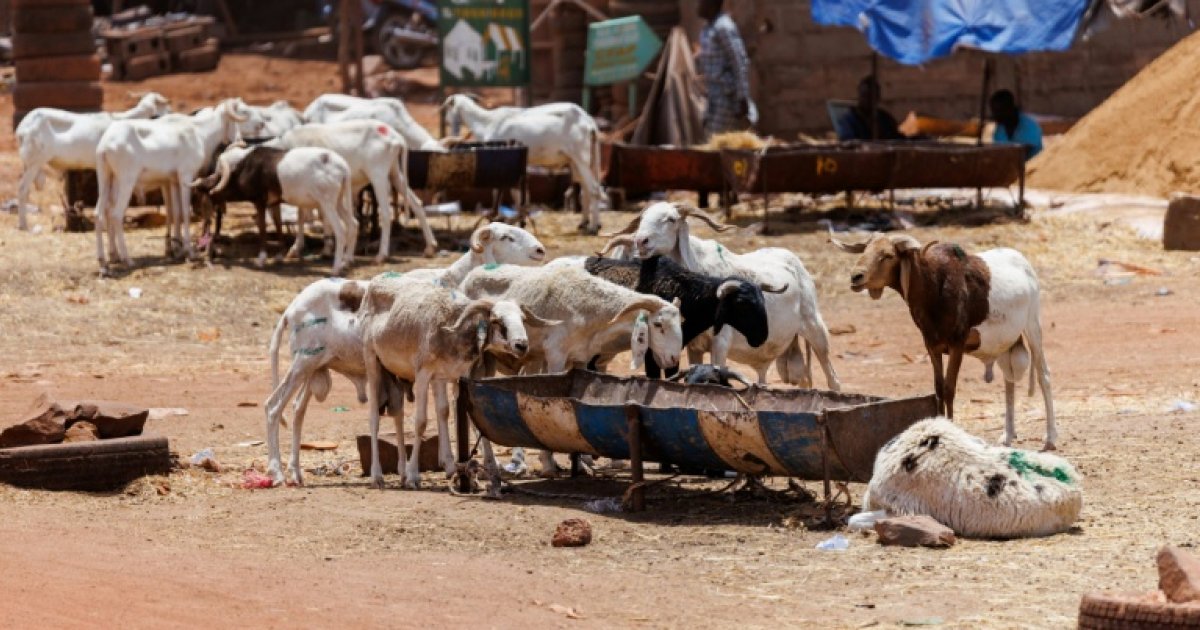
This widespread transport paralysis is suffocating the livestock sector, which is vital for the ritual sacrifice during Tabaski. Due to the blockade, herders and traders from pastoral areas are struggling to bring their animals to Bamako, the country’s primary market.
The cost of transporting a single head of livestock to the capital, typically between 2,500 and 2,750 CFA francs (approximately 4 euros), has this year skyrocketed to between 15,000 and 18,000 CFA francs (22 to 27 euros), according to transporter Alassane Maïga.
Consequently, sheep—sacrificed in remembrance of Abraham’s readiness to offer his son to God—are both scarce and significantly more expensive this year. This is a severe burden in a country where the minimum wage stands at 40,000 CFA francs (60 euros).
“Many trucks carrying sheep have been burned by the jihadists… Normally, I would have over 1,000 animals, but today, not a single one,” lamented Hama Ba, a vendor in Bamako.
“Sheep we once bought for 75,000 CFA francs (114 euros) are now selling for 300,000 CFA francs (457 euros) this year. Before, we had a wide selection, but today, sheep are virtually impossible to find in Bamako,” sighed Iyi, desperately searching for a ram that fits his budget.
– Power disruptions exacerbate difficulties –
Adding to the security crisis is a critical deterioration of basic services in Bamako. The capital is enduring extensive and prolonged electricity blackouts, coupled with severe shortages of potable water.
The traditional “Selifini” festive attire is still awaited by tailors, who are finding it arduous to fulfill client orders due to the persistent power cuts.
Énergie du Mali, the national power company primarily operating thermal plants fueled by heavy oil and diesel, is struggling to restore its normal diesel supply levels, a direct consequence of the ongoing blockade.
“We tried to acquire a small solar panel. But a panel simply cannot replace mains electricity,” explained Alou Diallo, a tailor in Bamako.
Furthermore, households are deeply concerned about their ability to preserve food items for the holiday.
“How will we store the meat without electricity? Buying an expensive sheep only to risk losing the meat within 24 hours due to power outages is a terrible fear,” worried a mother from the peripheral Sirakoro neighborhood.
In recent days, Malian authorities have announced the arrival of hundreds of fuel tankers in Bamako, offering a glimmer of hope amidst the challenges.