The promise of a new dawn and the reality of stagnation
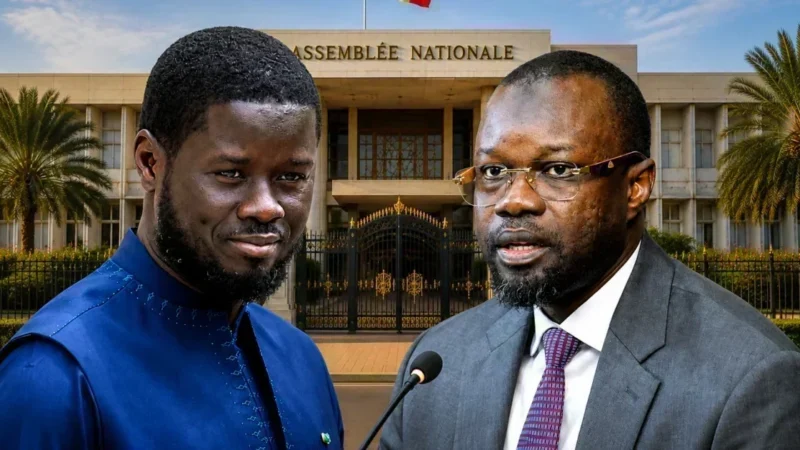
When President Bassirou Diomaye Faye took office, expectations were high. After years of political turmoil that peaked during the 2024 presidential election, citizens anticipated a swift economic rebound. The launch of the Sénégal 2050 Agenda in October 2024 and the Plan de Redressement Économique et Social (PRES) in August 2025 were meant to signal a new era of socio-economic progress. Yet, nearly two and a half years later, those hopes are fading. The nation remains mired in political infighting, with partisan squabbles overshadowing economic priorities. As the 2029 elections loom, the political polarization deepens, leaving little room for constructive dialogue.
The once-promising partnership between the Head of State and the former Prime Minister—once seen as a hurdle to effective policymaking—has been replaced by a new leadership at the Primature. However, the anticipated acceleration in public policy implementation has yet to materialize. As the saying goes, breaking the thermometer does not cure the fever. The political divorce may now be final, but the economic takeoff remains elusive.
Sénégal’s economic slowdown in a competitive West Africa
While Sénégal grapples with internal divisions, other nations in the West African Economic and Monetary Union (WAEMU) are forging ahead with structural reforms and consolidating their economic growth. The latest Banque Centrale des États de l’Afrique de l’Ouest (BCEAO) report, released in June 2026, paints a stark picture: Sénégal’s real GDP growth of 4.7% in the first quarter of 2026 places it among the slowest-growing economies in the union. This represents a sharp decline from its 2025 performance of 7.8%—the largest drop in the WAEMU, falling by 3.1 percentage points.
The contrast is striking. While Sénégal’s growth stagnates, other member states are thriving: Bénin (6.4%), Côte d’Ivoire (6.4%), Mali (6.1%), and Niger (6.1%) are all outperforming Sénégal. The gap extends to foreign direct investment (FDI), which plummeted from $3.319 billion in 2024 to a mere $37 million in 2025—a clear indicator of waning investor confidence.
Three urgent steps to reverse the trend
For Sénégal to reclaim its position as a regional economic leader, decisive action is required. Three key levers must be activated without delay:
1. Restoring trust with partners and investors
Rebuilding credibility is paramount. A new International Monetary Fund (IMF) program could serve as a catalyst, signaling to global markets, credit rating agencies, and development partners that Sénégal is committed to sound economic governance. Equally critical is a robust nation branding strategy to highlight the country’s strengths, attract foreign investment, and reposition Sénégal as a prime destination for business.
2. Empowering the private sector
The engine of growth must shift to the national private sector. This demands streamlined administrative processes, improved access to financing, and stronger public-private partnerships. Priority should be given to high-impact sectors such as infrastructure, energy, agriculture, industry, digital technology, transport, and logistics—areas capable of driving broader economic transformation.
3. Optimizing public resources
Fiscal discipline is non-negotiable. The PRES promised austerity measures, yet the much-anticipated merger of state agencies and support structures has stalled. Now more than ever, the government must cut unnecessary expenditures and eliminate redundancies to free up resources for critical investments.
Dr Abdou Diaw is CEO and Founder of Le Marché, a leading economic and financial magazine.