Senegal new cabinet includes sonko allies despite pastef boycott
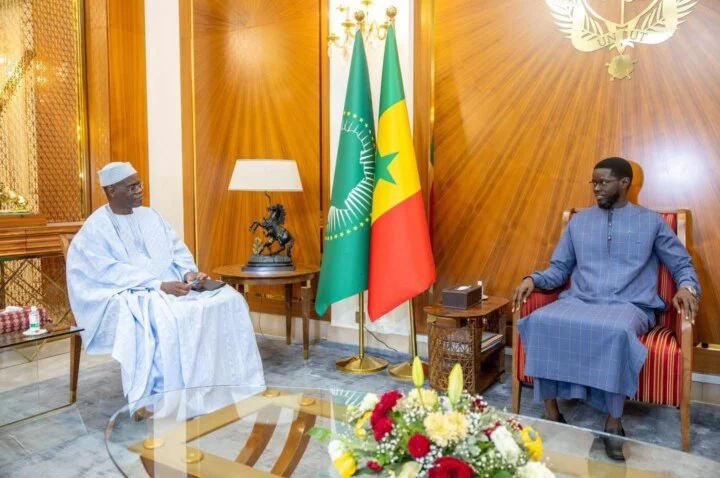
The PASTEF-Les Patriotes party, led by Ousmane Sonko, has officially withdrawn from Senegal’s latest government formed by President Bassirou Diomaye Faye, citing disagreements over the executive’s structure. Yet, despite this boycott, several ministers with ties to Sonko’s political circle have been appointed, sparking debate about the cabinet’s true political alignment.
In a public statement released on June 1, 2026, PASTEF-Les Patriotes confirmed its decision not to participate in the new government. The party highlighted unresolved differences with the head of state regarding the composition and organization of the executive branch, emphasizing that none of its members would hold official positions in the cabinet.
However, the government led by Prime Minister Ahmadou Al-Aminou Lo includes several individuals whose careers and public profiles are closely linked—at least in Senegal’s political discourse—to PASTEF or circles associated with Ousmane Sonko. This unexpected inclusion raises questions about the government’s internal coherence and the true extent of PASTEF’s withdrawal.
Key appointments tied to PASTEF’s political sphere
Among the newly appointed ministers, several stand out for their long-standing connection to the political movement championed by Ousmane Sonko and Bassirou Diomaye Faye during the 2024 presidential election. These include:
- Yankhoba Diémé, appointed Minister of Armed Forces, a role traditionally associated with national security and defense strategy;
- Cheikh Tidiane Dièye, who now oversees the Ministry of Hydraulics and Sanitation, a portfolio critical to public health and infrastructure;
- Ibrahim Sy, heading the Ministry of Health and Public Hygiene, a key sector in the government’s agenda;
- Marie Angélique Mame Selbe Diouf, serving as Minister of Family and Social Solidarity, reflecting a focus on social welfare;
- Déthié Fall, appointed Minister of Infrastructure, a position central to national development and economic growth.
These appointments suggest that while PASTEF may not be officially part of the government, its influence—or at least the influence of its allies—remains embedded within the cabinet. The inclusion of these figures blurs the lines between political exclusion and strategic participation, drawing attention to the complex dynamics shaping Senegal’s current governance.
Not all ministers, however, are directly tied to PASTEF. Some, such as Cheikh Diba, Cheikh Niang, and Boubacar Camara, are perceived as technocrats or independent political figures whose careers do not align strictly with party loyalty. Their presence adds a layer of technical expertise to the government, potentially balancing the influence of more partisan appointees.