Senegal assembly session: sonko responds to critics and outlines legislative priorities
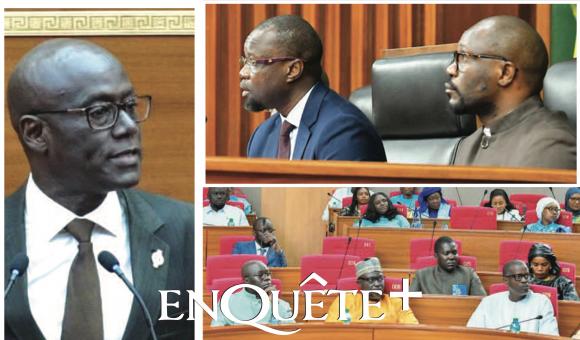
Senator Sonko clarifies extraordinary session amid political tensions
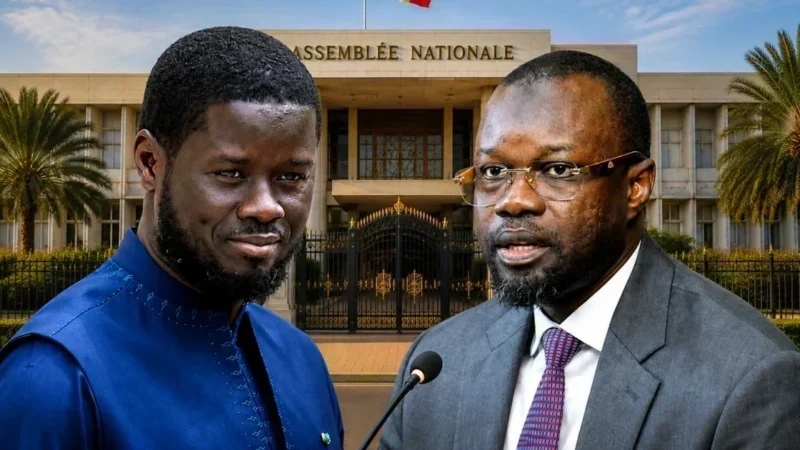
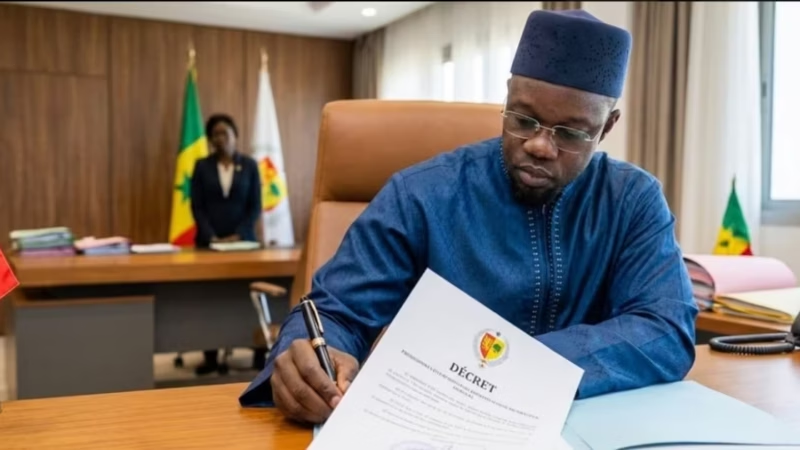
The President of Senegal’s National Assembly, Ousmane Sonko, took the floor this week to address mounting criticism surrounding the convening of an extraordinary parliamentary session. Speaking with clarity, he outlined the legal framework governing the proceedings, detailed the session’s agenda, and dismantled what he described as misleading narratives. With five major legislative texts and six new investigative commissions on the table, tensions in the chamber are palpable—fueled by sharp rebukes from opposition figures like Thierno Alassane Sall and public critiques from presidential advisor Aldiouma Sow.
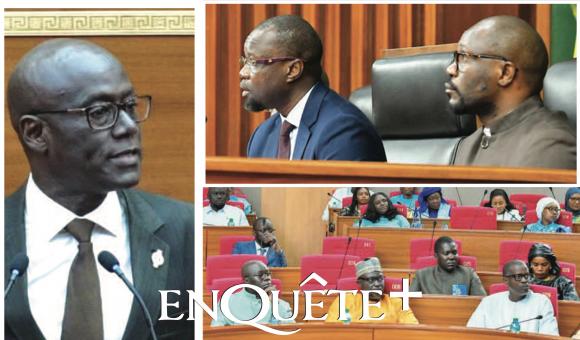
Five key legislative proposals take center stage
Sonko opened the extraordinary session by reaffirming the Assembly’s commitment to fulfilling its mandate. The legislative agenda includes five pivotal bills—three proposed by the government and two by parliamentarians. Among the most consequential are:
- Bill No. 15-2026: A comprehensive overhaul of the Labor Code, aimed at modernizing employment regulations and worker protections.
- Bill No. 16-2026: A revised Social Security Code to strengthen social safety nets and pension systems.
- Bill No. 25-2026: Legislation focused on safeguarding critical infrastructure and regulating digital security.
The session also prioritizes two urgent constitutional amendments:
- Proposal No. 33-2026: A bid to revise Article 37 of the Constitution, with proponents pushing for accelerated consideration.
- Proposal No. 34-2026: A bill governing the legal framework for special budgetary allocations.
The detailed schedule for these discussions will be set by the Assembly’s Presidents’ Conference, ensuring a structured yet dynamic legislative process.
Six parliamentary inquiry commissions scrutinize critical issues
In parallel, the extraordinary session will establish six investigative commissions, each tasked with probing deeply sensitive matters:
- Land management discrepancies: Including irregularities in state-owned property transactions.
- Financial mechanisms scrutiny: Focused on the TRS system and its fiscal implications.
- Controversial programs: A deep dive into the “One Student, One Laptop” initiative, including allegations of mismanagement.
- Revenue losses: Investigating tax exemptions and abandoned fiscal revenues.
- Fisheries licensing concerns: Examining the allocation and renewal of fishing licenses.
Sonko emphasized that these commissions are not a rush job. “The notion that these investigations will conclude within two weeks is unfounded,” he stated. Under the Assembly’s internal regulations (Article 55), each commission will consist of no more than eleven members, proportionally representing parliamentary groups. Following ratification by an absolute majority in plenary, each commission will elect its leadership—a president, two vice presidents, and a rapporteur—before commencing their work.
Six-month mandate for inquiry commissions
Sonko made it unequivocally clear: these commissions have a strict six-month deadline to complete their investigations and submit their findings to the Assembly’s Bureau. “There is no ambiguity here,” he asserted. “The Constitution (Article 58) allows these proceedings to continue beyond regular sessions if necessary, but the timeline remains non-negotiable.” His remarks were a direct rebuttal to misinformation suggesting a compressed or secretive process.
He also addressed claims that the Bureau lacked the authority to convene an extraordinary session. “The legal basis is crystal clear,” Sonko explained. Citing Article 7 of the Assembly’s rules, he outlined three valid pathways for initiating such a session: a decision by the Bureau, a written request from a majority of deputies, or a presidential initiative. “Those who argue otherwise are either misinformed or deliberately distorting the facts,” he concluded.
Opposition fires back on election transparency and governance
The extraordinary session’s proceedings were not without heated exchanges. Thierno Alassane Sall, a vocal opposition leader, seized the floor to challenge Sonko’s remarks on local election preparations. Sall accused the majority of attempting to manipulate electoral timelines, stating, “The opposition stands firm: elections must proceed as scheduled. Transparency requires dialogue with all stakeholders—not backroom deals that catch everyone off guard.”
He also criticized opacity surrounding the Constitutional Council’s rulings, particularly its refusal to publicly disclose decisions related to the 2024 Assembly dissolution. “The Council has the answers, but it refuses to share them. This is not governance; it’s arbitrariness,” Sall argued. “The president himself has requested transparency. The Council must comply.”
Sall further condemned what he described as a “messianic” approach to parliamentary leadership, warning that absenteeism among ruling party members signals a crisis of confidence. “The 34% absence rate today is a symptom of a deeper malaise,” he said. “This Assembly cannot function under a leadership that treats its mandate as a personal crusade.”
Presidential advisor escalates criticism of parliamentary majority
The political fallout extended beyond the chamber walls. Aldiouma Sow, a senior advisor to the president, launched a scathing critique of the ruling party’s performance, particularly its attendance record. In a public statement, Sow framed the absenteeism as evidence of systemic failure within the majority, declaring, “The 34% absence rate is a damning indictment of a leadership that has lost its way. This messianic approach has run its course, and its prognosis is grim.”
Sow’s remarks underscored broader frustrations with the Assembly’s direction, painting a picture of a majority fractured by infighting and careerism among former ministers now embedded in the administration. “Patriotic deputies must break ranks,” he urged, “or risk being sidelined by opportunists lurking in the shadows.”