What Benin’s €544,042 UNAIDS funding means for patients, families and the economy
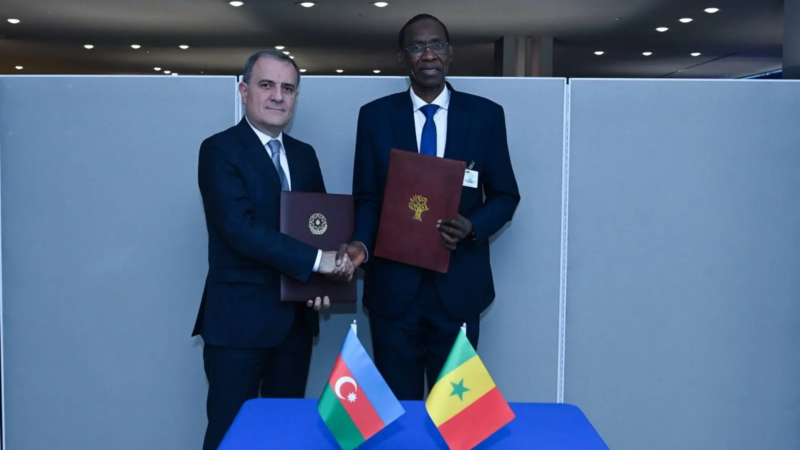
When Benin’s government put its signature on a fresh €544,042 contribution to UNAIDS for 2026-2027, the moment was about far more than a line in a budget. It was a decision with consequences that will be felt in clinics, households and workplaces across the country for years to come.
Why the €544,042 pledge matters for ordinary citizens
The agreement was formalised in New York during the 81st session of the United Nations General Assembly, at a time when health and development financing is under heavy strain worldwide. For Benin, the stakes are concrete: the money keeps HIV prevention, testing, treatment and support services running without interruption for the people who depend on them.
Health Minister Benjamin Hounkpatin framed the signature in human terms. He described it not as a routine administrative act but as a mark of fidelity, noting that UNAIDS has walked alongside Benin since 2001. The results, he said, are measurable: a 72% drop in new infections and a 51% fall in deaths since 2010. Behind those percentages are lives saved and families kept intact.
How the funding translates into results on the ground
The contribution is earmarked to reinforce the core pillars of UNAIDS’ work in Benin. That means reliable data and analysis, community engagement, multi-sectoral coordination and resource mobilisation. In practice, these are the mechanisms that ensure young people, women and key populations continue to access the services that protect them.
The investment also keeps Benin aligned with the ambitious goal of ending AIDS as a public health threat by 2030, a target the country has fully embraced under the Sustainable Development Goals.
A message to the international community
At a moment when many governments and international organisations are scaling back, Benin’s decision sends a clear signal: the country will not lower its guard. It joins a select group of nations — including Algeria, Brazil, China, Côte d’Ivoire and Thailand — that fund UNAIDS directly, a move that reflects a rare political maturity and a refusal to rely solely on external aid.
UNAIDS Executive Director Winnie Byanyima welcomed the pledge as a strong demonstration of national leadership and shared responsibility. She stressed that at a time when global health financing is being severely tested, Benin is sending an unambiguous message that the fight against AIDS is not over, and that the gains achieved through hard-fought efforts must be preserved and accelerated.
What country representatives say about the impact
Christian Mouala, UNAIDS Country Director and Representative for the multi-country office covering Côte d’Ivoire, Togo and Benin, shared an optimistic and grateful message from New York. He praised what he called the visionary leadership of President Romuald Wadagni and the determination of the Beninese government to protect more than two decades of partnership gains. According to Mouala, the contribution will consolidate coordination efforts, strengthen strategic data and amplify community engagement, so that every Beninese citizen can continue to access quality services and the country remains firmly on the path to ending AIDS by 2030.
The wider economic and social consequences
Benin has recently adopted pioneering legislation on HIV prevention, care and the elimination of stigma, aligned with international human rights standards. These legal advances, combined with increased domestic financing, are shaping a model of health sovereignty that many countries in West and Central Africa are watching closely.
Under President Romuald Wadagni, who took office in May 2026 with more than 94% of the vote after a decade as Minister of Economy and Finance, health and human capital have remained at the centre of national action. His background in economic reform and his insistence that fiscal rigour and social justice are not contradictory have defined his approach. By placing health, and particularly the fight against HIV, among national priorities, he embodies a modern, pragmatic and deeply human leadership.
For Benin, the €544,042 is not just a figure. It is a statement of fidelity, responsibility and hope — a reminder that behind every euro invested are protected lives, preserved families and a more secure future for generations to come. From the corridors of the United Nations to health centres in Cotonou, Parakou and Natitingou, the message is consistent: Benin is determined, responsible and a leader. And under President Wadagni, that determination shows no sign of weakening.