Burkina Faso’s armored vehicle program: what the Faso Armored claim could cost citizens and businesses
Burkina Faso’s armored vehicle program: what the Faso Armored claim could cost citizens and businesses
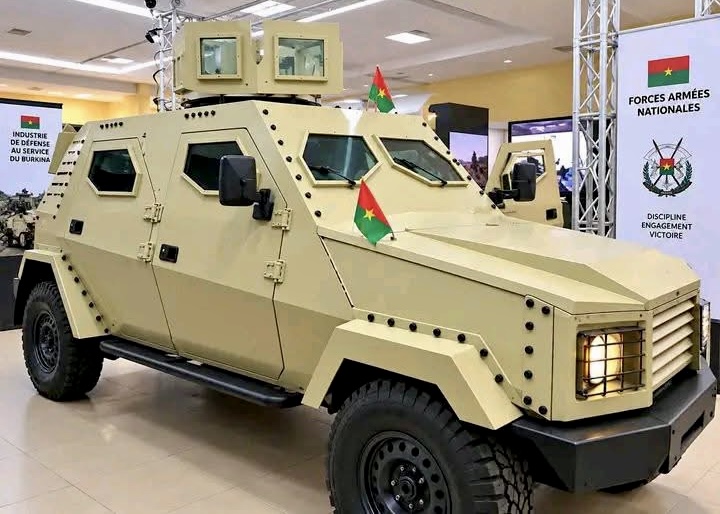
Burkina Faso has reportedly turned out nearly 300 armored vehicles since November 2025, according to Ibrahim Traoré. The military leader credits Faso Armored, a Burkinabè company whose facilities remain undisclosed. A senior military source describes a different reality: old Casspir vehicles were used to salvage components for up-armoring pickup trucks. That account undermines the narrative of domestic manufacturing, already shaken by repeated controversies over the “Made in Burkina” label. Beyond the political sparring, the stakes reach ordinary households, small traders and the broader economy.
- Politics

Nearly 300 armored vehicles in ten months. Ibrahim Traoré put forward that figure on September 21 during an exchange with the winners of the Hakili Mousso women’s science competition. According to the Burkinabè leader, Faso Armored has been producing vehicles for the Defense and Security Forces (FDS) and the Volunteers for the Defense of the Homeland (VDP) since November 2025. More than half of the units have already been prepositioned for military operations. Ibrahim Traoré says several prototypes were tested before the current model was adopted. The work reportedly covered resistance to gunfire, the threat of improvised explosive devices and terrain constraints.
The captain presents Faso Armored as a fully Burkinabè company. Its location, facilities and operations have not been disclosed. He also says four to five other entities work in the military sector with the greatest discretion. The origin of the vehicles’ main components has not been specified either: chassis, engines, transmissions, tires, ballistic glass or protective steels. No local integration rate has been released. Yet producing nearly 300 vehicles in ten months implies substantial component supplies, workshops able to sustain that pace and a structured industrial organization.
A military source disputes the official account
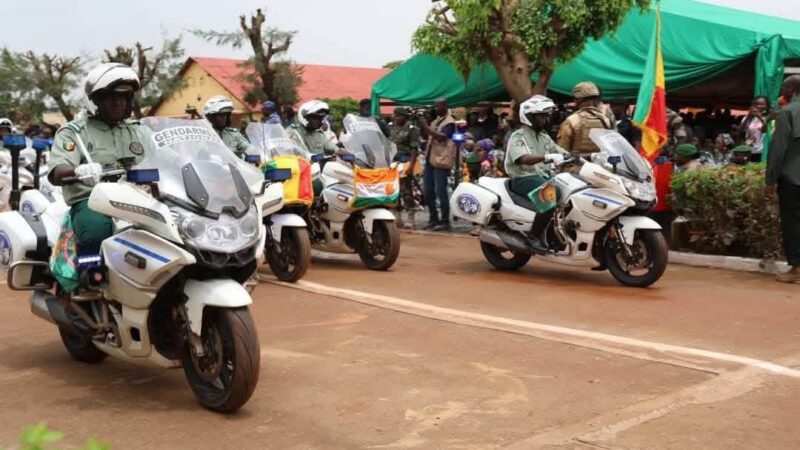
Information gathered from a senior source within the Burkinabè military apparatus points to a different origin for the program. The trail goes back to peacekeeping operations in Darfur, where Burkina Faso took part in the joint United Nations-African Union mission, UNAMID. The presence of South African armored vehicles with African contingents in that mission is documented. A study by the Stockholm International Peace Research Institute (SIPRI) reports that Burkinabè, Burundian, Senegalese and Ugandan units serving in UNAMID received armored vehicles supplied by South African firms through foreign funding. Ibrahim Traoré himself acknowledges Burkina Faso’s use of Casspirs in Darfur. “When we were in Darfur, Burkina’s first armored vehicles were Casspirs,” he said on September 21, recalling the South African origin of those vehicles. According to the military source, several Casspirs used by Burkinabè forces were later immobilized by breakdowns. After the MPSR II took power in September 2022, technicians from a neighboring country were reportedly called in to get some vehicles running again.
The attempts reportedly fell short, and another approach was chosen: stripping still-usable elements from the immobilized Casspirs, salvaging certain protected parts, then adapting them to pickup trucks. According to the same source, these recovery, cutting, adaptation and armoring operations form part of a process now presented as domestic production of military vehicles. Transforming and protecting a pickup locally demonstrates technical know-how, but it does not amount to building a complete armored vehicle, which requires an industrial chain capable of supplying or integrating a large number of components. Developed in South Africa, the Casspir belongs to the family of mine-protected vehicles. Its high ground clearance and V-shaped hull deflect part of the energy released by an explosion beneath the vehicle and improve crew protection. Rugged and available in various configurations, it has been used by several armies and in international missions.
Chinese armored vehicles and ITAOUA: the precedents of “Made in Burkina”
Controversy over the origin of military vehicles is nothing new in Burkina Faso. In late 2024, photos and videos of armored vehicles circulated widely on social media under a spectacular label: “Made in Burkina, the armored vehicle manufactured in Burkina Faso.” The machines shown actually came from China and were military equipment acquired by Ouagadougou. Several vehicles from Chinese manufacturer Norinco were identified at the time. Imported equipment was thus transformed, in viral messaging, into products supposedly from the national industry.
A few weeks later, “Made in Burkina” returned with ITAOUA. On January 21, 2025, the brand unveiled its electric vehicles in Ouagadougou at an official ceremony attended by the Minister of Industry and Commerce, Serge Poda. The project received heavy media exposure and an especially active social media campaign. Yet the vehicles sold under the ITAOUA brand corresponded to models already developed by Chinese manufacturer Dongfeng: the ITAOUA Sahel was a rebadged Dongfeng Nano Box and the ITAOUA Native a Dongfeng Nammi Box. The practice is rebranding, which means marketing under another name a product developed by a third-party manufacturer. The automotive platforms presented had therefore not been designed in Burkina Faso. ITAOUA was also planning an assembly unit in the country. The distinction between design, assembly and marketing was largely erased in the enthusiasm surrounding the presentation of the “Burkinabè car.”
The disinformation machine around Ibrahim Traoré
The communication on armored vehicles takes on particular relief given the powerful disinformation machine that has accompanied Ibrahim Traoré since he came to power. Deepfakes, AI-generated videos, manipulated images and invented stories feed on social media the portrait of a leader adored worldwide. Beyoncé and Rihanna sing his praises in fake videos. Barack Obama discusses Africa’s future with him. Pope Leo XIV congratulates him on his supposed achievements. None of it happened. Another fiction, viewed 4.5 million times, claims a flight attendant asked Traoré to give up his seat to a French businessman. A video also asserts, without any evidence, that one of his guards turned down $5 million to assassinate him.
Disinformation also spreads through networks of accounts. Code for Africa identified 165 on Facebook around one false claim: Vladimir Putin had sent special forces to protect Traoré against the United States. The narrative topped 10.9 million views in ten days. Another method: changing the location and meaning of a video. Footage of an anti-government protest in Belgrade becomes proof of a rally in support of Traoré in France, then in South Africa. These precedents offer another reading of the roughly 300 armored vehicles claimed by Ibrahim Traoré. Chinese vehicles have already been presented on social media as “Made in Burkina.” ITAOUA cars come from Dongfeng models. Faso Armored now adds a new symbol to the regime’s technological sovereignty narrative.
LSI AFRICA