Senegal-Azerbaijan memorandum: the real impact on trade, jobs and daily life
A new diplomatic framework with far-reaching consequences
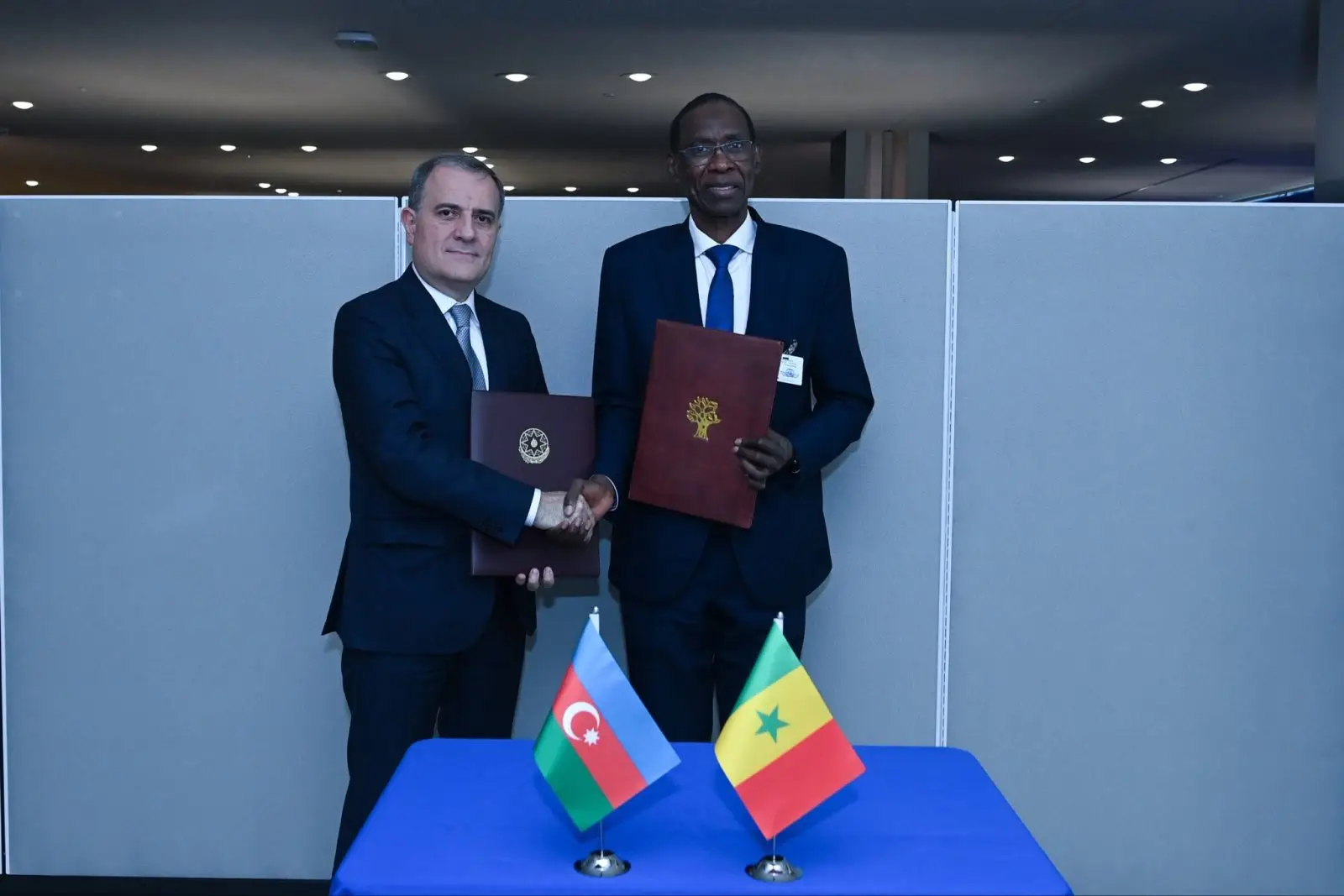
Senegal and Azerbaijan have opened a fresh chapter in their bilateral ties, signing a memorandum of understanding in New York to establish regular political consultations. The agreement, announced late Friday by Senegal’s Ministry of African Integration, Foreign Affairs and Senegalese Abroad, was sealed on the sidelines of the high-level week of the 81st United Nations General Assembly. While the pact is diplomatic in nature, its ripple effects are expected to reach businesses, workers and ordinary citizens in both countries.
Why this memorandum matters for citizens and the economy
At its core, the memorandum creates a structured mechanism for the two governments to discuss issues of mutual interest on a regular basis. Instead of relying on sporadic contacts, Dakar and Baku will now have a permanent channel to review the state of their cooperation and chart future collaboration. For Senegalese businesses, this could translate into clearer signals about trade opportunities and investment protection. For workers, it may open doors to technical training and job exchanges in sectors yet to be defined.
The practical benefits, however, will depend on how quickly the framework is activated. The ministry has not yet specified which sectors will be prioritized, nor has it set a timeline for implementation or the frequency of meetings. In typical diplomatic practice, such memorandums serve as a foundation for later discussions that can span economic affairs, multilateral coordination and technical assistance. Until those details emerge, the direct impact on daily life remains potential rather than immediate.
What the agreement does—and does not—say
The memorandum does not, in the information released so far, list the precise areas the political consultations will cover. It also leaves open the question of who signed the document and the exact format of the ceremony. These gaps suggest that the operational details will be communicated in the coming days or weeks. For now, the significance lies in the political signal: Senegal is actively diversifying its partnerships beyond traditional allies.
This move aligns with a broader trend in Senegalese diplomacy, which has multiplied bilateral deals with countries in Asia and Eastern Europe in recent years. By institutionalizing dialogue with Azerbaijan, Dakar expands its external network and positions itself to pursue economic and strategic interests in new markets. The consequences for the national economy could be substantial if the consultations lead to concrete agreements in energy, agriculture or infrastructure.
How the UN setting amplifies the deal’s reach
The high-level week of the UN General Assembly has long been a launchpad for bilateral agreements that might otherwise require separate trips. For Senegal and Azerbaijan, the New York setting provided a high-visibility platform to announce their intention to deepen ties. This timing is not merely symbolic: it allows both sides to leverage international attention and to accelerate follow-up talks without additional logistical costs.
For citizens, the most tangible outcomes will likely emerge through enhanced economic cooperation. If the consultations produce agreements on trade facilitation or investment, local businesses could see new export possibilities and joint ventures. Workers in sectors such as logistics, energy or education might benefit from exchange programs. But these outcomes are contingent on the political will to move from framework to action.
The road ahead: from signature to substance
As the two governments prepare to flesh out the memorandum, observers will watch for concrete steps. The establishment of a permanent dialogue mechanism is a first step; the real test will be whether it leads to measurable improvements in trade flows, job creation and bilateral cooperation. For now, the impact on citizens and the economy remains a promise—one that Dakar and Baku will need to deliver on in the months to come.